What is the NWMO doing well? What are people in support of the project saying?
Executive Summary
The Nuclear Waste Management Organization (NWMO) has successfully established a narrative of technical rigor and long-term planning, which resonates with supporters who view the Deep Geological Repository (DGR) as a necessary, science-based solution to Canada’s nuclear waste legacy. Proponents emphasize the project’s role in supporting low-carbon energy and express confidence in the NWMO’s safety protocols and public education efforts [Ref: 672, 653]. However, this support is sharply contrasted by significant community opposition, particularly from Indigenous Nations and residents in unorganized territories who cite profound concerns regarding transportation risks, environmental safety, and the lack of meaningful consultation [Ref: 705, 660, 627].
Detailed Analysis
The NWMO’s primary success lies in its ability to secure formal hosting agreements with the Township of Ignace and the Wabigoon Lake Ojibway Nation (WLON) [Ref: 13, 14]. Supporters highlight these agreements as evidence of a ‘consent-based’ process [Ref: 215]. Furthermore, the NWMO is praised for its extensive public education initiatives and the perceived safety of its multi-barrier containment system [Ref: 672, 653].
Conversely, the project faces intense scrutiny regarding its scope. A recurring theme in public comments is the exclusion of waste transportation from the federal Impact Assessment [Ref: 612, 585, 439]. Residents of Northwestern Ontario, particularly those along the Trans-Canada Highway (Highway 17), express deep apprehension about the safety of transporting radioactive materials through accident-prone corridors [Ref: 623, 603, 595].
Evidence from Public Registry
- Supportive Perspectives: Supporters view nuclear energy as essential for climate goals and trust the NWMO’s safety record [Ref: 670, 653]. They often dismiss opposition as being driven by competing energy interests [Ref: 670].
- Opposing Perspectives: Opponents, including the Grand Council Treaty #3, argue that the project violates Indigenous laws (Manito Aki Inaakonigewin) and lacks Free, Prior, and Informed Consent (FPIC) [Ref: 705, 660]. Concerns regarding the contamination of watersheds and the ‘sacrifice zone’ narrative are prevalent [Ref: 685, 604, 578].
Technical Deficiencies & Gaps
Internal technical reviews highlight that the NWMO’s reliance on ‘industry-standard’ mitigation measures often lacks site-specific validation [Analysis: Section 19.2.3.5]. The current baseline data for hydrology and ecology is frequently described as ‘sufficiently advanced’ by the proponent, yet it relies on regional averages rather than granular, site-specific modeling for the Revell area [Analysis: Section 14.6.2]. Furthermore, the exclusion of transportation from the impact assessment creates a significant regulatory gap that fails to address the cumulative risks to the communities along the transit routes [Analysis: Section 10.3].
Recommendations & Mandates
We strongly recommend that the NWMO conduct a comprehensive, site-specific hydrogeological study that models the movement of radionuclides through the fracture networks of the Revell Batholith. This study must be peer-reviewed and made publicly available to address the ‘low risk’ claims with empirical data.
We strongly recommend that the NWMO establish a ‘Regional Infrastructure Resilience Plan’ in coordination with the Township of Ignace and the City of Dryden. This plan must detail how the increased heavy-vehicle traffic will be managed to prevent degradation of public roads and ensure that emergency response services are adequately funded and equipped to handle potential incidents involving nuclear materials in a remote Canadian Shield environment.
Conclusion
While the NWMO has achieved significant milestones in site selection and formal agreements, the project’s social license remains fragile. The path forward requires a shift from high-level policy commitments to transparent, site-specific technical and socio-economic mitigation that directly addresses the concerns of the most proximate, yet currently marginalized, stakeholders.
About the Deep Geological Repository (DGR) for Canada’s Used Nuclear Fuel Project
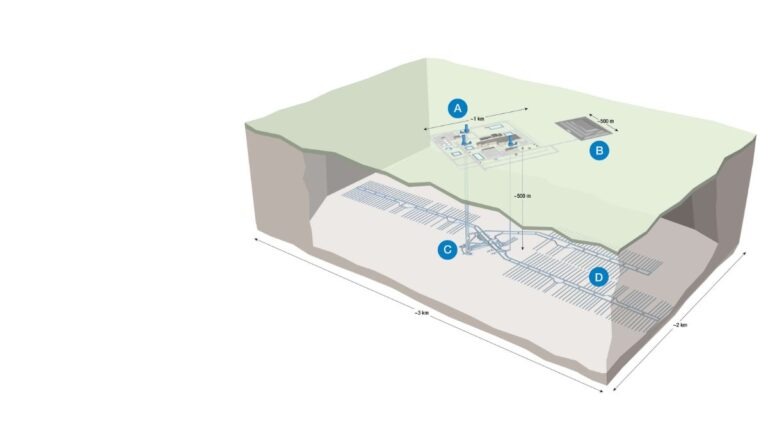
The Nuclear Waste Management Organization (the NWMO) is proposing a new underground deep geological repository system designed to safely contain and isolate used nuclear fuel. Wabigoon Lake Ojibway Nation (WLON) and the Township of Ignace have been selected as the host communities for the proposed project, which is located 21 kilometres southeast of the WLON and 43 kilometres northwest of the Town of Ignace, Ontario along Highway 17. As proposed, the Deep Geological Repository (DGR) for Canada’s Used Nuclear Fuel Project would provide permanent storage for approximately 5.9 million bundles of used nuclear fuel. The project is expected to span approximately 160 years, encompassing site preparation, construction, operation and closure monitoring. The project assessment is being conducted in collaboration with the Canadian Nuclear Safety Commission.
Learn more about the Integrated Impact Assessment process which is led by the Impact Assessment Agency of Canada and Canadian Nuclear Safety Commission.
- Read the Summary of Issues (February 16, 2026)
- Read the Summary of the Initial Project Description (January 5, 2026)
- Read the Initial Project Description (January 5, 2026)
- Learn More about the Melgund Integrated Nuclear Impact Assessment (MINIA) Project
- Learn More about the Nuclear Waste Management Organization (NWMO)
About the Author