
Forget the corporate retreats and focus on the small, daily habits that build lasting trust.
The most effective team building happens in the quiet moments between the big deadlines.
For a small, grassroots arts organization, the idea of a traditional team building retreat often feels like a luxury you cannot afford or a corporate cliché you would rather avoid. When resources are tight and everyone is wearing five different hats, the thought of adding a social exercise to the calendar can feel like just another chore. But the principle of healthy creative leadership is simple: trust is not a one-time event; it is a recurring ritual. You do not need a budget for a ropes course to build a resilient team. You need a commitment to the small, human interactions that happen every single day.
In a small group, the lines between personal and professional are naturally thin. You are likely working with friends, peers, or fellow travelers who share your artistic convictions. This intimacy is a strength, but it requires intentionality. Without a clear approach to how you support one another, that intimacy can turn into friction. The easy approach to team building is to integrate it directly into the workflow. It is about moving away from eye-to-eye intensity, where every meeting feels like a high-stakes negotiation, and toward shoulder-to-shoulder collaboration. There is something transformative about doing the physical work of an organization together. Whether it is moving chairs for a rehearsal, prepping a mailing list, or painting a gallery wall, these moments of shared labor provide a low-pressure environment for conversation.
One of the most powerful tools for a small team is the micro-ritual. This is a consistent, low-barrier practice that honors the people behind the tasks. Perhaps it is a ten-minute check-in at the start of every meeting where the only rule is that you cannot talk about the project. You talk about your lives, your creative frustrations outside the organization, or even just how you are sleeping. This is not just small talk. It is a mechanism for visibility. When you know that a teammate is dealing with a personal struggle or a creative block, you can adjust your expectations and offer support before a conflict arises. Visibility is the best defense against the silent build-up of resentment.
As a leader, your role in team building is to model a radical transparency about your own limitations. In the corporate world, leaders are often taught to project an image of total competence. In the grassroots world, that approach is a recipe for isolation. When you are honest about what you do not know or when you admit that you are feeling the weight of the workload, you give your team permission to do the same. This creates a culture of psychological safety where asking for help is viewed as a strategic contribution rather than a failure. This shared vulnerability is the glue that holds a small group together when the funding is low and the stakes are high.
Finally, remember that the goal of a team is not just to produce work, but to sustain the people producing it. Small is beautiful because it allows for a level of care that institutions simply cannot scale. You have the opportunity to build a culture where everyone feels like a stakeholder in the mission. Encouraging ownership means letting go of the need to control every detail and trusting your peers to bring their own creative soul to the project.
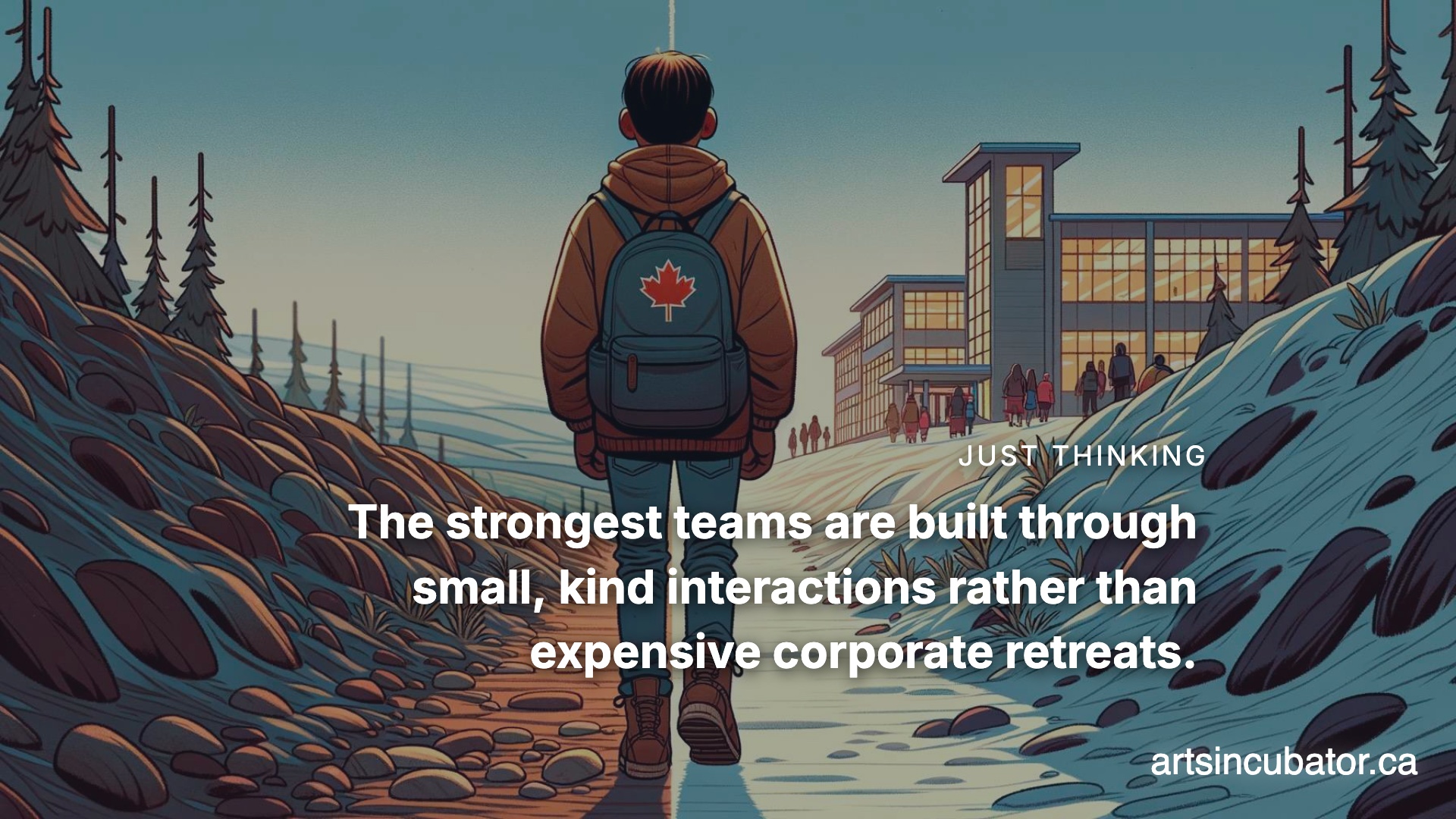
When people feel trusted, they do not just show up; they contribute. Keep your rituals simple, keep your communication honest, and remember that the strongest teams are built one small, kind interaction at a time.
Thoughts on Creative Leadership
Creative Leadership is about turning vision into action by empowering people, cultivating trust, and building momentum around shared purpose. It blends imagination with accountability, inviting diverse voices to shape solutions while navigating complexity with clarity and courage.
About the Author