HOW TO CARE FOR CHIVES FOR A CONTINUOUS HOME HARVEST
Adding fresh herbs to your kitchen garden is a great way to elevate your cooking, and mastering how to care for chives is one of the easiest ways to establish a reliable, year-round harvest. This cold-hardy perennial belongs to the allium family, sharing ancestry with garlic and onions, and is widely loved for its mild flavor and vibrant purple blossoms. Because they are incredibly resilient, chives are an ideal plant for both beginner gardeners and seasoned growers. However, maximizing their growth and ensuring they return thicker each spring depends on setting up the right environment and following a few basic maintenance steps.
Finding the Right Balance of Sunlight and Soil
The first major milestone in how to care for chives focuses on picking the perfect location in your yard or patio. Chives do best when they receive full sun, which means they need roughly six to eight hours of direct sunlight every day. While they can survive in partial shade, a lack of light often leaves the green blades looking thin, weak, and sparse.
When it comes to the ground beneath them, learning how to care for chives effectively requires fertile, well-draining soil. These herbs are heavy feeders that appreciate a loam or sandy mix rich in organic matter. If your backyard has dense clay soil that pools water after a heavy rain, a smart adjustment in how to care for chives is installing a raised bed or using container pots. Stagnant water around the roots is a fast track to rot, so ensuring excellent drainage is non-negotiable.
Developing a Smart Watering and Mulching Routine
Unlike many woody, drought-tolerant Mediterranean herbs, chives love consistent moisture. A critical part of how to care for chives is keeping the soil damp without letting it turn into an oversaturated mud pit. Their root systems are relatively shallow, meaning they will struggle and turn yellow if the top few inches of soil dry out completely during summer heatwaves.
For young seedlings or newly divided plants, the standard guideline for how to care for chives is to irrigate every few days to keep the soil consistently damp. Once the plants form mature clumps, you can shift to a deep watering session once or twice a week. To make your life easier, apply a thin layer of organic mulch, such as shredded leaves or clean straw, around the base of the plant. This extra step helps lock in soil moisture, cools the roots during intense summer days, and blocks out competing weeds.
Harvesting Techniques and Managing Purple Flowers
The way you trim your herb patch plays a massive role in how to care for chives over the long term. Regular harvesting is actually beneficial, as it stimulates the plant to produce a steady stream of fresh, tender shoots. When cutting chives for dinner, use sharp kitchen shears and snip the leaves from the outside of the clump first. Always leave about two inches of growth above the soil line; cutting them flush with the ground can stunt their recovery.
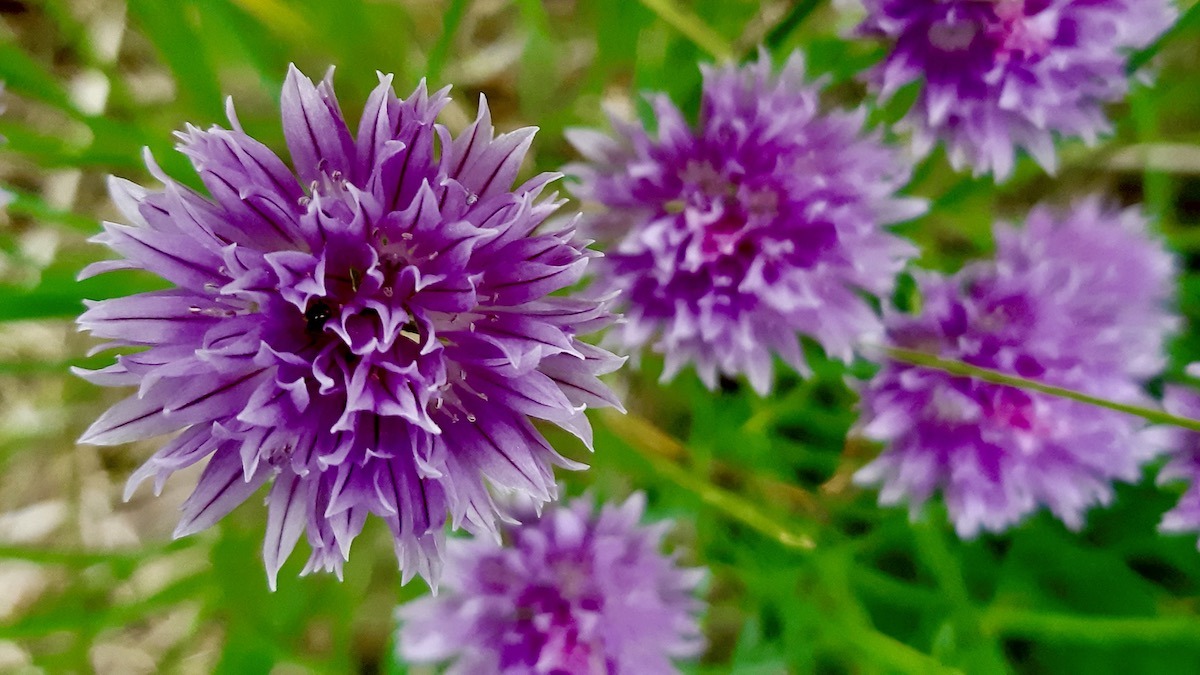
As spring transitions into summer, your plants will send up round, purple flower buds. Knowing how to care for chives during this blooming phase is a common point of confusion. While these flowers are completely edible and look beautiful in salads, letting them mature and go to seed tells the plant to stop producing new leaves. Therefore, a vital tip on how to care for chives is to deadhead the flower stalks right at the base as soon as the blossoms begin to fade. This redirects all the plant’s energy right back into growing flavorful green blades.
Long-Term Care: Dividing Clumps Every Few Years
To maintain a healthy, productive herb garden over several seasons, you need to understand how to care for chives as they age. Over three or four years, a single chive plant will grow into a dense, overcrowded clump. When this happens, the center of the plant can become unproductive, and the individual blades will start to narrow.
The solution is division, which should be done in early spring or late autumn when the weather is cool. Gently dig up the entire root ball, use your hands or a garden spade to split the large clump into smaller sections of about ten to fifteen bulbs each, and replant them in fresh soil. This simple rejuvenation technique is the ultimate secret to how to care for chives, ensuring your patch stays vigorous, healthy, and abundant for a lifetime.