Low rankings in global trust and training studies prompt a focus on public education and safety
Canada’s ambitions to become a global leader in artificial intelligence are facing a significant hurdle in public trust and technical literacy. Despite a rich history of academic innovation, the domestic population remains deeply skeptical of the technology.
A global study conducted by KPMG and the University of Melbourne highlights the scale of this challenge. The report ranks Canada 44th out of 47 countries on training and literacy. Additionally, the country ranks 42nd out of 47 nations regarding public trust in these systems.
Fewer than a quarter of Canadians, or 24 percent, report having received any training on how to use these tools. Fewer than four in ten citizens say they possess moderate or high knowledge of the technology. At the same time, less than half of the population believes they can use these systems effectively in their daily lives.
This lack of familiarity contributes to widespread public caution and skepticism. Public opinion is roughly evenly split, with 34 percent of Canadians believing the technology is good for society and 36 percent viewing it as harmful. Half of the population regards the technology as a threat to humanity.
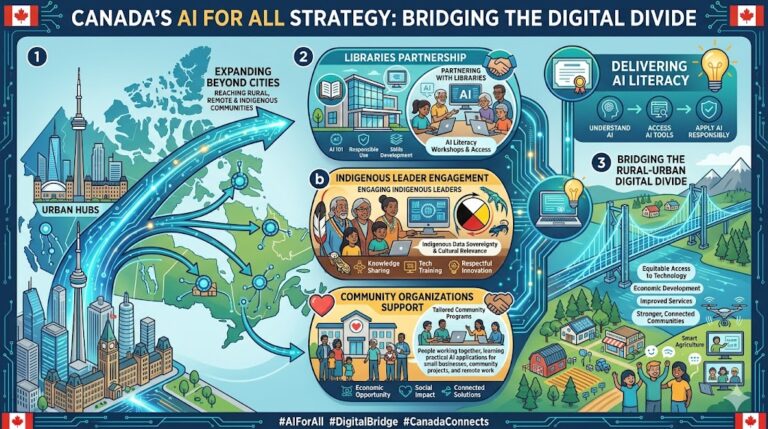
The federal government’s new strategy, “AI for All,” aims to address these concerns directly. Planners intend to build a responsible, safe, and sovereign industry that prioritizes public safety. The goal is to ensure the technology serves citizens rather than the other way around.
Canada plans to leverage its strong civic institutions and rule of law to build public confidence. A tradition of pragmatic regulation will be used to govern the sector responsibly without stifling innovation. This balanced approach is intended to reassure a cautious public while supporting domestic developers.
The strategy also focuses on creating educational opportunities to bridge the literacy gap. Providing work placements and training programs will help young Canadians and small businesses develop necessary skills. Increasing hands-on experience is seen as a key method for building trust over time.
Overcoming these cultural and educational barriers is essential for the success of the national strategy. Without a foundation of trust and literacy, broad economic integration will remain difficult to achieve. The government’s plan represents a long-term commitment to aligning technological progress with public values.
Building a secure regulatory framework is expected to help ease public anxiety. The government plans to work with international partners through the G7 to establish global rules for safe deployment. These collaborative efforts will help ensure that domestic systems meet high safety standards.
Educators and industry leaders must work together to explain these systems to the public. Providing clear information about how data is used will help reduce fear and encourage adoption. This educational push is a cornerstone of the federal plan to build a more inclusive digital economy.
About the Author