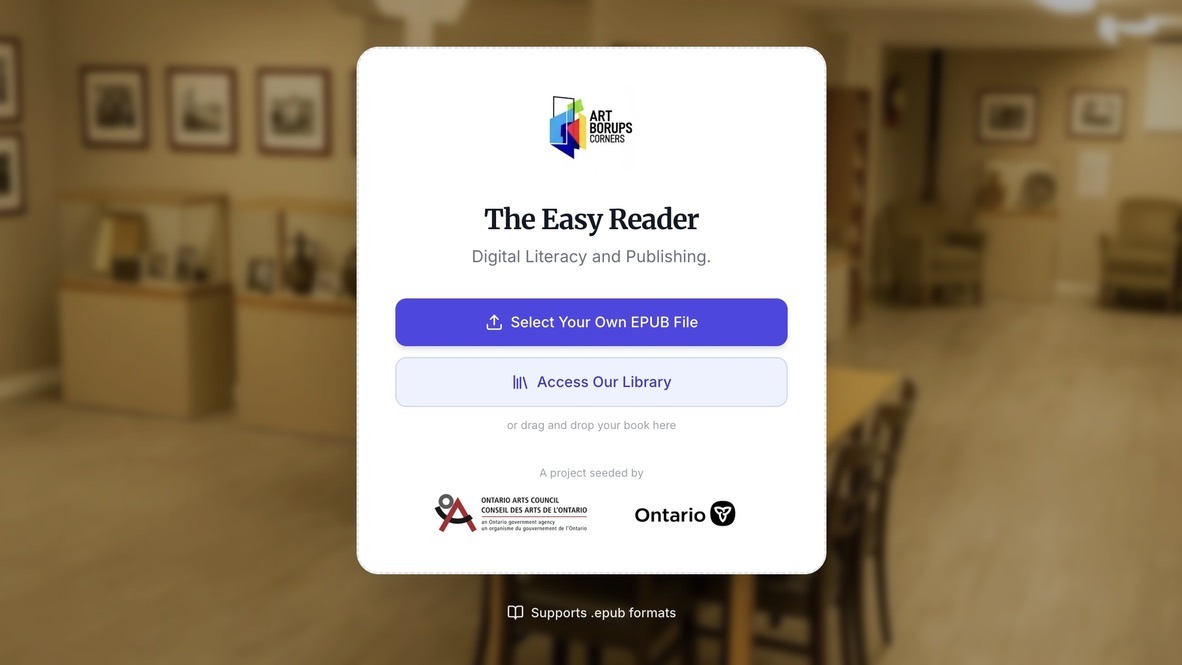
Many northern communities face barriers to basic digital literacy. Our community-built EPUB reader makes accessing digital books simple and accessible.
In many northern communities, people have devices but limited ability to use them beyond social media. Even basic tasks like opening a book file can be a barrier. To address this digital literacy gap, we built our own EPUB reader and integrated it directly with our platforms—creating a tool that works with the skills people actually have, rather than expecting them to adapt to existing software.
Background
During our workshops and hands-on development sessions in summer and fall 2025, we saw that standard software often assumes a level of technical knowledge many community members simply do not have. Tasks such as downloading a file, navigating a reader, or adjusting settings were stopping people from accessing content entirely. This was not a problem with motivation or interest; it was a problem with literacy levels and accessibility.
Approach
Rather than relying on existing EPUB readers, we decided to build our own. Our goal was to remove technical barriers and create a reading experience that was straightforward, reliable, and fully integrated with the platforms our communities already use. This approach allowed us to:
- Ensure that the reader could be opened and used without prior technical knowledge.
- Simplify the workflow from receiving a book to reading it.
- Integrate directly with our existing content distribution platforms, so books are accessible without additional steps or downloads.
Outcomes
The resulting EPUB reader allows users to engage with digital books directly, without navigating complicated software or settings. By designing the tool around real user needs and skills, we have created a system that empowers community members to use their devices for productive and educational purposes.
Next Steps
The reader continues to be refined based on user feedback. Future iterations may include minor accessibility improvements and expanded integration with other tools, but the core principle remains the same: the tool must meet users where they are, not where existing software expects them to be.
About the Author