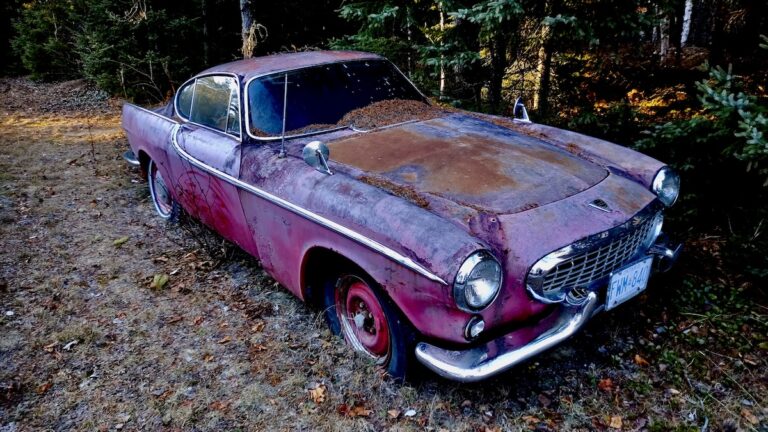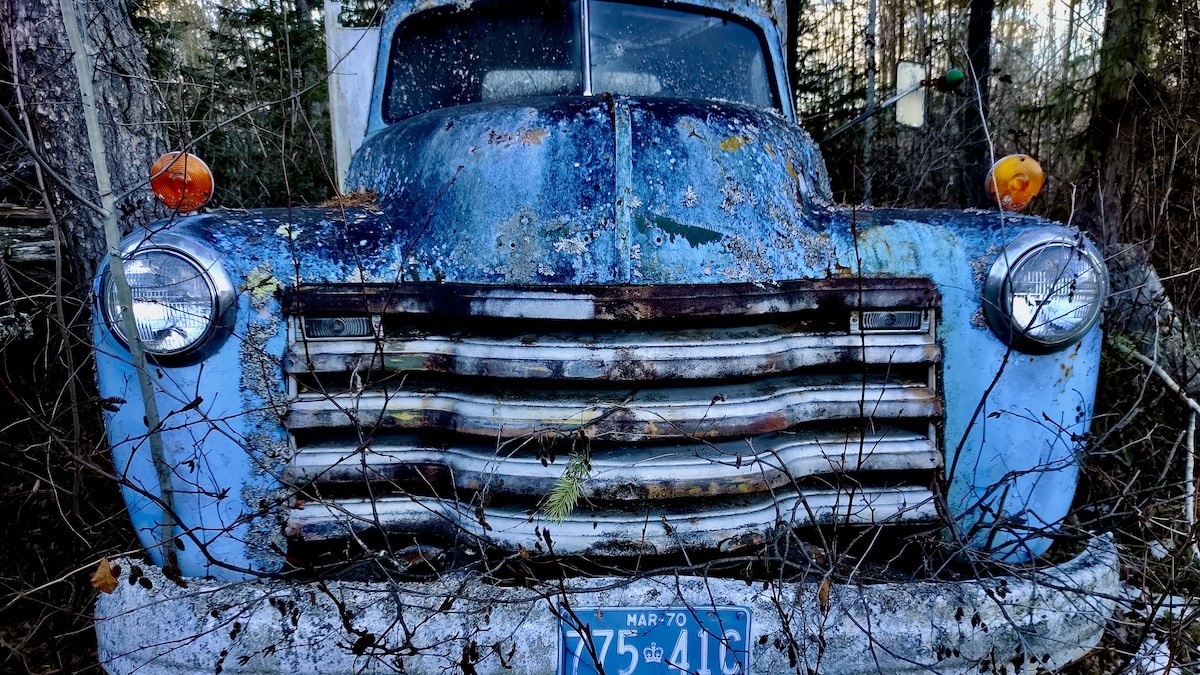
This rugged 1954 Chevrolet 3100 truck rests quietly, its once-vibrant blue paint now a beautiful, multi-hued patina earned over decades of exposure to the elements. Photo: Jamie Bell
The “Bullnose” Advance Design in Repose
This striking image captures the rugged and faded beauty of a 1954 Chevrolet truck, its “bullnose” grille and iconic round headlamps standing guard against the encroaching wilderness. The vibrant blue paint, now heavily patinaed and consumed by rust, tells a silent story of hard work, long journeys, and eventual rest deep within the woods.
The 1954 model year marked a significant, though brief, styling update to the long-running Advance Design series. General Motors, in an effort to modernize the look before a full redesign in 1955, gave the truck a distinctive new grille, often referred to by collectors as the “bullnose.” Unlike the horizontal bar grilles of the earlier years, the 1954-55 first-series trucks featured a cross-type, bolder grille that housed new park lights in the lower corners. Other subtle, one-year-only changes included a slightly different emblem and a one-piece curved windshield, replacing the previous two-piece split glass. This particular truck, likely a half-ton 3100 model, represents the final, modernized iteration of a beloved postwar design that helped establish the American pickup as a versatile and indispensable workhorse.
Today, trucks like this one are highly prized by classic vehicle enthusiasts, whether for a meticulous frame-off restoration or simply to admire the untouched, authentic patina seen in this photograph. The rust, the exposed chrome, and the old “Mar ’70” license plate beneath the bumper transform this former machine of labor into an object of rustic art. Encased by the tangle of bare branches, the truck has become a part of the landscape, a beautiful monument to a bygone era of simple, durable American engineering, waiting for the next chapter in its long, quiet life.
Titans of the Forest
The upcoming exhibition, “Titans of the Forest,” is the culmination of a powerful six-month interdisciplinary arts and capacity-building project spearheaded by the Art Borups Corners collective. This initiative, made possible by seed funding from the Ontario Arts Council Multi and Inter-Arts Projects program, represents a significant collaboration for our artists and programs. Working closely with key partners—the Dyment Museum, The Arts Incubator Winnipeg, and the Local Services Board of Melgund—the exhibition is set to debut a compelling series of photo and multimedia works. These pieces offer an artistic and historical look at the region, celebrating the history, and the powerful role of these industrial giants in shaping the local landscape and memory.
About the Author