Reactive frameworks, bureaucratic delays, and restrictive cross-compliance force primary producers to opt out of federal business risk programs.
A unifying consensus across all agricultural associations testifying before the Standing Committee on Agriculture and Agri-Food is that Canada’s public safety net is completely broken. Witnesses highlighted a profound funding disparity, noting that while comparable international G7 peers allocate an average of 2% of total public spending to agriculture, Canada currently spends less than 1%.
Patrice Léger Bourgoin of the Association des producteurs maraîchers du Québec detailed how the core Business Risk Management suite fails during climate emergencies. Using the extreme weather events of 2023 as an example, Bourgoin explained that when a farm suffers consecutive catastrophic weather years, the AgriStability program completely breaks down.
Because AgriStability calculates coverage based on a rolling five-year reference margin, a single bad year artificially suppresses the farm’s baseline margin for the next season. This design leaves the safety net useless when it is needed most after two bad years out of five, while the emergency AgriRecovery disaster framework takes up to 18 months to deliver a single penny of aid.
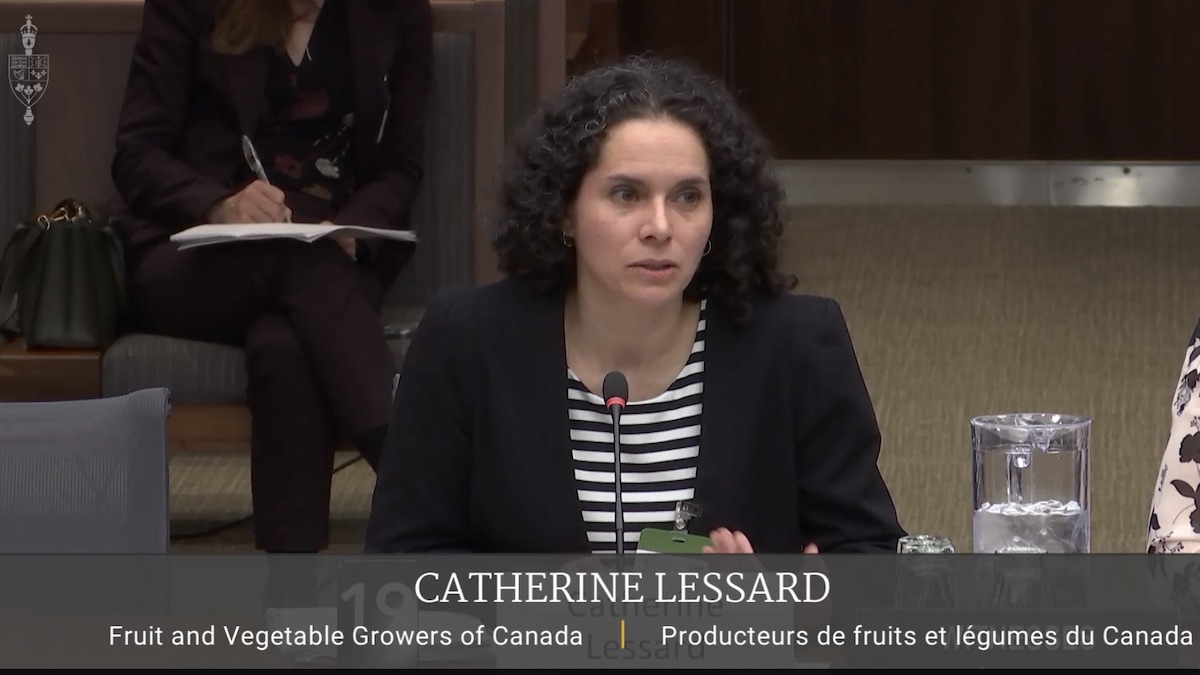
To remedy these failures, agricultural groups have formally requested that the federal government overhaul program mechanics. Catherine Lessard and Patrice Léger Bourgoin recommended raising the AgriStability trigger threshold to 85% of the reference margin, allowing protections to kick in after a minor 15% decline.
Furthermore, growers demanded that the federal advance payment program permanently increase its interest-free loan portion to $350,000 to ease immediate liquidity constraints. Lessard also confirmed that outside of AgriStability, there is currently zero crop protection insurance available anywhere in Canada for greenhouse operations facing production disease or weather shocks.
Policy analysts warned the committee that federal risk programs are underutilized because of restrictive administrative burdens and shrinking farm margins. Compounding these systemic issues, Bloc Québécois MP Sébastien Lemire highlighted recent federal budget cuts that threaten to strip $27 million annually from public research centres that pay vital scientists.
University deans council representative John Cranfield confirmed that academic institutions do not possess the financial means to replace this lost $27 million in public research capacity. Experts emphasized that well-designed risk programs help producers recover from shocks, but innovation-enabled research systems prevent those shocks from becoming crises in the first place.
In response to questions regarding regional flexibility, policy expert Tyler McCann recommended the creation of a national reinsurance fund. This system would allow provinces to pool geographic risks nationally, preventing localized climate disasters from bankrupting regional insurance programs while structurally lowering annual premium costs for all Canadian farmers.