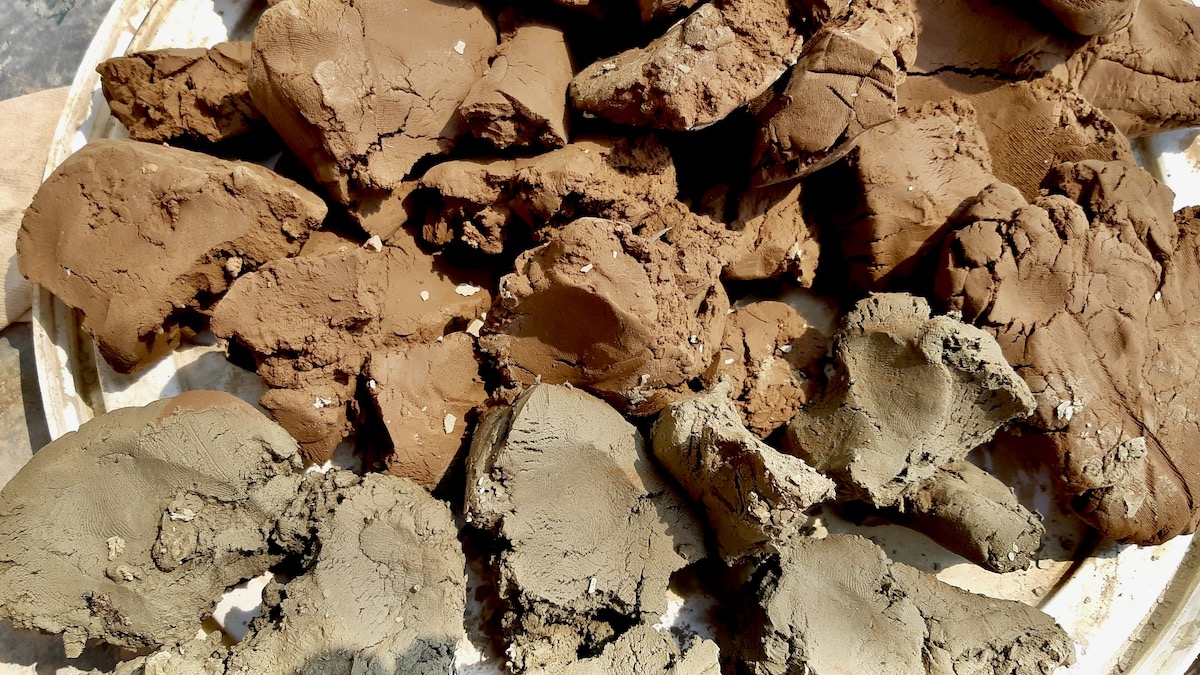
Our summer of harvesting and drying native clays has been messy, educational, and incredibly rewarding.
This summer has been an absolute thrill as we’ve learned how to harvest, slake, and process wild clays collected from around our area. Every batch has taught us something new, and we’ve had a lot of fun getting our hands dirty along the way.
One of the biggest milestones has been drying our processed clay. After collecting, we slaked it in water, screened out roots and stones, and let the clay settle before drying it into workable blocks. It’s a slow process that takes patience, but watching the clay transform from muddy slurry into usable material has been incredibly satisfying.
So far, we’ve processed more than 35 pounds of beautiful native clay, including rich grey clay, iron-red clay, and striking varved clay with natural layers of both grey and red. Each type has its own texture, colour, and character, making every batch a little different from the last.
Like many people across northwestern Ontario, our summer plans were affected by forest fires and fire restrictions. That meant we aren’t yet able to hold the pit firings we had been looking forward to. While that’s disappointing, it hasn’t slowed the learning. Instead, we’ve focused on improving our harvesting and processing techniques, building a better understanding of the materials we’ll eventually fire when conditions allow.
Working with wild clay has given us a new appreciation for the landscape around us. Every handful tells a story of local geology formed thousands of years ago. As we continue experimenting, we’re building a growing collection of local clays and developing the skills to transform them into future pottery projects.
Sometimes the best part isn’t the finished piece, it’s the process of discovering what the land has to offer.