Community Presentation in Melgund Township Highlights Nuclear Waste Proposal and Regulatory Oversight
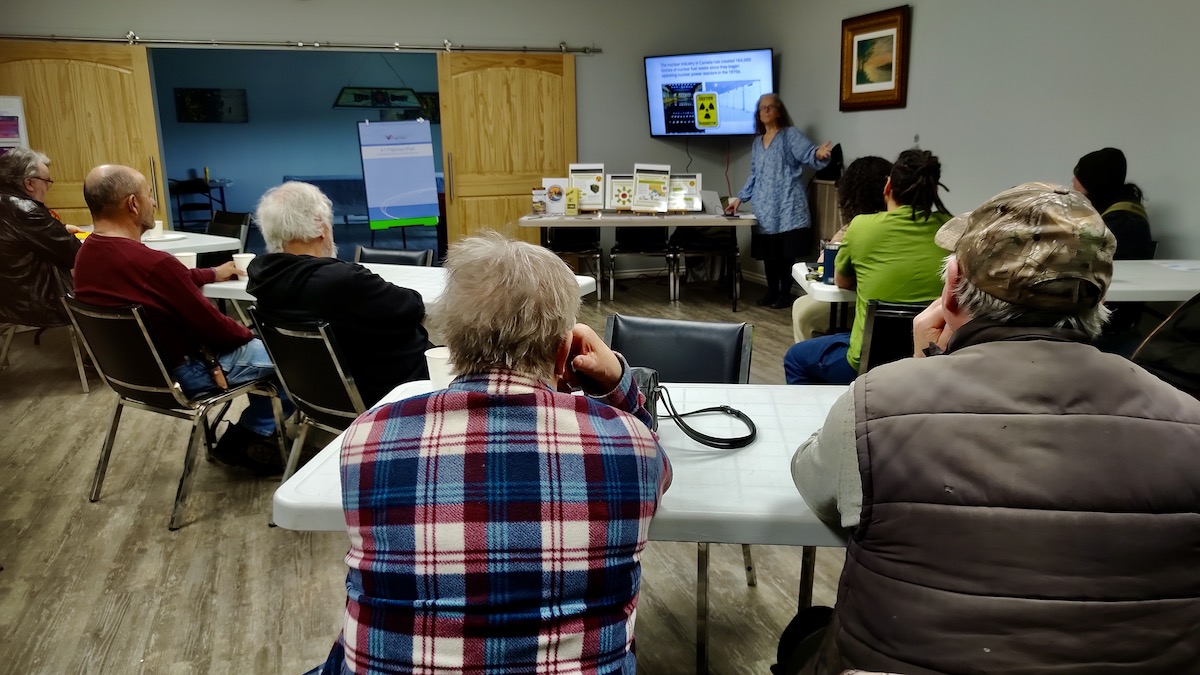
Residents of Melgund Township and Dyment gathered on Saturday morning for a special public presentation led by Brennain Lloyd of Northwatch and We the Nuclear Free North.
The session, held following the monthly community breakfast at the Dyment Recreation Hall, drew strong attendance and focused on the nuclear industry in Ontario, with particular attention to the proposed Deep Geological Repository (DGR) for Canada’s Used Nuclear Fuel Project being advanced by the Nuclear Waste Management Organization (NWMO). The presentation also outlined potential risks, long-term considerations, and identified environmental and community impacts associated with the project.
The open house and presentation took place on April 22, 2026, running from 10:00 a.m. to 3:00 p.m.
Community members engaged in discussion following the presentation, which formed part of a broader series of informational sessions held throughout the week. Earlier in the week, representatives from the NWMO met with residents on Monday evening, followed by sessions on Wednesday involving the Impact Assessment Agency of Canada (IAAC) and the Canadian Nuclear Safety Commission (CNSC).
Organizers extended thanks to Brennain Lloyd for attending and delivering a well-received and well-attended presentation, and noted that they look forward to future engagement opportunities.
The proposed NWMO project is designed to safely contain and isolate used nuclear fuel in a deep underground geological repository. If approved and constructed, the facility would be located approximately 10 kilometres from Borups Corners and 14 kilometres from Dyment—making these the closest communities along Highway 17 potentially affected by the development.
According to NWMO plans, the repository would be designed to permanently store approximately 5.9 million bundles of used nuclear fuel. The project lifecycle is expected to span roughly 160 years, including site preparation, construction, operation, and eventual closure and long-term monitoring.
The environmental assessment process for the project is being conducted in collaboration with the Canadian Nuclear Safety Commission, as part of federal regulatory oversight.