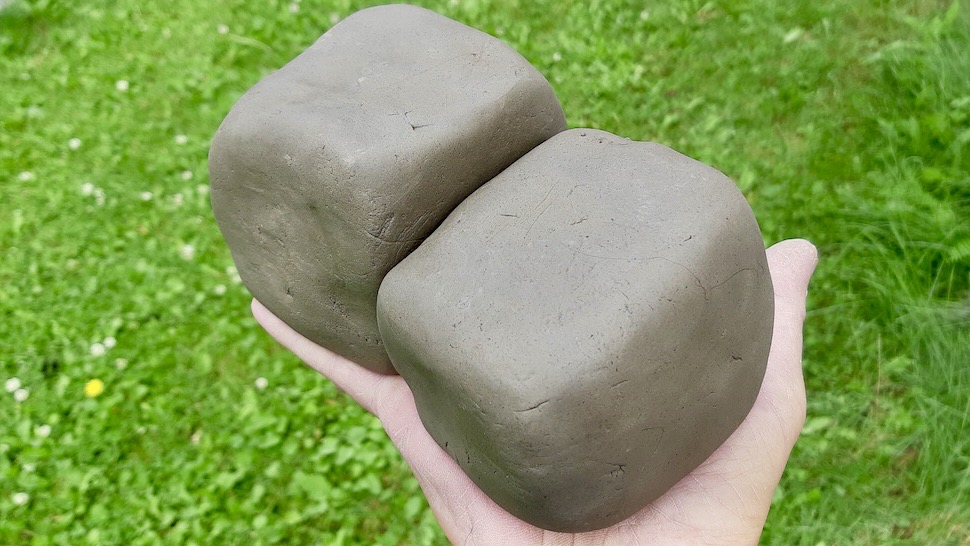
Our first drying tests reveal how native Melgund Township clay performs with minimal processing and no commercial additives.
Our summer wild clay experiment is off to a promising start.
As part of our arts program, we’ve been collecting and processing native clay from a glaciolacustrine deposit here in Melgund Township. After digging the material, we broke it down in water, screened out the larger particles, and let the clay settle before drying it into a workable body. The goal is simple: find out how this local, Northwestern Ontario Canadian Shield clay behaves on its own before we make any adjustments with temper, grog, or other additives.
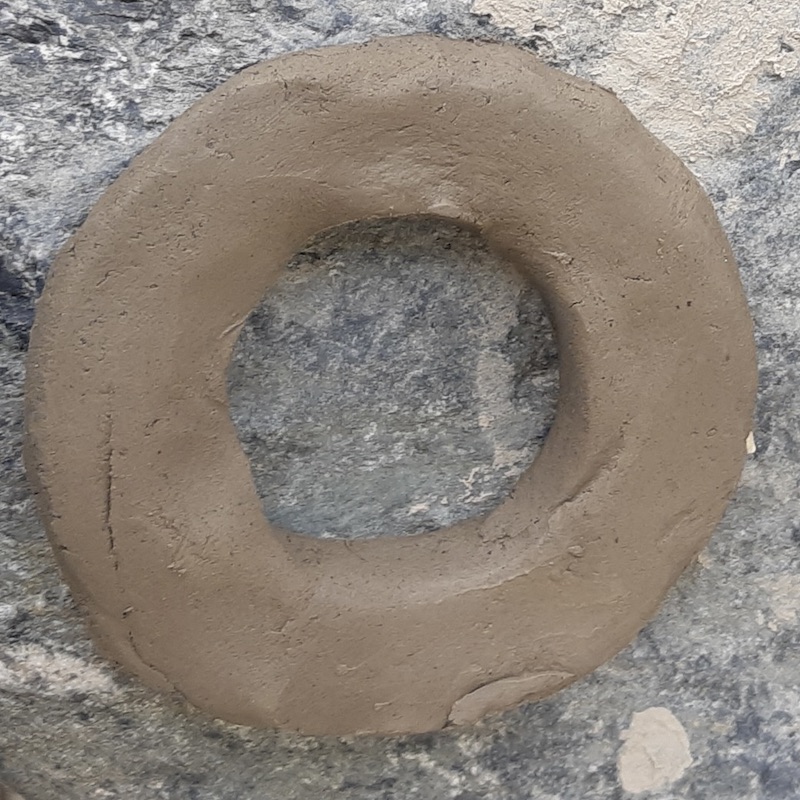
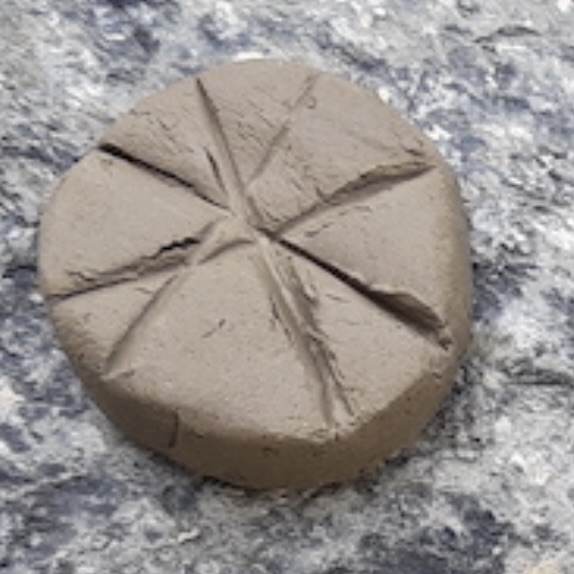
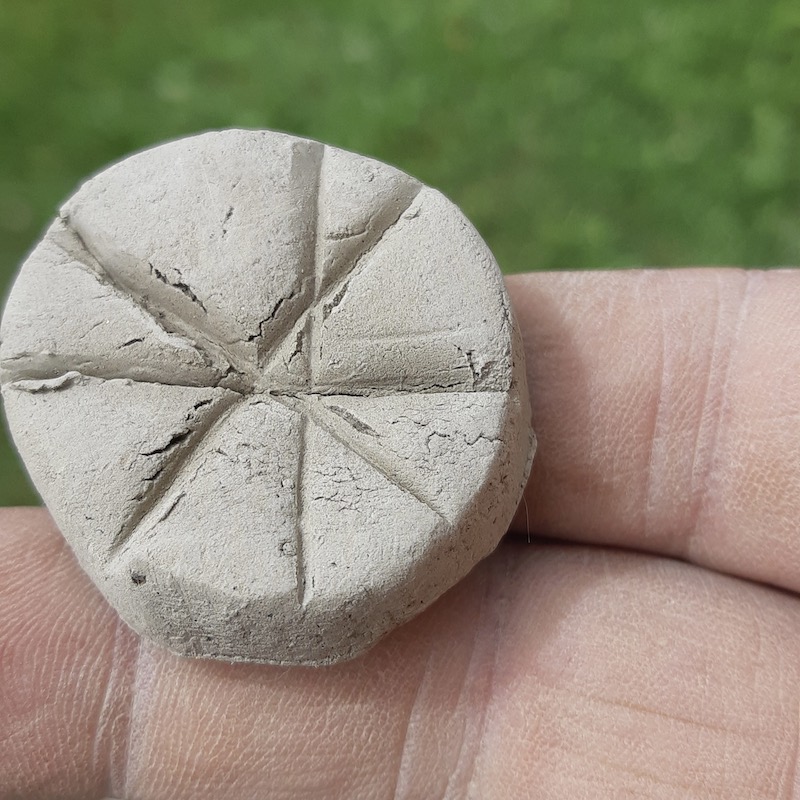
For these first tests, we deliberately avoided many of the steps a potter would normally take. We didn’t wedge the clay very much, compress seams, or carefully finish the surfaces. Instead, we quickly formed a handful of simple test pieces and placed them outdoors in full July sun—on both a granite boulder and a hot metal tabletop. Rapid drying like this is a demanding first test because it tends to exaggerate shrinkage and expose weaknesses that might not show up during slower drying.
We’re learning a lot!
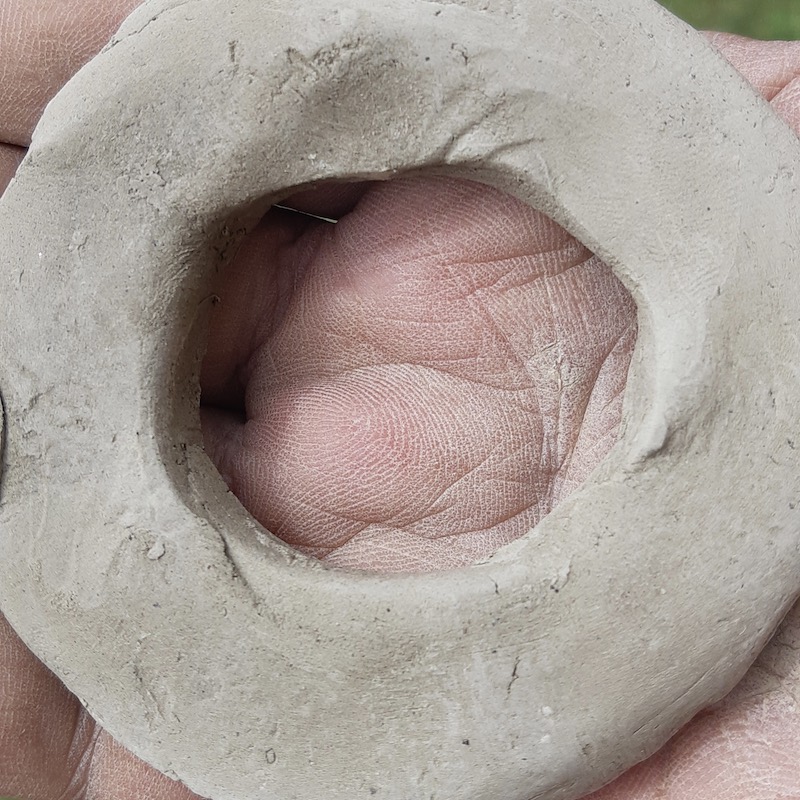
So far, the results have been encouraging. One of the test pieces, a simple clay hoop, was joined together with a quick hand-pressed seam before drying. Even after several hours in direct sunlight, that seam hasn’t opened up or developed any visible cracking. The piece has dried evenly, and despite the intentionally rough construction, it has remained surprisingly stable.
It’s still far too early to draw broad conclusions about the material, but these first drying tests suggest the clay has good potential. We’ll continue monitoring the pieces as they finish drying over the next couple of days before moving on to more demanding experiments. Later this summer we’ll begin testing different natural tempers, and if everything continues to go well, we’ll be pit-firing our first locally sourced clay pieces this autumn.
That’s what makes this project exciting. Every stage teaches us a little more about the materials beneath our feet, and each experiment brings us closer to understanding how this local clay can be used for art using methods that rely almost entirely on resources found right here in our region.
The Adventure Continues
This year’s summer arts projects are doing incredibly well across the board, and we can’t wait to show everyone the final results. From fresh studio creations to our outdoor experiments, we’re pushing boundaries and making the most of the season’s creative energy. We are already planning how to showcase these finished works later this year so the whole community can see the incredible talent and dedication that has taken place this summer.
As part of that broader creative energy, our wild clay experiment is progressing quite nicely! Learning to process raw earth has been a fantastic addition to our summer programming, and we’re having so much fun working through the trial-and-error of local geology. Keep following us to see how these native clay tests turn out as the journey continues and we gear up for our autumn pit-firing.