Exploring the butterfly-hosting wildflower of Melgund Township
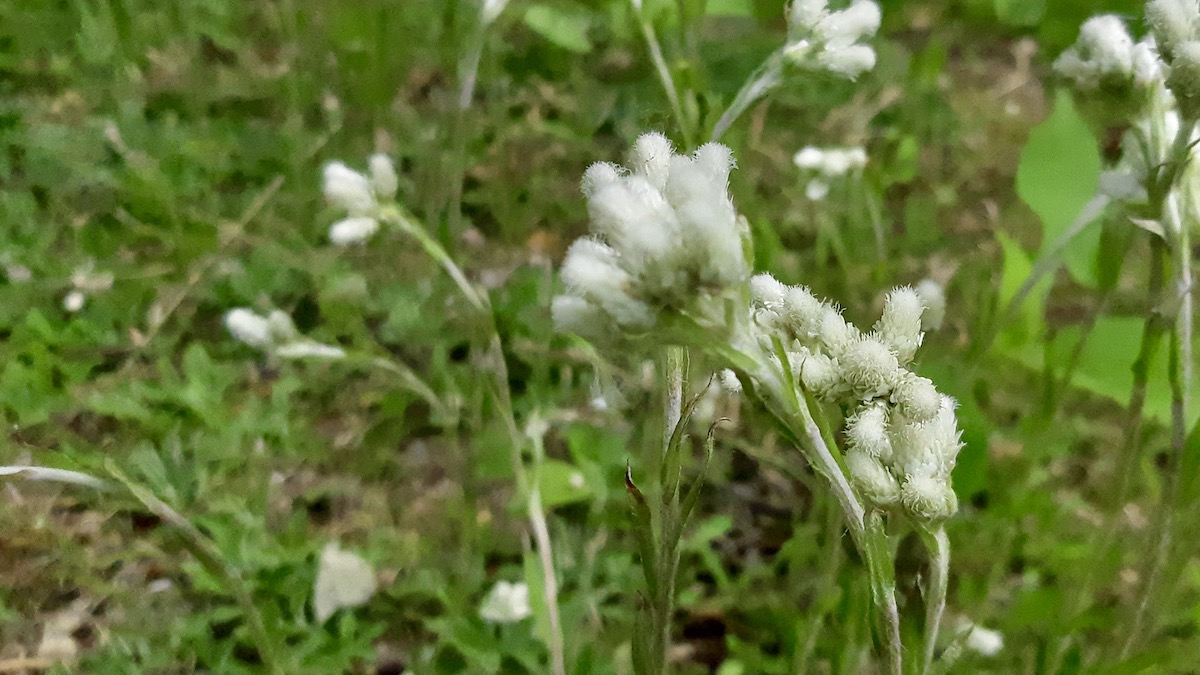
Look closely at the dry, rocky ground along the edges of paths and clearings in Northwestern Ontario right now, and you will likely see clusters of small, fuzzy white flowers rising just a few inches above the soil. These are Field Pussytoes (Antennaria neglecta). The plant gets its whimsical name because the soft, compact flower heads look exactly like the underside of a tiny kitten’s paw.
Documenting these subtle species is a big part of our summer routine. Every year, our arts incubator program works to capture the local plants, berries, and flowers growing in and around Melgund Township and the wider region. We want to celebrate the local landscape and show how these native plants shape our ecosystem. While showy shrubs usually get all the attention, low-profile survivors like Field Pussytoes tell the real story of our rugged northern terrain.
Built to Endure the Canadian Shield
You will rarely find this plant growing in rich, pampered garden beds. Instead, it deliberately seeks out places where other vegetation completely fails to take root. It thrives in full sun and thin, nutrient-poor soils, making it a frequent sight on sandy banks, gravelly roadsides, and the exposed granite outcrops of the Canadian Shield.
To survive these harsh conditions, the plant forms a tight, ground-hugging mat of spoon-shaped, gray-green leaves. The undersides of the leaves and the flower stems are covered in fine, woolly white hairs. This fuzz is a clever adaptation that traps a layer of air, reducing moisture loss from drying winds and protecting the plant from intense summer sun.
A Vital Sanctuary for Local Butterflies
Though it looks modest, this little perennial plays a massive role in our local wildlife web. It serves as a primary host plant for the American Lady butterfly. The adult butterflies lay their eggs on the woolly leaves, and once the caterpillars hatch, they use the plant’s fuzzy hairs to construct tiny, protective silk tents. Inside these nests, they safely feed on the foliage away from the eyes of hungry birds.
As a native groundcover, it also functions as a natural weed suppressor in dry areas, anchoring thin topsoil and preventing erosion. It is a quiet, beautiful example of how even the smallest wildflower can anchor a piece of the northern ecosystem.