Witnesses Warn MPs of Widening Infrastructure and Data Deficits in Sustainable Agriculture
OTTAWA — Canada’s organic agriculture sector is operating without a centralized national tracking system for certified producers, forcing industry groups and private companies to build fragmented databases themselves while buyers struggle to locate domestic suppliers in a rapidly growing market.
The issue surfaced during a recent meeting of the House of Commons Standing Committee on Agriculture and Agri-Food, where witnesses warned MPs that Canada lacks even the most basic national visibility into its certified organic sector.
Bloc Québécois MP Sébastien Lemire contrasted Canada’s fragmented approach with the United States Department of Agriculture’s Organic Integrity Database, which publicly tracks certified operators across the U.S.
“For organic farming, the United States has a database: the Organic Integrity Database,” Lemire told witnesses, noting that while some provinces maintain localized systems, Canada still lacks a unified national registry.
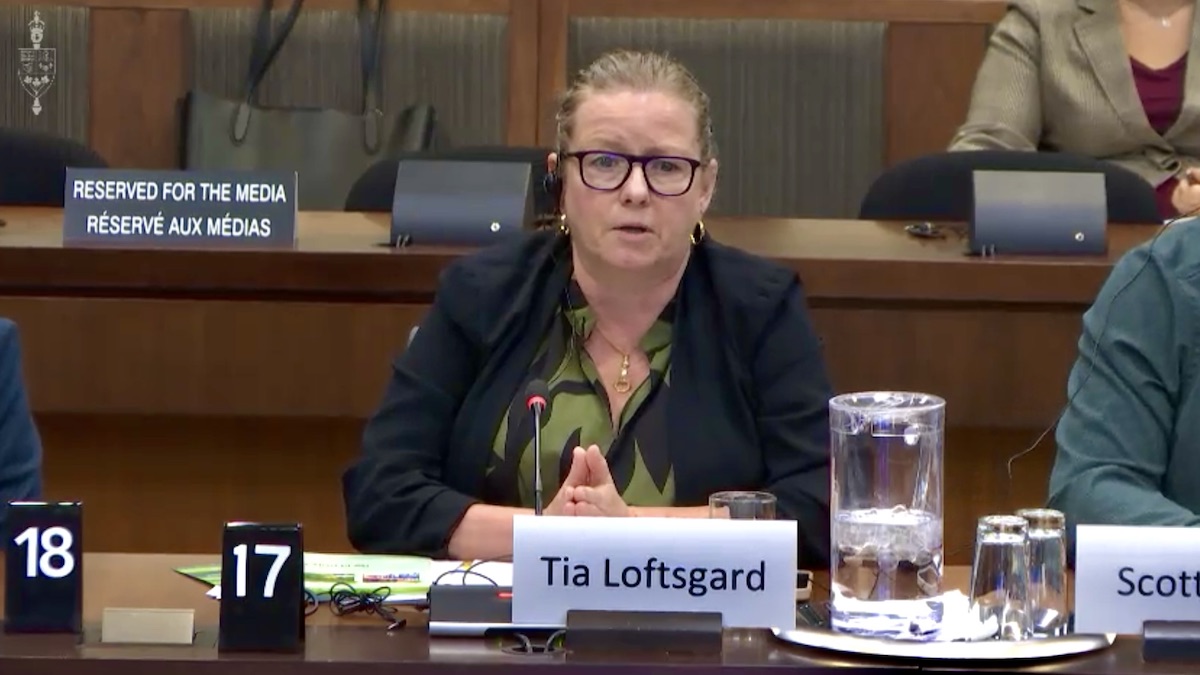
Tia Loftsgard, executive director of the Canada Organic Trade Association, told the committee the absence of centralized data is now limiting the industry’s ability to measure growth, identify supply gaps and coordinate domestic markets.
“Part of the problem is that we don’t have the data,” Loftsgard testified. “We don’t have one list of who is certified in Canada.”
Loftsgard said industry organizations are now attempting to manually assemble national operator lists themselves while lobbying Statistics Canada to assume responsibility for maintaining a comprehensive registry.
“We’re trying to get Statistics Canada to take over the list of operators that we’re pulling together so that we can have full information available in regard to what the opportunity is and have benchmarking to look at why there is a decline when the market is growing,” she said.
The testimony exposed what several witnesses described as a widening disconnect between growing consumer demand for Canadian organic products and the country’s ability to coordinate domestic supply chains.
“We have a demand in Canada,” Loftsgard said. “I have many members who say that they would like to buy Canadian, but they can’t find it.”
The comments suggest the lack of a centralized public database has evolved beyond an administrative issue into a broader market coordination problem affecting food sovereignty, regional processing networks and domestic procurement.
Witnesses repeatedly described Canada’s agricultural support systems as fragmented and increasingly unable to keep pace with evolving production realities, climate pressures and emerging markets.
“Our agricultural sector needs to be viewed as a living system,” said Guillaume Camirand of Coop Agrobio du Québec, which represents more than 150 organic grain producers in Quebec and eastern Ontario.
Camirand said one of the sector’s long-term priorities should be expanding domestic institutional procurement of Canadian food products, including supplying schools, hospitals and public institutions with locally produced food.
“Aiming to supply the entire institutional market with Canadian products by 2030 is an ambitious plan,” he told MPs. “I’d say that a target of 50 per cent could be set for 2030, and 100 per cent for 2035.”
His colleague, Marianne Bergeron, warned that government programs and support systems continue to lag behind innovation occurring within the organic sector itself.
“Programs therefore need to keep up with crop diversification and new practices in real time,” Bergeron testified. “When a new crop emerges, it shouldn’t take the government 10 years to offer a program that supports the crop.”
Bergeron also described major insurance and infrastructure gaps affecting organic producers, particularly in emerging regional markets.
“In Abitibi-Témiscamingue, a producer can sign a $3,000 contract for hemp production, but it’s only insured for $1,000,” she said. “It’s easy to see that there’s a significant gap.”
Witnesses argued that the absence of federal coordination is increasingly forcing private companies to absorb responsibilities traditionally associated with public agricultural infrastructure.
Scott Shiels, grain procurement manager at Grain Millers Canada, testified that his company had established internal agronomic and crop sciences support systems to help organic growers navigate production and market challenges.
“There has been some initiative taken by private companies and private industry like us,” Shiels said. “We wanted to provide support, especially to organic growers.”
However, he warned that relying on private firms to independently finance those systems is unsustainable over the long term.
“We’re looking for support for that, because that’s coming out of our pocket,” Shiels testified. “You can’t look to industry.”
The hearing also highlighted broader concerns about the modernization of Canada’s agricultural risk-management systems.
David Sullivan of Global Ag Risk Solutions told MPs that existing public support systems are increasingly failing to cover modern agricultural risks.
“The risks that the public programs do not cover are widening,” Sullivan said.
Witnesses pointed to climate volatility, trade disruptions, regional infrastructure shortages and delayed government response times as growing pressures on producers.
Several also argued that support programs frequently fail to reflect the realities of smaller regional operations, emerging crops and organic transition periods.
Bergeron said producers transitioning to organic agriculture face a particularly difficult three-year certification process during which they absorb higher production risks without receiving organic-market pricing.
“They face the risks, but they don’t get the price for an organic crop,” she said. “It’s not like flipping a switch.”
Lemire argued that risk-management programs must evolve to better support localized food systems, regional processing infrastructure and value-added production.
“One of the overlooked aspects in risk management is precisely what you’re doing — processing the resource locally and creating regional systems that enable production for local people,” he told witnesses.
The committee hearing painted a picture of a rapidly growing sector operating without the centralized market intelligence infrastructure routinely available in competing jurisdictions.
As domestic food-security debates intensify and governments increasingly promote Canadian procurement and supply-chain resilience, witnesses warned that Canada’s fragmented agricultural data systems may now be undermining both market coordination and long-term sector planning.