How Rain and Roots Transform a Shared Northern Landscape
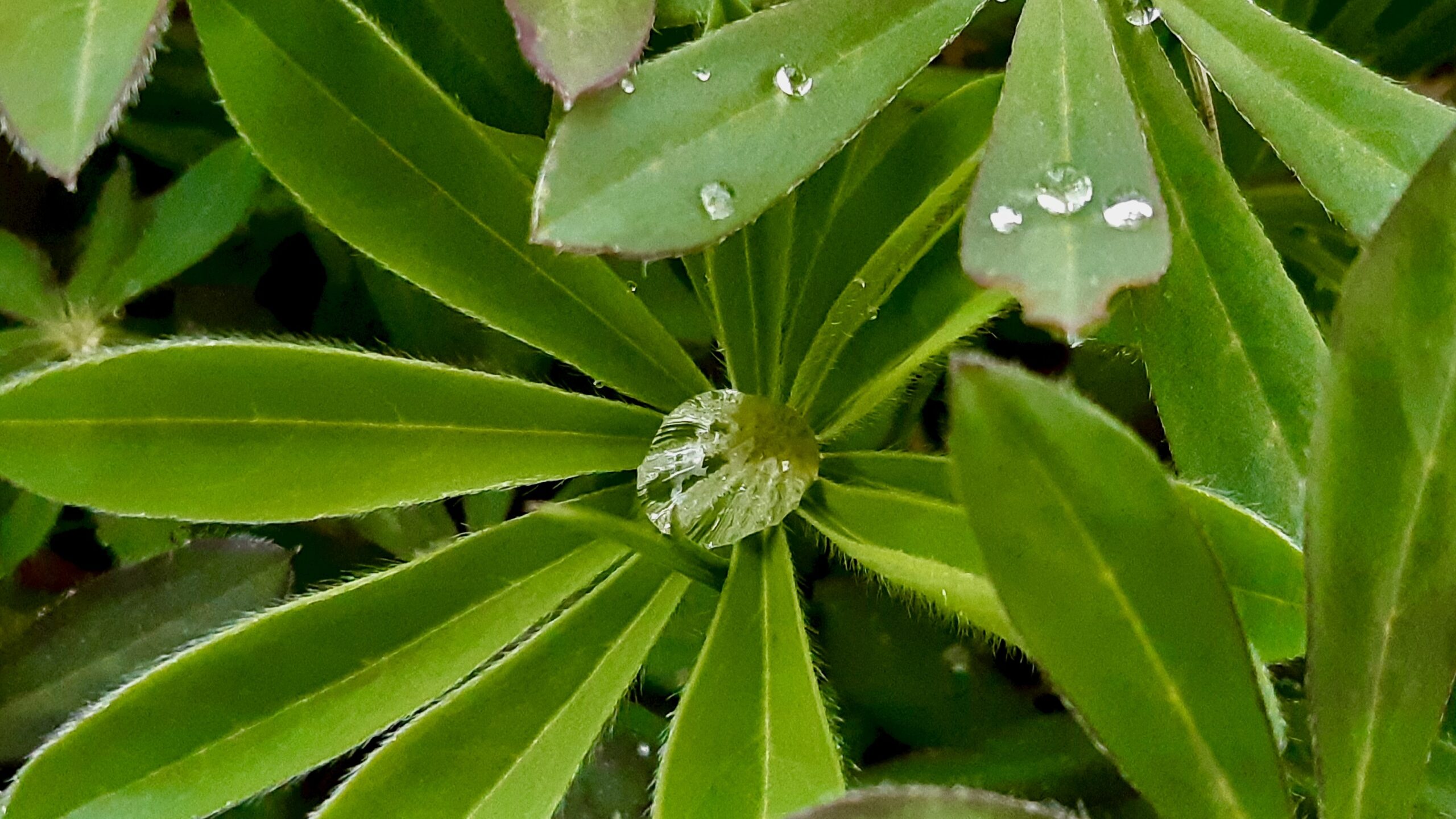
The palm of a lupine leaf holds water differently than almost any other plant in the north. After a dawn rain, the droplets don’t simply run off into the soil; they gather precisely in the center, forming a heavy, silver lens that mirrors the shifting sky.
It is a beautiful kind of engineering. Often found in the sandy, rugged soil running along Highway 17, these plants act as both a physical anchor and a visual canvas for our land lab. For three years now, they have been the quiet spine of our shared garden plots, arriving each June to rewrite the ditches and garden borders in shades of electric violet, soft pink, and deep blue.
Growing things in Northwestern Ontario requires a genuine tolerance for unpredictability. The changing climate continues to alter the rhythm of our seasons, compressing the valuable time between the final spring frost and the intense midsummer heatwaves.
Lupines don’t just survive this shifting timeline—they actively improve the earth beneath them. As natural nitrogen fixers, they pull sustenance out of the air and bury it deep into the dirt, preparing the ground for the food crops and native species we hope to establish next. They function as a living bridge between wild resilience and deliberate cultivation, showing our community exactly how a landscape heals itself when given the space.
This summer, the creative geography of our garden is expanding. We spent the autumn scattering seeds further across the plot, mapping out new paths where we hope to see fresh, unexpected gradients of colour emerge over the coming weeks. It is an exercise in patient anticipation. Local agriculture, much like painting or digital storytelling, is a long conversation with time and light. You lay down the groundwork, you provide a supportive space, and then you watch to see what the land decides to create with the elements it has been given.