Milkweed in Northwestern Ontario: A plant people used to pull out
For a long time, milkweed was treated like a weed. It was seen as something to cut down, spray, or clear out of the way.
We still hear it. “It takes over.” “It’s messy.” “It doesn’t belong in a garden.”
But that’s starting to change. Because once you actually stop and look at it … really look at it … it becomes clear that milkweed isn’t just another plant. It’s part of something much bigger.
The plant that makes monarchs possible
Milkweed is essential to the life cycle of the Monarch butterfly. There’s no workaround. Monarchs lay their eggs only on milkweed. When the caterpillars hatch, it’s the only thing they can eat. Without it, they don’t survive.
So when milkweed disappears from a landscape, monarchs disappear with it. That’s why planting milkweed isn’t just gardening—it’s habitat work.
It’s not just about butterflies
Milkweed doesn’t just support monarchs.
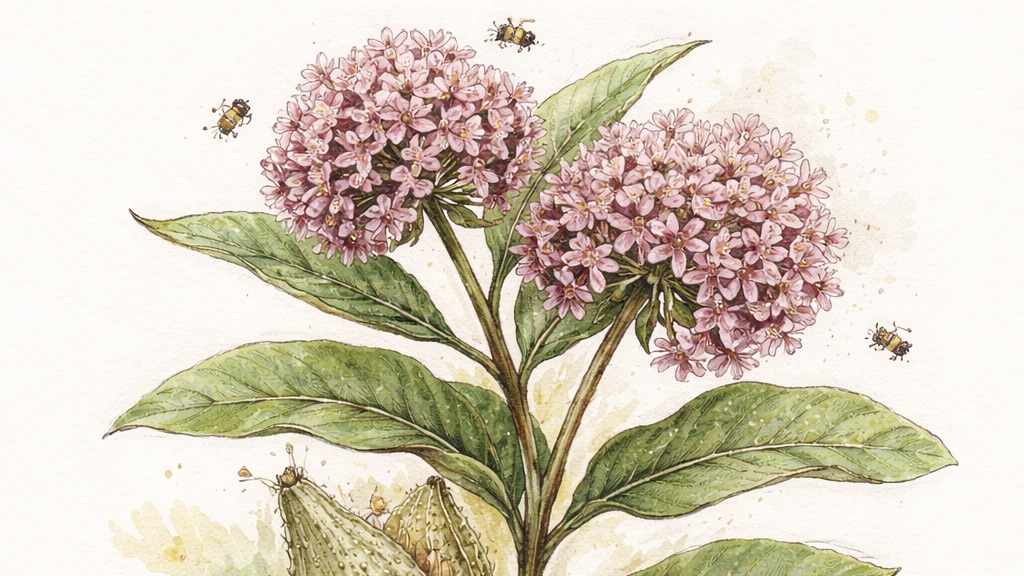
When it blooms, it’s full of life! Bees, beetles, wasps, and other pollinators all show up. It becomes a small ecosystem on its own, right in the middle of a field, a ditch, or a garden bed. It’s one of those plants that quietly does a lot of work without asking for much.
The beauty people overlook
Milkweed isn’t just important—it’s actually beautiful.
The flowers are complex and almost sculptural when you look closely. The colours range from soft pinks to purples, depending on the variety. Later in the season, the pods form—thick, textured, and unmistakable.
Then they split open. Inside is that familiar white silk, catching the wind and carrying seeds across the landscape. It’s one of the most recognizable signs of late summer turning into fall.
It’s not a perfect, manicured kind of beauty. It’s something a bit wilder, but that’s what makes it feel real.
A different way of thinking about land
Part of the reason milkweed gets pulled out is because of how we’ve been taught to see land.
Clean edges. Short grass. Control.
Milkweed doesn’t fit that. It grows where it wants to grow. It supports things we don’t always notice. It doesn’t stay in neat rows. But if the goal is a healthy landscape, not just a tidy one, then plants like milkweed start to make a lot more sense.
What we’re doing in Melgund Township
Through our Milkweed to Market project, we’re working with the community to bring milkweed back into everyday spaces—parks, garden edges, and shared public areas. We’re doing this through hands-on workshops at the Dyment Recreation Hall, the Art Borups Corners land lab, and other sites across Melgund Township.
One of the simplest ways we’re doing this is through seed bombs: small, handmade balls of soil, clay, and seeds that people can take and place in areas that could support new growth. The goal isn’t perfection. It’s participation.
We’ll also be making seeds available for residents who want to take part in their own way. Want to know more? Hit us up at info@artsincubator.ca!
Learning from the land as we go
This work is also helping us pay closer attention to what’s actually happening on the land around us.
Just a few kilometers away in Revell Township, a proposed Deep Geological Repository for nuclear waste fuel is being advanced by the Nuclear Waste Management Organization. It’s currently undergoing an integrated impact assessment led by the Impact Assessment Agency of Canada and Canadian Nuclear Safety Commission.
One of the gaps identified by our community in that process is the lack of real, site-specific data on pollinators and species like the Monarch butterfly. So by planting milkweed and watching what shows up, we’re starting to build a small, community-led understanding of local ecosystems. It’s not a formal study, but it’s real observation, and that matters.
From plant to paper
This project doesn’t end in the field. At the end of the growing season, we’ll harvest milkweed fibres and use them in a fall papermaking workshop. That paper will then be used by local artists and youth to create handmade products for community markets.
For us, it’s a full cycle that connects ecology, art, and small-scale entrepreneurship.
Why it matters
Milkweed is one of those plants that changes how you see things.
At first, it’s just a weed. Then you notice the flowers. The insects. The movement. The role it plays. And eventually, you realize it’s not something to remove, but something to protect.
Sometimes supporting something as large and complex as a migrating species like the Monarch butterfly starts with something as simple as letting a single plant grow.