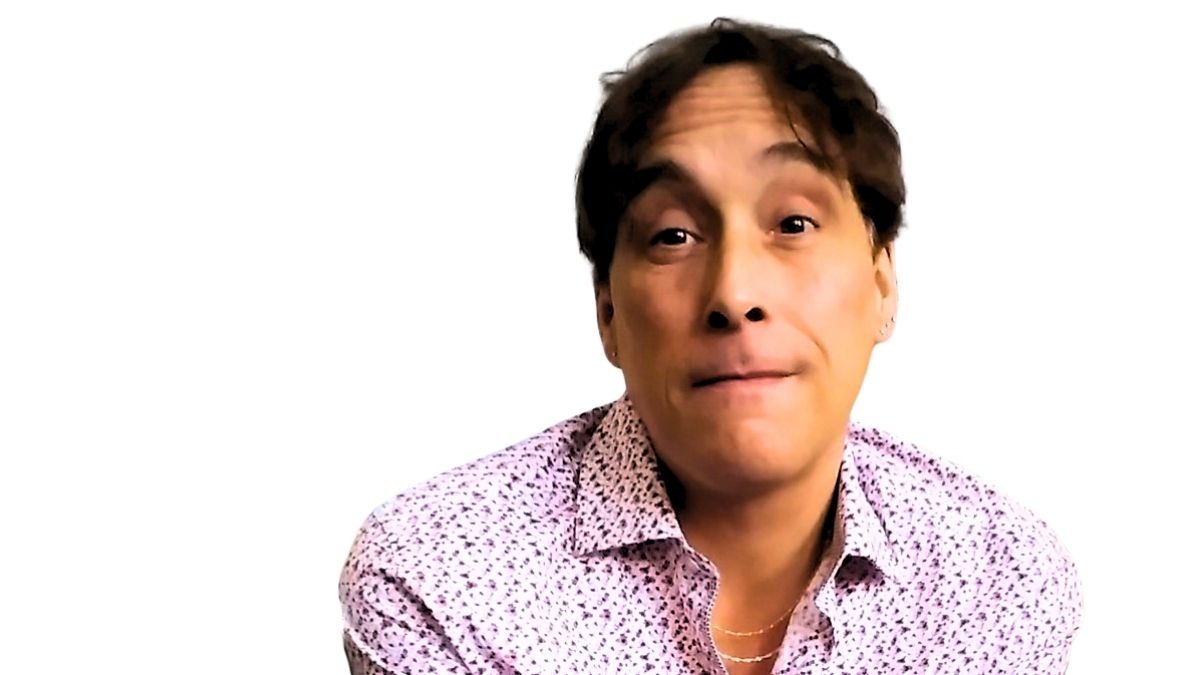
This week we interview Jamie Bell
Starting this week, we’re kicking off something new. Each month, we’ll be sitting down with one member of our team to talk about their experiences in the arts. Not in a super formal, polished way, but in a real and honest way. We want to hear how they got started, what they’ve learned, what’s been hard, and what keeps them creating. It’s a chance to slow down, share stories, and spotlight the people who make this work what it is.
Our first interview is with Jamie Bell. He’s one of the founding members of our program and has been working in the arts for a long time. We will ask 10 questions!
How did you get into arts administration?
There was no one else, and someone had to do it. Haha. Not everyone likes doing paperwork. But I’ve always been a paper pusher at heart. Sometimes I look back and think I spent too much time on paperwork, but that’s the nature of the beast. You’re always having to chase grants, there’s funding reports, but that’s not all of it. There’s communicating the impacts and outcomes too. That can be fun. But yeah, really I’ve always just enjoyed doing that side of the work. Some people want to be up front, on the stage and others like to work more behind the scenes. I don’t really have the most exciting answer for that. That’s just one part that I really don’t mind doing.
Why did you leave government to get more involved in the arts?
Oh, straight into the tough questions! I like that. It’s actually not that exciting. I’ve been lucky and fortunate to have had so many rewarding experiences, to see and do things in places a lot of people never get the chance to see. But one thing I always told myself was that I would never let myself old and basically die behind a desk. And I basically did 25 years. That was enough for me. So, I was sitting in a board meeting one day, and I decided I just didn’t want to do corporate or government things anymore. I wanted to make sure I could have the adventures and to pursue the things I really wanted to do, which was to get back to more arts-focused work full time. I wanted to get out of the office and into community.
What’s something that didn’t go as planned — and what did you learn from it?
Hah. Just about everything? So much of what we’ve done over the years, since day one was built from the ground up. Like when we started the TV station. All of that started really with nothing more than a plastic table and some imagination. A lot of the things we’ve done were emergent. Sometimes things weren’t really planned because we wanted to see where we wound up.
But for something that didn’t go as planned, I would say it’s this project. The Arts Incubator. When we started in 2021/2022, the plan was that we’d have the Winnipeg hub as the city side, and the Northwestern Ontario hub as the “land” side. Two sides of the same coin. But when we flooded in 2022, that really compromised just about everything. Three years of setbacks, disruption. Hundreds of thousands of dollars. And all that happened just as we were starting to get our footing. So yeah, what did we learn from that? There’s an old saying “don’t put all your eggs in one basket.”
Because we designed the program to be partly in the city and partly out in the bush, we were able to instantly switch over and rely on the Winnipeg hub. We also had great partners, like the Minneapolis College of Art and Design and the University of Minnesota Duluth. We were able to function as an ecosystem, rather than being in one silo. So yeah, the biggest lesson learned there was to always have a “Plan B.” If we’d had our program only in one place, I really don’t think we’d be doing this interview today. We’d have thrown in the towel and packed it in. Now, everything is mostly back to normal. Both hubs are active, and we have things largely back on track. So what I learned there, was to always have a backup. A contingency. That way if something goes wrong, you can pivot. Instantly.
What’s been one of your proudest moments in your arts journey so far?
I think it’s watching you young people stepping up. I’ve watched you grow up since you were little kids, messing around with painting and tagging along when we had researchers and projects. And now, over a decade later we get to see you starting to lead. And to be able to have the freedom to choose directions a lot of us didn’t have when we were the age you are now. We’re starting our second decade of adventures now. Sure, we started all of this for fun, for something to do, that we wanted to do. But it was also for you.
And look at what’s been accomplished! Two years ago, we would get excited and happy when our little platform saw a thousand visits a day. Look at it now. This month alone we’ll see more than 220,000 visits and we’re not even at the end of the month. Some days the servers can barely handle the load. That’s why our site sometimes crashes. And I’ve always said that everything we do isn’t about the “numbers.” We stay humble, we don’t focus on those kinds of metrics because it’s all about the adventure. But the hardcore reality is that three years in, our little platform is literally getting millions of visits a year now, from all over the world. So I think that’s what I’m most proud of. It’s something we all built together, bit by bit entirely as a labour of love but now it’s something you, the next generation can build on.
Has your relationship with art changed as you’ve gotten older?
Absolutely. I’m older now. I can look back on so many projects over the years. I think getting older means being able to look back on a lot of those experiences, the people and groups we’ve learned from. A lot of the Elders we worked with 15 years ago are almost all gone now. They were so happy and excited and supportive. One of the reasons we started this program was because we wanted to be small, focused. For me, it’s not about being in a rush. But yes, I think I have a much deeper relationship with the work we do now, and that comes with growing and experience. I also feel a stronger sense of community now. The work isn’t just creative output, it carries memory, relationships, and promises we made to people who believed in us early on. As I get older, I’m less interested in scale and more interested in depth. I want to make sure what we build lasts and that it feels honest to the communities all those experiences come from.
What does being part of this team mean to you?
Everything! Excitement. I like how we’ve split things into two seasons, winter and fall and spring and summer. We get choose the things we want to learn and focus on. We’re always doing something different and I like how we have a different focus every few months. But I think the best part is being able to work with a core group, while collaborating with so many amazing people all over. We started as a simple pilot program. No agenas. It is what it is. And how everyone supports each other. That’s what it really means for me. We have musicians, and drum dancers, photographers, filmmakers and storytellers. We have variety, where everyone is able to learn with and from each other. And that we have a fun team. Everyone’s not afraid to try different things.
How has creating in community shaped your work?
I think it’s how community-based work opened my eyes to doing things differently. Especially when we’re not in the city. There’s a different vibe when you’re in a small community. You don’t have a lot of the resources a city has – galleries, universities, large populations where there are a lot of other artists to connect with and work with. Creating in community brings a lot of advantages. You’re not tied up in the rat race. You often have to build things, and structure things. You have to make do. And I think that’s what makes northern communities so special. You learn to innovate, and to be resourceful and think outside the box.
What’s something you still want to try or learn creatively?
Can I say everything? Wow. That seems like such an easy question to answer until you actually have to answer it! When I was first starting out, in my early career, I did a lot of work with simulation systems. If I had the time, I’d take a crack at using VR/AR, projection mapping and lights. I’ve always wanted to something with lights. And outdoors. We’ve explored the potential of VR, AI, digital twins and virtual spaces on projects over the years. But I’d like to take some of that outside. Yeah. Totally outside. No walls.
The Northwestern Ontario hub has this huge park, a greenspace. It’s almost two acres of mostly flat, open space. I’d love to be able to do something virtual in a space like that. Slap on a VR headset or overlay an AR environment and create some kind of funky virtual world. That’d be fun. And with music. And lights. Did I say I’ve always wanted to do something funky with lights? I don’t mean stage lights or spotlights because we’ve done so much of that on stage and with TV. I’m talking freaky, like LED strips, lasers or pixel beams and fibre optic strands. Lots and lots of lights. That would be something I really want to try doing more with.
What advice would you give to someone just starting out?
Experiment. Explore. Try a bit of everything. Your generation is so different. The nature of work is changing and there’s no such thing as one career anymore. You’ve got to have a broad set of skills, to be flexible, resilient and adaptable. You’ve got to be able to do paperwork. You’ve got to be able to do a little bit of everything. That’s what they call a “jack of all trades.” I think of the big ones is going to be AI. I don’t mean generating text or pictures, but learning to develop and direct those kinds of tools. We’re already seeing a lot of disruption in the sector, and I think a lot of young people are going to see some of those early career pathways disappearing. So yeah, AI. Learn to build, direct and mange those kinds of tools. I think that’s going to be incredibly important in the next few years.
But most of all, don’t wait. Like I said earlier I spent a lot of years behind a desk. I wish sometimes I’d left government sooner, but then again it wouldn’t have prepared me for what I do today. But don’t wait. If there’s something you’re dreaming of, and really want to do in life, not just about art, then do it. Go for it. Take risks. Don’t be afraid to explore those directions because some day you’ll look back and think damn I should have done that.
If you could describe your creative journey in three words, what would they be?
Messy. Fun. Accidental.
Monthly Interview Series
Check back again in the last week of March for our next interview!
About the Author