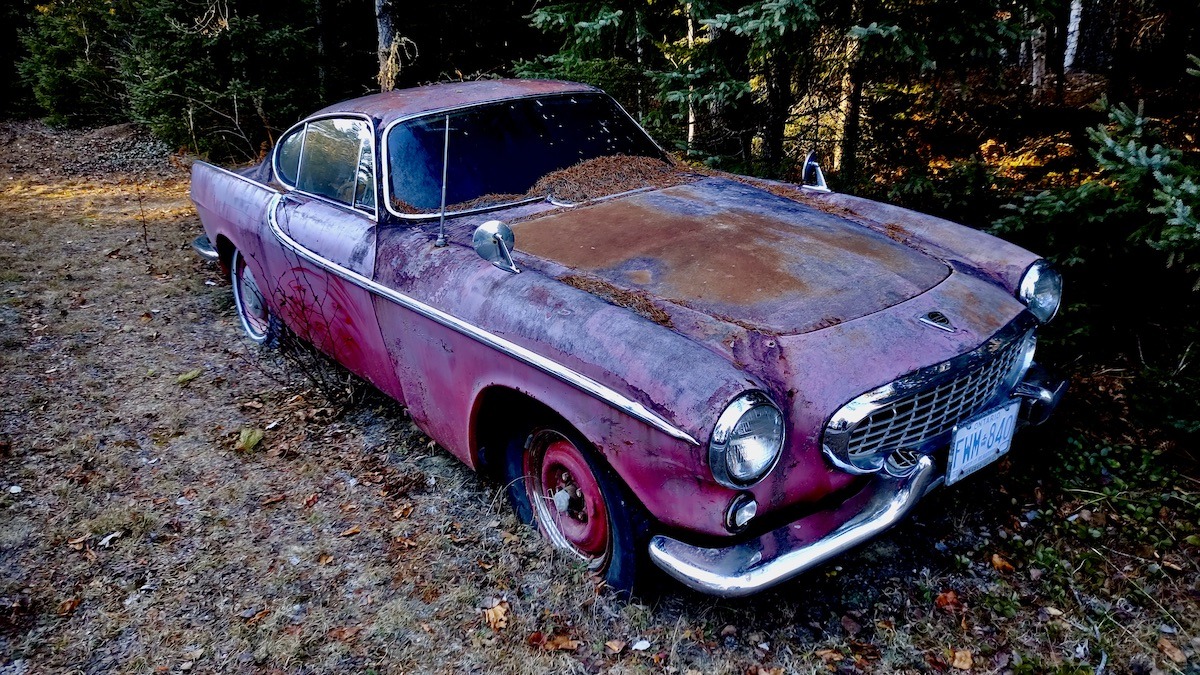
Scandinavian Cool Finds a Rest Spot in the North Woods
Imagine this car, a Volvo P1800, ripping down the highway. This isn’t just an old Volvo; this is one of the most stylish cars to ever come out of Sweden. First hitting the road in the early 1960s, it looked more like an Italian sports car than a sturdy machine from the company that builds tanks and sensible sedans. The P1800 was made famous when Roger Moore drove it as Simon Templar in the TV show The Saint. This specific car, with its original red paint faded to a deep purple-maroon, shows off those iconic, long fenders and the sharp tail fins. Even with the deep rust on the hood, you can still see the graceful lines that made it a true rival to British sports cars of the era.
Despite the glamorous looks, the P1800 was pure Volvo underneath. It was powered by a reliable B18 or B20 four-cylinder engine known for its incredible durability—one P1800 holds the Guinness World Record for the highest mileage on a non-commercial vehicle. This car was meant to be driven hard and often. Seeing it now, with its wheels sunk slightly into the dirt, surrounded by pine trees, makes you wonder about its life. Who owned it? Where did they drive it? The tarnished chrome bumpers and side mirrors—which would have gleamed under streetlights—tell a story of a long life lived and, eventually, abandoned here.
For enthusiasts, finding one of these cars, even in this condition, is a moment. The P1800’s reputation means these are worth saving. This car is a perfect contrast: a European sports coupe designed for high-speed roads and coastal drives, now spending its final days being slowly consumed by the quiet, rugged wilderness.
It’s a quiet end for a car that once promised speed and excitement.
The upcoming exhibition, “Titans of the Forest,” is the culmination of a powerful six-month interdisciplinary arts and capacity-building project spearheaded by the Art Borups Corners collective. This initiative, made possible by seed funding from the Ontario Arts Council Multi and Inter-Arts Projects program, represents a significant collaboration for our artists and programs. Working closely with key partners—the Dyment Museum, The Arts Incubator Winnipeg, and the Local Services Board of Melgund—the exhibition is set to debut a compelling series of photo and multimedia works. These pieces offer an artistic and historical look at the region, celebrating the history, and the powerful role of these industrial giants in shaping the local landscape and memory.