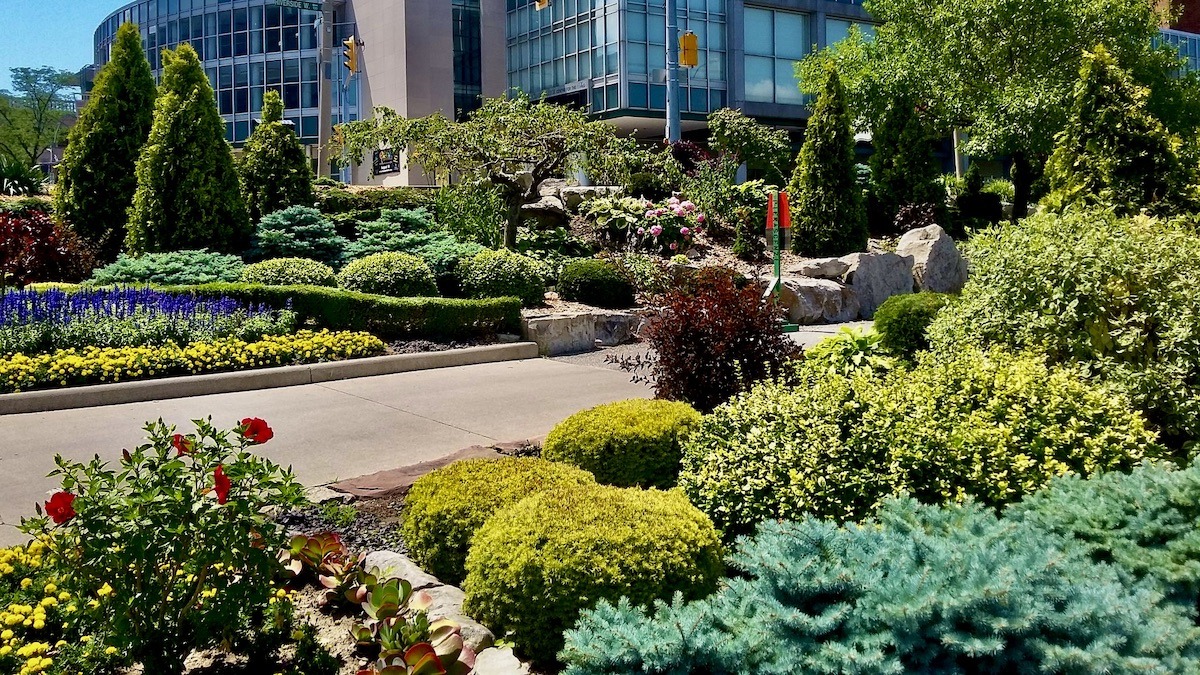
A visit to Windsor’s waterfront offers inspiration for how parks, trails, public art and placemaking can strengthen community wellbeing and create vibrant public spaces.
Some of the best ideas for community development don’t come from boardrooms or planning documents. They come from walking around and paying attention. While we focus much of our time during the fall and winter in Winnipeg, summer is a different story. Our team often travels to various places across Canada and beyond during the summer months, where we take in the sights and sounds of the places and spaces we visit.
That’s been a recurring theme as our team spent time exploring Windsor’s waterfront along the Detroit River. Stretching for kilometres, the waterfront offers a remarkable example of what happens when cities invest in public space. Wide walking paths, green spaces, public art, seating areas, gardens and gathering places create an environment that feels welcoming and alive. Even on an ordinary afternoon, people are walking, cycling, relaxing, meeting friends or simply enjoying the view.
It’s easy to see why these spaces matter.
Many people think of parks as places for playgrounds, sports fields or summer events. Those things are certainly important, but increasingly communities across Canada are thinking about parks and public spaces in a broader way. The conversation is shifting toward something called placemaking.
The Framework for Recreation and Parks in Canada describes placemaking as the process of shaping public spaces to strengthen the connection between people and their communities. It focuses on creating environments that encourage physical activity, social interaction and a stronger sense of belonging. The idea is surprisingly simple: when people have inviting places to spend time, they are more likely to use them.
What makes placemaking particularly interesting is that it isn’t limited to planners, architects or government agencies. Anyone can become a placemaker. Community groups, artists, neighbourhood organizations and residents all have a role to play in shaping the spaces around them.
Sometimes placemaking involves major infrastructure projects. Other times it can be as simple as adding public art, improving a trail, planting a garden, installing seating or creating opportunities for community gatherings. The goal is not necessarily to build something expensive. The goal is to create places where people actually want to be.
That connection between people and place is becoming increasingly important as communities grow and change. Across Canada, new housing developments continue to emerge while many parks and recreation facilities age. The challenge is ensuring that public spaces keep pace with development.
Urban planners often talk about the concept of the “15-minute city,” where essential services, recreation opportunities and public amenities are accessible within a short walk or bicycle ride from home. Whether in large cities or smaller communities, the idea reflects a growing recognition that quality of life is influenced by what people can access without getting into a vehicle.
The pandemic reinforced this reality. Parks, trails and outdoor gathering spaces became some of the most valued pieces of public infrastructure available. They provided places to exercise, connect with others and spend time outdoors when many indoor activities were restricted.
Research continues to show that green spaces contribute to physical health, mental wellbeing and environmental resilience. Trees help cool urban areas during hot weather. Parks improve air quality. Trails encourage active transportation. Public spaces also create opportunities for the social connections that help communities thrive.
Perhaps the most important lesson from places like Windsor’s waterfront is that successful public spaces don’t happen by accident. They are intentionally designed to encourage people to linger, explore and interact with their surroundings.
As our own placemaking projects continue this summer, including work involving park design, public art and community engagement, we’re finding inspiration in the communities that have embraced these ideas successfully. Every bench, pathway, mural and gathering space tells a story about how a community values public life.
Sometimes the most meaningful community development project isn’t a building at all.
Sometimes it’s simply creating a place where people want to walk.