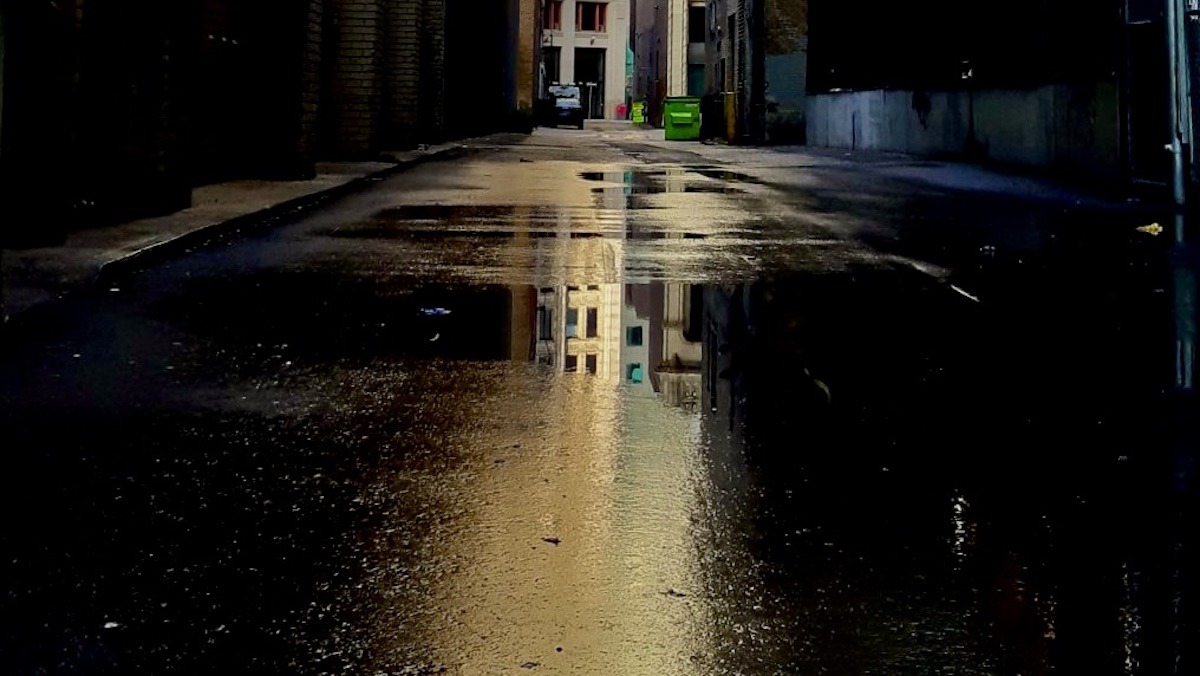
Stumbling through the rain-slicked corridors of downtown Winnipeg, where the shadows of 1926 look remarkably like our own.
A good puddle is just a pothole until the sun goes down; then, it becomes a time machine.
Stepping into one of downtown Winnipeg’s narrow brick alleys after midnight is a lesson in acoustic time travel. The city’s modern roar completely vanishes, replaced by a deep, haunting silence that lets your imagination run entirely off the leash.
A century ago, these exact stone pathways hummed with the chaotic energy of bootleggers, horse-drawn carts, and the raw, unpolished hustle of an exploding prairie metropolis. Today, the horses are long gone, but the towering brick walls still hold the heavy, invisible residue of every secret ever whispered in the dark.
There is a strange, magnetic art to these overlooked spaces.
Walking through them under the cover of night isn’t about avoidance; it’s an act of deep connection with the generations of people who built this place block by block.
When you look down into the wet, reflective asphalt, the glowing windows of the modern skyline blur beautifully with the weathered masonry of the past. It forces you to pause, breathe the crisp air, and realize that while the eras change, the human desire to carve out private, rebellious corners in a public world remains completely untouched.