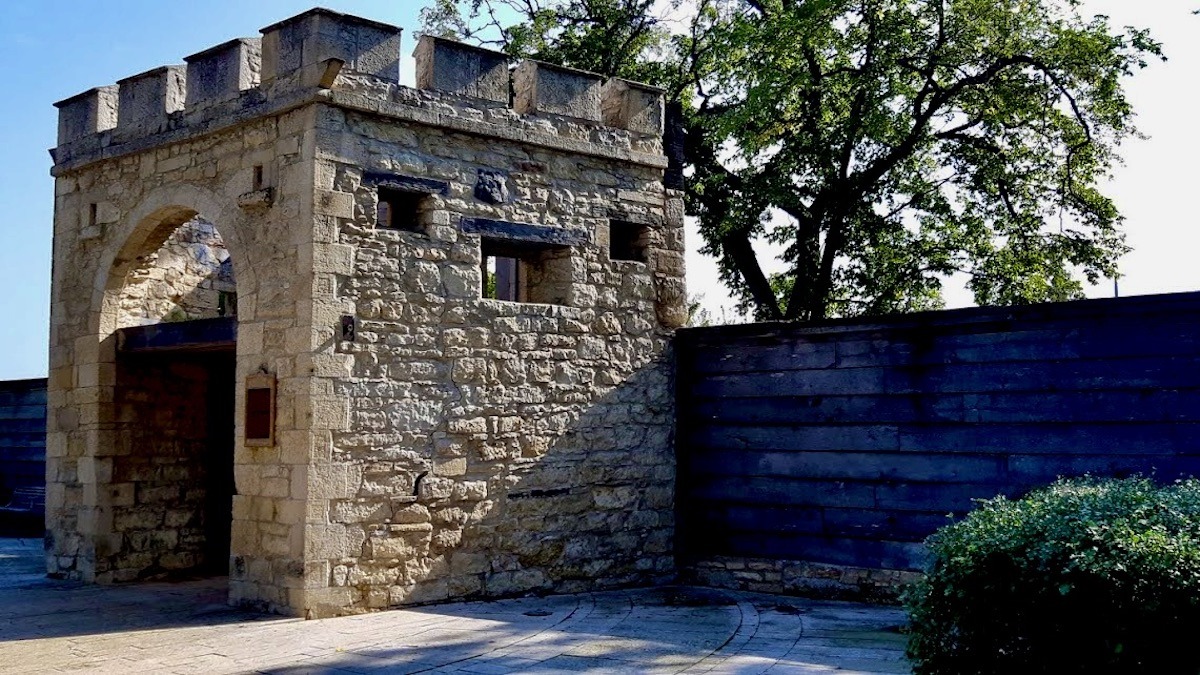
Redefining innovation as the creative reuse of resources in a world that demands more.
Innovation is often sold to us as a high-tech frontier.
We are told it involves virtual reality, expensive software, or massive digital overhauls that require a venture capital budget to even consider.
But for a grassroots arts leader, true innovation isn’t about what you buy; it is about how you see. It is the art of looking at a closed door and seeing a projection screen, or looking at a grocery list and seeing a script. Innovation is simply the distance between a problem and a solution, bridged by imagination.
This matters because, in the resource-thin world of DIY arts, we cannot outspend the status quo. If we try to compete on their terms—using the same venues, the same marketing budgets, and the same rigid structures—we will always feel like we are falling behind. Innovation is our equalizer. It allows us to move sideways when the path forward is blocked. It keeps our work relevant and agile. When you are small, you can pivot in a heartbeat. You can experiment with a new format on a Tuesday and iterate by Friday. That speed and flexibility is a form of innovation that large institutions, with their boards and five-year plans, simply cannot match.
How do we actually practice this? We start by practicing radical resourcefulness. This means taking an inventory of everything around you that isn’t being used to its full potential. One of the most powerful and innovative approaches for a small organization is the Ghost Space model. Think about your neighborhood. There are storefronts that sit empty from 6 PM to 8 AM. There are parking lots that are vacant on Sundays. There are community centers with unused closets or lobbies. Innovation is negotiating a micro-lease or a barter agreement to turn these underutilized hours into a gallery, a rehearsal space, or a classroom. You aren’t building a new building; you are hacking the existing clock of your city to find space where none seemed to exist.
Let’s look at the Asset Swap as a specific example. Imagine an arts collective that needs high-quality lighting, and a local hardware store that needs a vibrant mural for their storefront. Instead of both parties spending money they don’t have, they swap assets. The artists get a credit for gear and materials, and the store gets a cultural facelift that drives foot traffic. This isn’t just a transaction; it’s a design for a new kind of local economy. It is innovative because it removes the middleman of currency and replaces it with direct community value. It turns a lack of funding into a surplus of connection.
Innovation is a muscle, and like any muscle, it gets stronger the more you use it. Don’t wait for a grant to tell you that you are allowed to be creative with your logistics. Your constraints are not a cage; they are the edges of the canvas. Every time you find a way to make something happen without the proper resources, you are innovating. You are proving that the most valuable thing in any room isn’t the equipment—it is the people who know how to use it in ways no one else thought of.
Stay curious, stay scrappy, and keep looking for the magic in the mundane. You have the vision to see the potential in what others have overlooked. That is where your power lives.
Northern Arts and Regional Innovation
This is a collaborative initiative by The Arts Incubator Winnipeg and the Art Borups Corners art collective, supporting artists and creative projects in Melgund Township, Northwestern Ontario. Our groups champion rural arts development, community programming, Indigenous arts partnerships, and cultural innovation—strengthening the local and regional arts sector through mentorship, exhibitions, digital media, and sustainable creative entrepreneurship. Our events and activities include artists from Melgund Township, Winnipeg, Ignace, Sioux Lookout, Dryden, and beyond. You read more innovation-focused posts here.
About the Author