Slaking Clay from Melgund Township
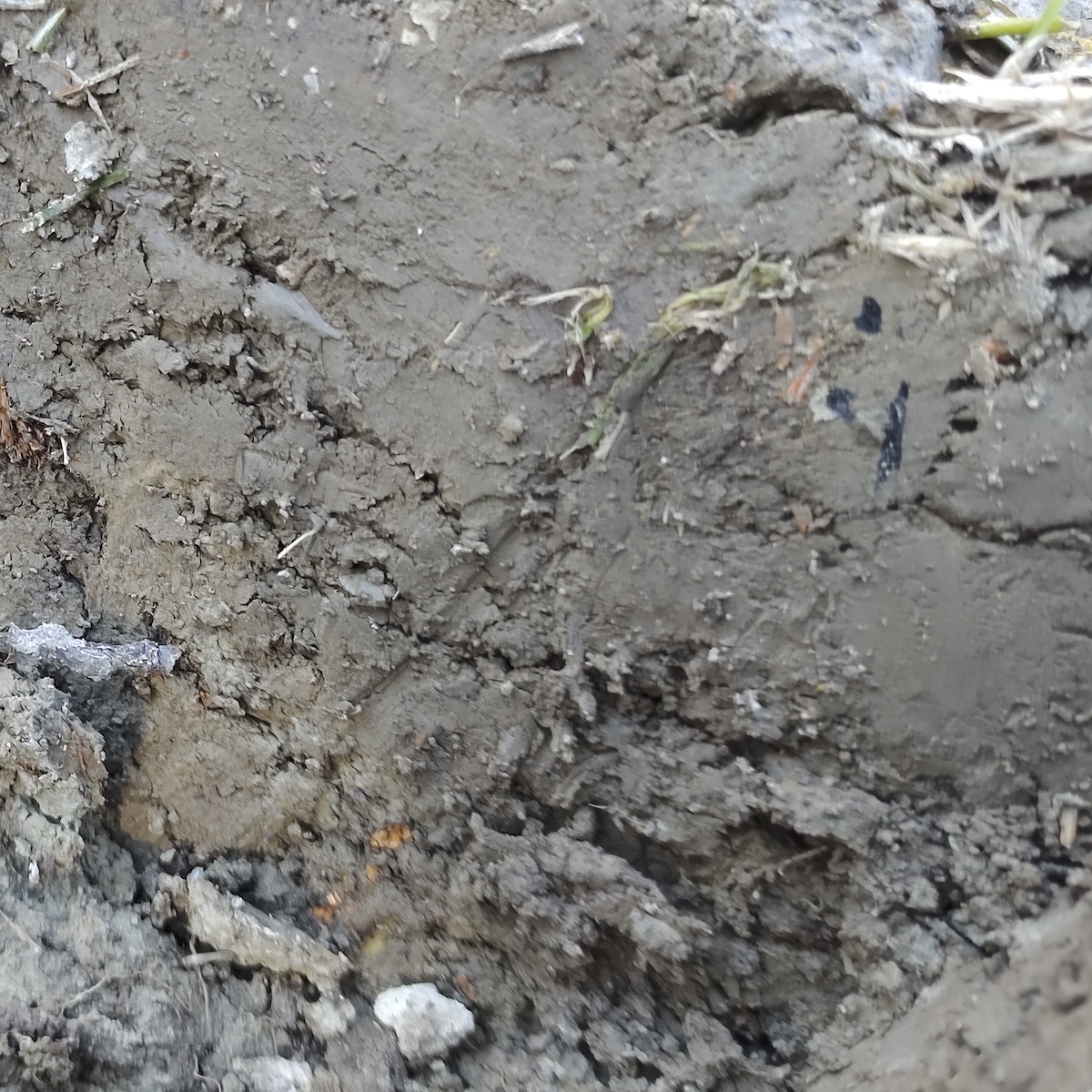
The dense, sticky chunks of earth dug straight out of the ground in Melgund don’t look like much at first—just stubborn clods mixed with grass, roots, and pebbles. But inside those heavy lumps is a usable, centuries-old medium. Today, we took the first major step toward unlocking that material by starting the process of slaking our wild harvested clay.
Our hands are muddy, our 5-gallon bucket is full, and we are officially moving from local geography to ceramics.
What is “Slaking” Anyway?
In ceramics, slaking is the process of completely saturating dry or damp raw clay in water so that it breaks down at a microscopic level.
When clay is dug straight from the earth, it is tightly bound together in highly compressed chunks. If you try to filter it or work it while it’s in this blocky state, you’ll just end up fighting with rocks, roots, and hard lumps. By introducing water, the water molecules wedge themselves between the tiny clay platelets, forcing them to separate and suspend freely in the liquid. Slaking essentially dissolves the dirt clods into a smooth, uniform mud soup called a slurry.
Our Processing Steps: From Bucket to Mud
To turn our Melgund sample into a clean, workable material, we are using a traditional, multi-step wet processing method:
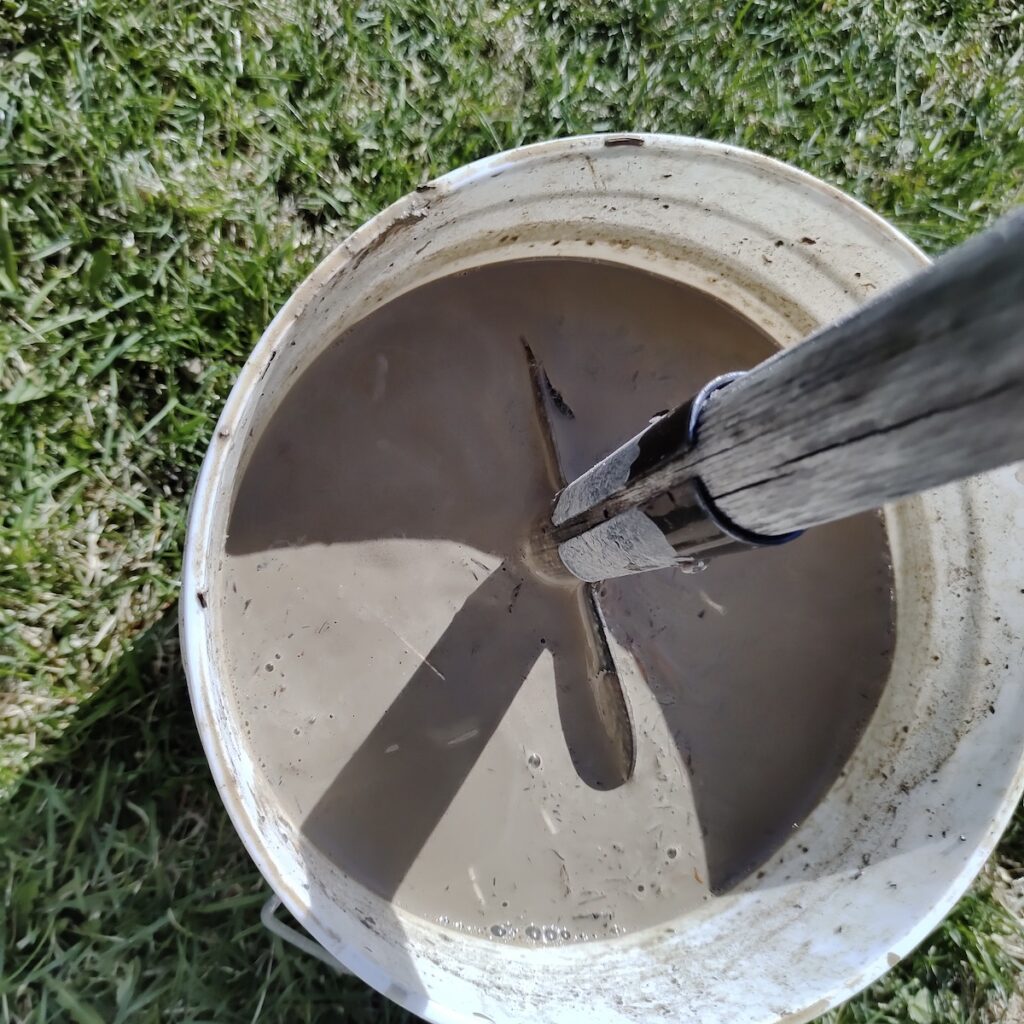
Step 1: Submerging & Breaking Down (Where we are now!)
We placed our dense clay chunks into a bucket and submerged them in water. Using a sturdy mixing tool, we’ve been breaking up the larger pieces, letting the water do the heavy lifting of dissolving the tight bonds of the earth.
Step 2: The Coarse Strain (Catching the Big Stuff)
Once our slurry is entirely smooth and has the consistency of heavy cream, we will pour it through a coarse screen (like a kitchen colander or window screen mesh). This will instantly trap all the larger roots, grass, and pebbles we saw in our raw soil photos.
Step 3: The Fine Strain (Removing the Grit)
Next, we’ll pass the liquid through a fine-mesh sieve or a piece of tight fabric (like an old t-shirt). This crucial step separates the microscopic clay particles from the heavier, gritty sand and silt.
Step 4: Settling & De-watering
Finally, we will let the bucket sit for a couple of days. The heavy clay will settle to the bottom, leaving clear water on top. After siphoning the water away, we’ll pour the thick mud onto a canvas sheet or a plaster bat to let it dry until it reaches a perfect, dough-like consistency.
Connecting to the Landscape: Melgund and the Revell Border
Processing this clay isn’t just a craft project—it is a hands-on exploration of the unique terrain right beneath our feet in Melgund Township. Our clay sample was dug directly from the Melgund landscape, just a couple of kilometers away from the neighboring Revell region. This specific geography connects us to an incredible, deep-time geological history.
While Melgund is highly mineralized—famous for its volcanic greenstone belts, fault zones, and gold properties like the historic Glatz and Pathfinder occurrences—its neighbors in the Revell area are dominated by the massive, 2.7-billion-year-old Revell Batholith granite formation.
Over tens of thousands of years, massive glaciers advanced and retreated across this exact border. These glaciers acted like giant sandpaper, grinding down the tough granite of the Revell batholith and the volcanic rock of Melgund into an ultra-fine powder.
When the ice melted, it formed the historic Glacial Lake Agassiz. The finest, lightest particles of that crushed rock dust floated out into the deep, quiet waters of this ancient lake and slowly settled over the landscape. Today, those ancient lake-bed deposits are the dense pockets of lacustrine silt and clay we dug up in Melgund.
The stickiness we feel in our bucket is the direct result of thousands of years of geological pressure and glacial grinding right on the Melgund-Revell border. Turning this local earth into pottery connects us directly to the profound depth of our own local landscape.