Residents of Dyment and Borups Corners are using participatory arts and community dialogue to engage deeply with the proposed Deep Geological Repository and its long-term impacts on land, memory, and future generations.
In Melgund Township, conversations about nuclear waste aren’t happening in boardrooms alone—they’re unfolding in community halls, art studios, and shared spaces across Dyment and Borups Corners.
Over the past year, residents in these neighbouring communities—situated closest to the proposed Deep Geological Repository (DGR) for Canada’s Used Nuclear Fuel Project—have been taking part in a series of arts-based workshops and participatory dialogues that bring a different kind of voice to a complex issue. Instead of technical reports and formal hearings, these gatherings invite people to respond through storytelling, drawing, mapping, and open discussion.
The proposed project, led by the Nuclear Waste Management Organization (NWMO), would involve the long-term containment of approximately 5.9 million bundles of used nuclear fuel in a deep underground repository. Designed to span roughly 160 years—from construction through to closure and monitoring—it represents one of the most significant infrastructure and environmental decisions facing the region. The assessment process is being carried out in collaboration with the Canadian Nuclear Safety Commission.
For many residents, the scale and timeline of the project can feel abstract. That’s where the arts-based approach has proven powerful. In Dyment, participants have created visual timelines imagining what the land might look like generations from now. In Borups Corners, small group dialogues have focused on memory, responsibility, and what it means to care for a place over centuries. Some sessions have invited Elders and youth to sit together, sharing perspectives that stretch across time in ways formal consultation processes often struggle to capture.
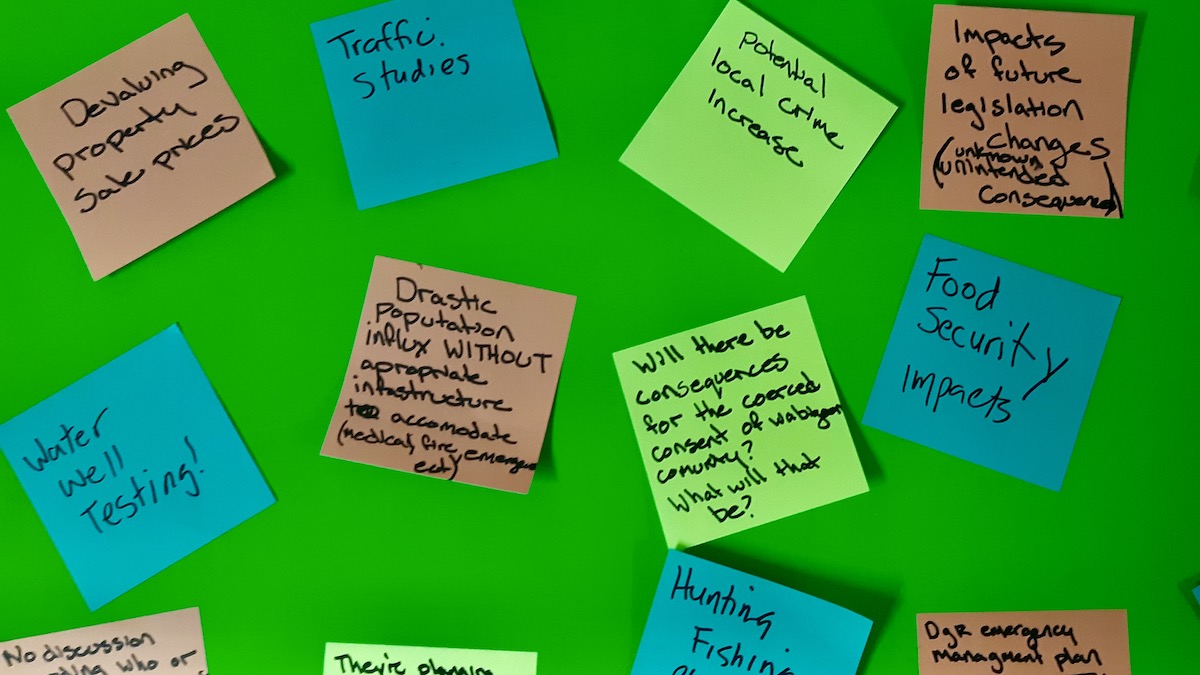
There’s no single viewpoint emerging from these sessions—and that’s part of the point. Some residents express cautious support, others raise deep concerns, and many are still undecided. What these workshops have created is space: space to think, to question, and to speak in ways that feel grounded in lived experience rather than technical language.
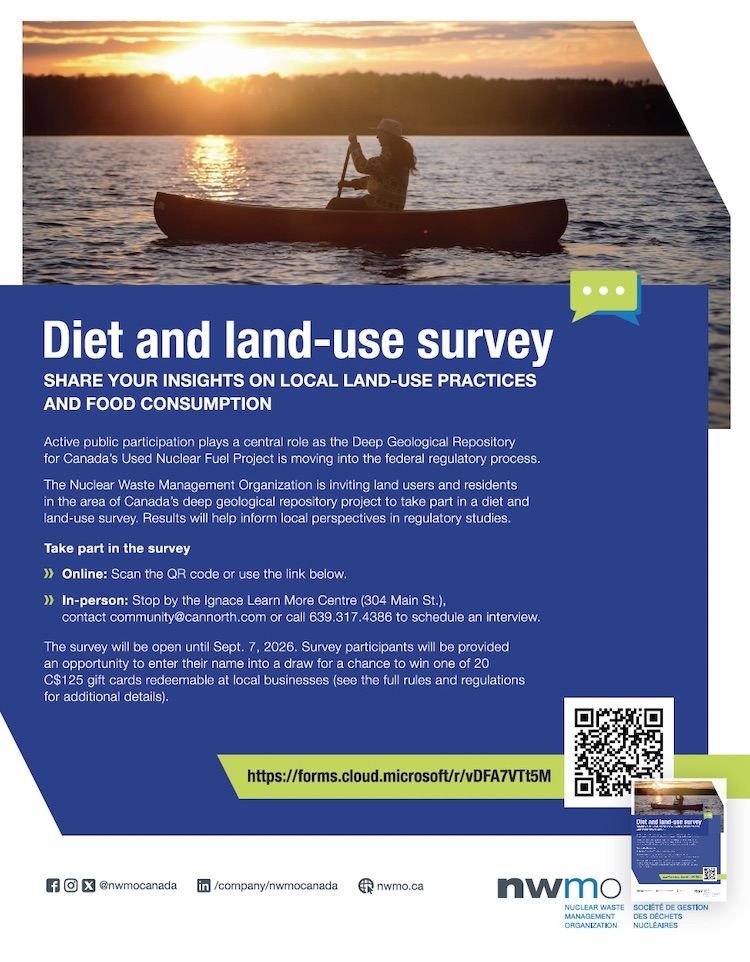
Importantly, these community-led efforts are happening alongside the formal federal review process. Consultations for the Draft Tailored Impact Statement Guidelines and Public Participation Plan are currently open, with a deadline of May 10. Residents—and anyone interested—are encouraged to submit comments through the Canadian Impact Assessment Registry.
In a process that will ultimately shape the region for generations, the people of Melgund Township are making sure their voices are not only heard, but felt. Through art, dialogue, and shared reflection, they are helping to define what meaningful participation really looks like.