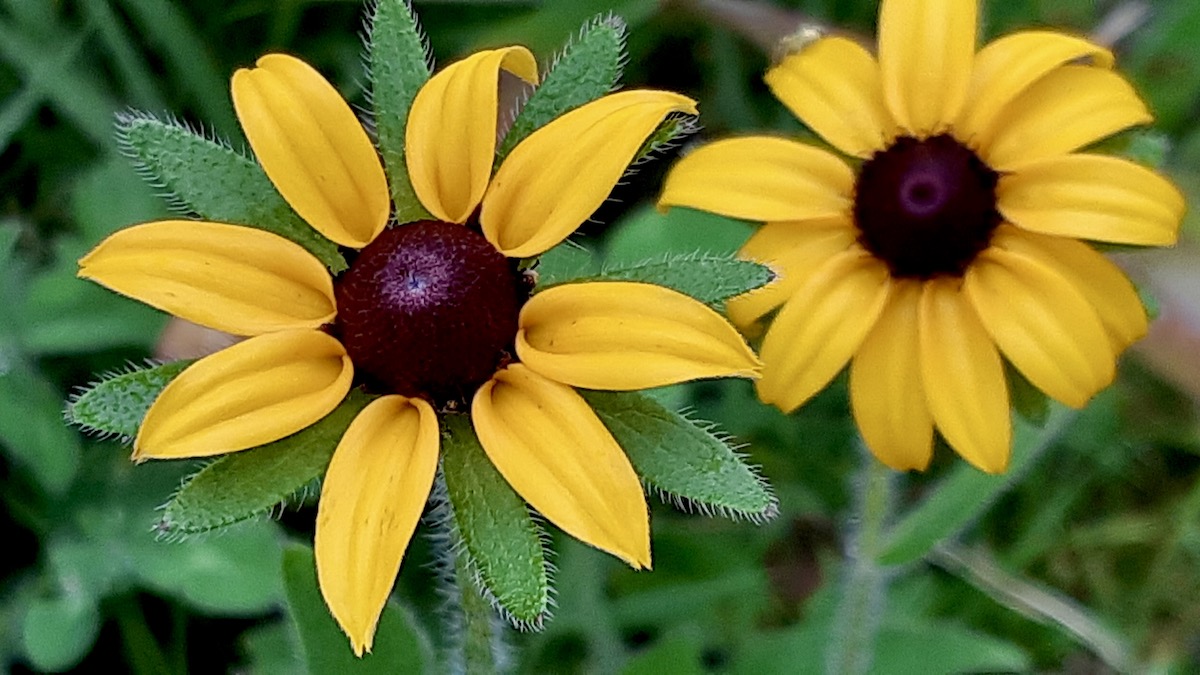
The Bright Yellow Faces Guarding the Roadside
If you’ve ever felt like the ditches along a highway were quietly cheering you on, you can probably thank a patch of Black-Eyed Susans. Every summer, we dedicate time to identifying and documenting the plants and flowers that surround us, and these sunny little firecrackers are always among the first to call out for attention. With their jet-black, velvety centers and brilliant yellow petals, they have a way of looking so deliberately painted that it’s almost hard to believe they just show up on their own.
Why They Matter (And How We Use Them)
Beyond giving open fields that classic late-summer glow, Rudbeckia hirta is a workhorse for native ecosystems. They are absolute magnets for native pollinators, offering a rich source of nectar when other early-summer flowers begin to fade. Historically, various Native American nations utilized extracts from the roots to treat colds, soothe skin irritations, and even create natural dyes. In modern gardens, they act as low-maintenance heroes—drought-tolerant, tough as nails, and brilliant at choking out invasive weeds.
Cool Fact: Black-Eyed Susans are masters of secret ultraviolet messages. To the human eye, their petals are a uniform, bright yellow. But to a bee seeing in the UV spectrum, the inner ring of the petals reflects light differently, creating a prominent “bullseye” target leading straight to the nectar in the center cone!