Rigid tax filing rules bar Indigenous agricultural operations from accessing federal business risk programs
OTTAWA — Rigid federal bureaucracy is locking Indigenous farmers out of Canada’s multi-billion-dollar agricultural support programs, undermining national food security and economic reconciliation, a parliamentary committee has heard.
The National Circle for Indigenous Agriculture and Food (NCIAF) warned MPs at a meeting of the Standing Committee on Agriculture and Agri-Food on Thursday, April 23, 2026, that conventional government safety nets use financial metrics that completely disregard the legal, communal, and operational realities of Indigenous communities. This exclusion leaves Indigenous producers isolated without a safety net when crops fail, exacerbating food insecurity in regions already vulnerable to supply chain disruptions.
Liberal MP Marianne Dandurand noted that because Indigenous people are historically under-represented in commercial agriculture, their specific systemic challenges are rarely aired in Ottawa. She asked the witnesses to elaborate on how farming models differ in Indigenous communities and why current federal programming is poorly adapted to those realities.
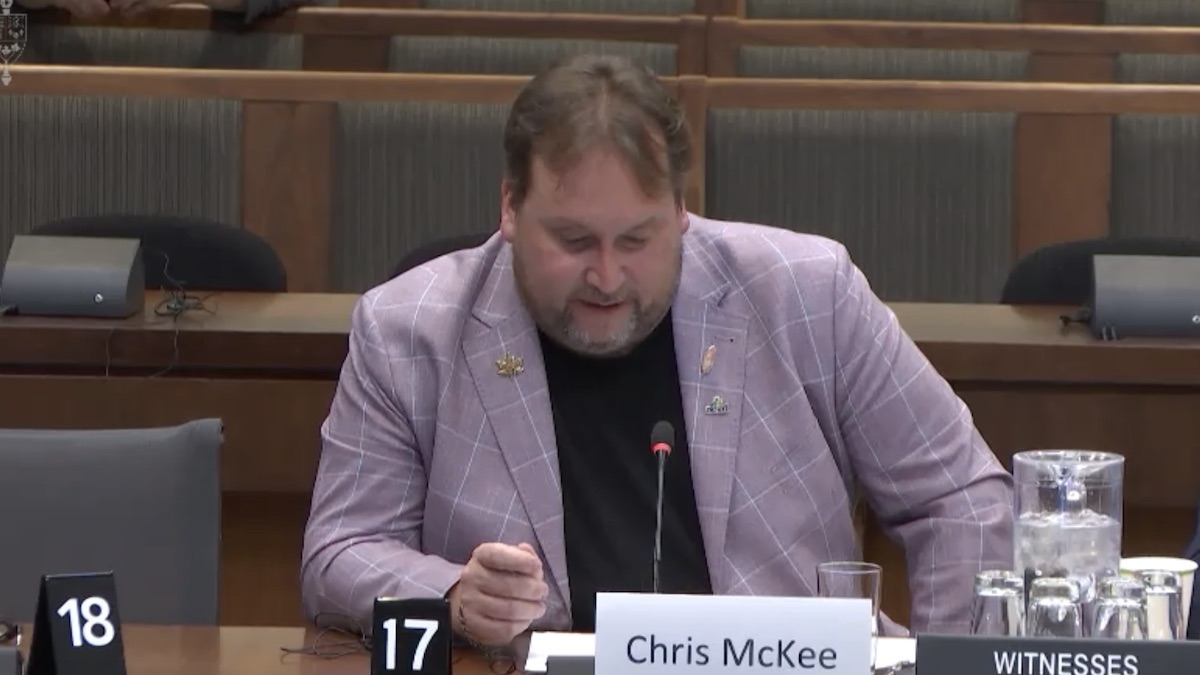
Chris McKee, senior vice-president of business development for the NCIAF, explained that the federal government’s fundamental misunderstanding of Indigenous agricultural models creates immediate administrative barriers. While conventional federal programs look strictly at standard primary agriculture, McKee said Indigenous communities often focus on traditional harvesting, greenhouses, or community gardens to reclaim local food sovereignty.
The primary roadblock, McKee noted, occurs at the very start of the application process due to rigid paperwork requirements.
“Oftentimes, the programming is fit for conventional financial benchmarks, but those benchmarks don’t exist in a lot of communities,” McKee told the committee. “I can think of certain programs that want the financial farming income and expense claim that was submitted for income tax, but nations don’t submit those same forms. Therefore, at the first checkbox on eligibility, it’s ‘not eligible’ and they just move on.”
McKee stressed that Indigenous peoples represent the fastest-growing demographic in Canadian agriculture, yet severe structural infrastructure gaps in cold storage, food processing, and transport continue to limit their commercial growth.
Industry advocates argue that fixing the paperwork glitch is a straightforward but vital step toward economic reconciliation, calling for dedicated, Indigenous-led agricultural funds and formalized federal-provincial-territorial tables to build long-term stability rather than relying on temporary grant injections.