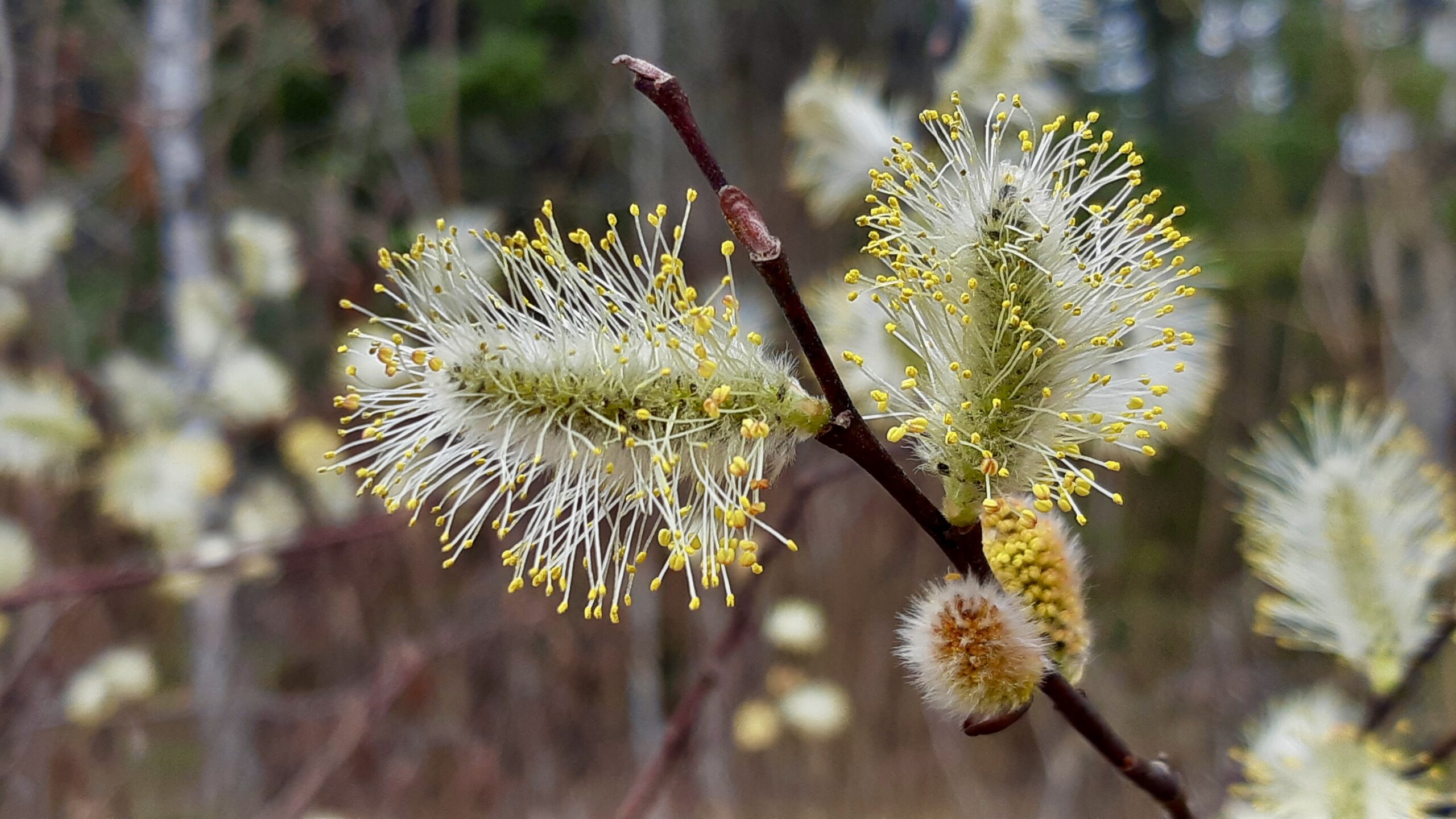
Why Blooming Pussy Willows Matter for Northwestern Ontario Pollinators
The fuzzy grey buds on our native pussy willows have officially transitioned into full bloom. The branches are now covered in large, spiky catkins loaded with bright yellow pollen. While most of the backyard grow boxes are still slow to wake up, these wild shrubs are already working overtime.
Finding reliable food sources is a massive challenge for local pollinators in May. Pussy willows are among the very first native plants to flower in our region, blooming well before the leaves even start to appear on most trees. This makes them a critical lifeline for native bees and insects just coming out of hibernation.
We love seeing these bright yellow blooms open up early in the season. They provide a much-needed energy boost for the local ecosystem when almost nothing else is available. It’s a great reminder that spring is finally here, even if the rest of the garden is taking its time.
About the Program
The Art Borups Corners Land Lab is a community-based summer program in Northwestern Ontario that combines participatory arts, land-based learning, and sustainable food growing from May through September each year. Participants engage in hands-on gardening and creative outdoor activities while cultivating strawberries, raspberries, saskatoon berries, vegetables, and herbs in a northern climate setting. The program explores food security, small-scale agriculture, environmental education, and food entrepreneurship while encouraging stronger connections between art, ecology, and rural community development. In 2026, the Land Lab is also expanding its conservation efforts through the introduction of milkweed stands to help support endangered monarch butterfly habitat and regional pollinator health.