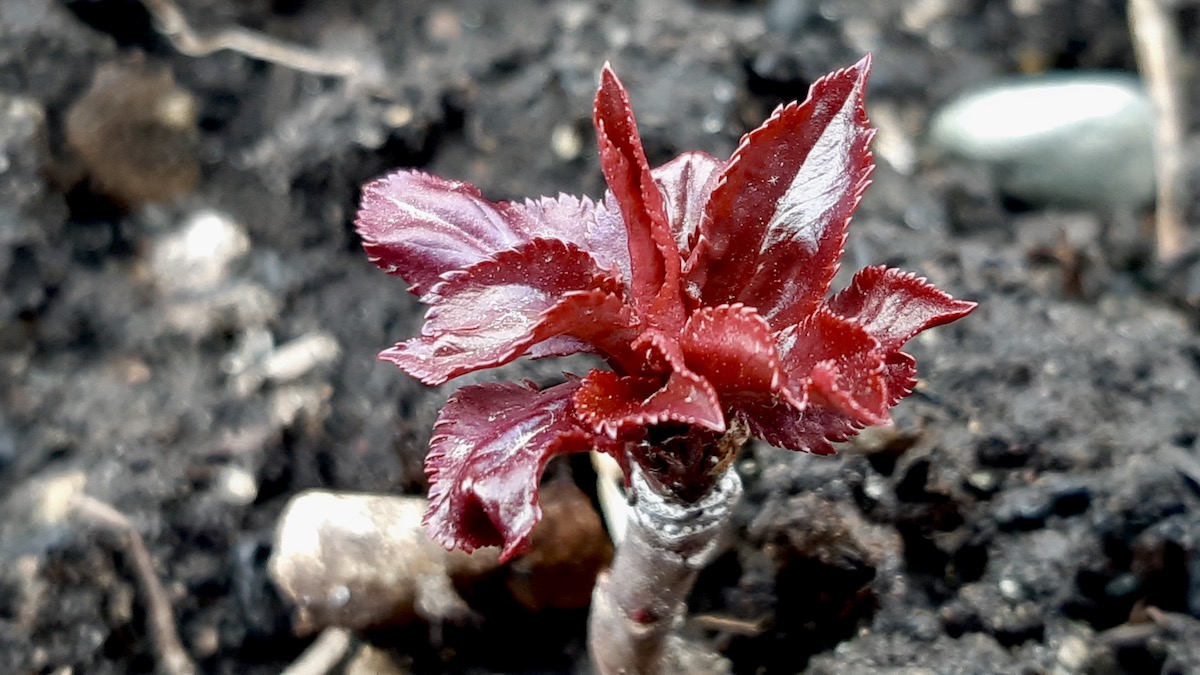
Nurturing Second-Year Indoor-Grown Apple Trees Through Their First Northern Outdoor Spring
If you’re managing an orchard or just tending a few saplings, patience is the name of the game this month. Our young apple trees, now entering their second year, are taking their sweet time waking up from the winter chill. Because they spent their infancy indoors under grow lights last winter, we don’t have a perfect baseline for their natural outdoor timeline. They are running a bit slow, but the transition to the elements is always a gamble.
The great news is that the wait is officially over. We’re finally seeing the first flush of leaves pushing through, showing off that characteristic, beautiful deep red hue. It’s a massive relief to see them clearing this hurdle. Surviving a northern winter is tough enough for established trees, but for home-grown seedlings, it’s a true rite of passage.
This is their very first full season living completely outdoors, and so far, they are handling the transition like champions. There is something incredibly rewarding about watching a tree you started from a tiny seed adapt to the real world.
We are absolutely thrilled to watch them stretch out and see just how much height they put on over the coming months. Every summer, we make a point to monitor the progress of everything we plant. We check the raised beds and berry patches regularly to see what is leafing out, flowering, or ripening. Having a timeline of the growth helps us see what is thriving and gives us a clear look at how the garden changes over the months.
About our Summer Program
Running each year from May through September, the Art Borups Corners Land Lab runs a Northwestern Ontario land-based arts program focused on community gardening, environmental learning, and creative engagement. Artists and community members help cultivate berries, vegetables, herbs, and other small crops while learning about local food systems, northern agriculture, and food entrepreneurship. This year, the program is expanding its ecological focus by establishing milkweed stands to support endangered monarch butterflies and strengthen pollinator habitat across the region.