A simple idea with real impact to support Monarch butterflies in Northwestern Onatrio
There’s something pretty satisfying about throwing a handful of dirt and knowing it might turn into something alive. That’s the idea behind seed bombs. They’re simple, a bit messy, and honestly kind of fun, but they also give people a real way to take part in restoring habitat.
This year, through our Township Milkweed to Market project, we’re going to make and use our own little seed bombs to help spread milkweed across Melgund Township. It’s part of a bigger effort to support the Monarch butterfly, strengthen pollinator habitat, and create more opportunities for people to get outside and do something hands-on together.
This work will happen through community programming at the Dyment Recreation Hall park and community garden, our Art Borups Corners land lab, and other shared spaces across the township. Workshops will take place at the end of April, so stay tuned or contact us for the dates. We’re still waiting for the snow to melt!
What is a seed bomb?
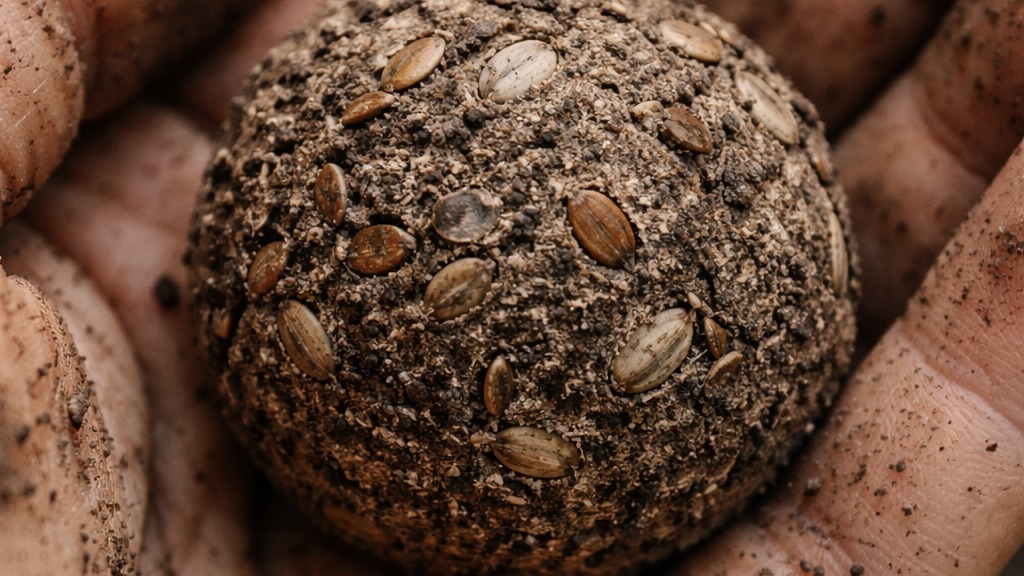
A seed bomb is a small ball made from soil, clay, and seeds. That’s it.
You toss it into an area that could use a bit of life: edges of fields, open patches of ground, places that don’t get much attention—and when rain and weather break it down, the seeds inside have a chance to take root.
It’s not about perfection. Some will grow, some won’t. But over time, it adds up.
Why milkweed matters
Milkweed isn’t just another plant. It’s essential habitat.
The Monarch butterfly depends on it completely for reproduction. It’s the only plant where monarchs lay their eggs, and it’s the only food source for their caterpillars.
When milkweed disappears, monarch populations follow. Planting milkweed is one of the simplest and most direct ways to support pollinators. It also benefits bees and other insects that rely on flowering plants throughout the season.
How to make seed bombs
You don’t need much to get started, and you don’t need it to be perfect.
What you’ll need:
- Native milkweed seeds
- Clay (powdered clay or natural clay soil)
- Compost or garden soil
- Water
Basic steps:
- Mix about 2 parts soil or compost with 1 part clay
- Add a small handful of milkweed seeds
- Slowly add water and mix until it holds together
- Roll into small balls (about the size of a walnut)
- Let them dry for 24–48 hours
Once they’re dry, they’re ready to use.
Where and when to use them
Seed bombs work best when you throw them somewhere that has a chance to support growth.
Look for:
- Open soil or lightly disturbed ground
- Sunny areas
- Edges of gardens, trails, or public green spaces
Timing matters too. Spring and early fall are ideal, especially before rain.
This isn’t about random scattering! It’s about paying attention to place. Even small patches can become habitat if they’re given a chance. That’s why we’re going to seed a lot of them at the recreation hall where we have a nice, large park and our community garden.
A community-based approach
What makes this different is that it’s not just about planting—it’s about participation. This spring, we’re running seed bomb workshops as part of our land-based recreation and arts programming, bringing together youth, artists, and community members to learn about pollinators, regenerative practices, and the land around us.
With Melgund Recreation, Arts and Culture, we’ll also be making milkweed seeds available to local residents who want to take part on their own. The goal is simple: make it easy for people to contribute in whatever way they can. This is as much about placemaking and active living as it is about ecology. It gives people a reason to be outside, to work with their hands, and to feel connected to what’s growing around them.
This project also connects to something happening just a few kilometers away in Revell Township: the proposed Deep Geological Repository being led by the Nuclear Waste Management Organization.
One of the challenges identified in that process is the lack of real, site-specific baseline data for pollinators and other small species. Seeded in part through support from the Impact Assessment Agency of Canada (IAAC), this work responds to a recognized gap in baseline data for pollinators and other small species.
Planting milkweed, creating consistent habitat patches, and observing what shows up – especially the Monarch butterfly, we’re starting to build a small, community-led picture of what’s actually living and moving through our local environment. It’s a practical way to learn, pay attention, and contribute to a better understanding of local ecosystems over time.
From habitat to handmade paper
The project doesn’t stop at planting.
At the end of the growing season, we’ll harvest milkweed fibres and use them in a fall papermaking workshop. That material will be turned into handmade paper, which community artists and youth can use to create cards and small works for local markets.
That connection, from seed to finished product helps people see value in the whole process, not just the outcome.
Why this matters
There’s a lot of talk about biodiversity loss and pollinator decline, but it can feel distant or overwhelming.
Seed bombs are the opposite of that. They’re small, local, and doable. They give people a way to take part without needing specialized knowledge or equipment. And when enough people take part, even small actions can start to reshape a landscape.
Supporting the Monarch butterfly doesn’t require a massive program. Sometimes it just starts with a handful of seeds and a place to throw them.
Would you like to learn more? Contact us at feedback@artsincubator.ca for more information on how you can get involved and support this fun arts and recreation program!