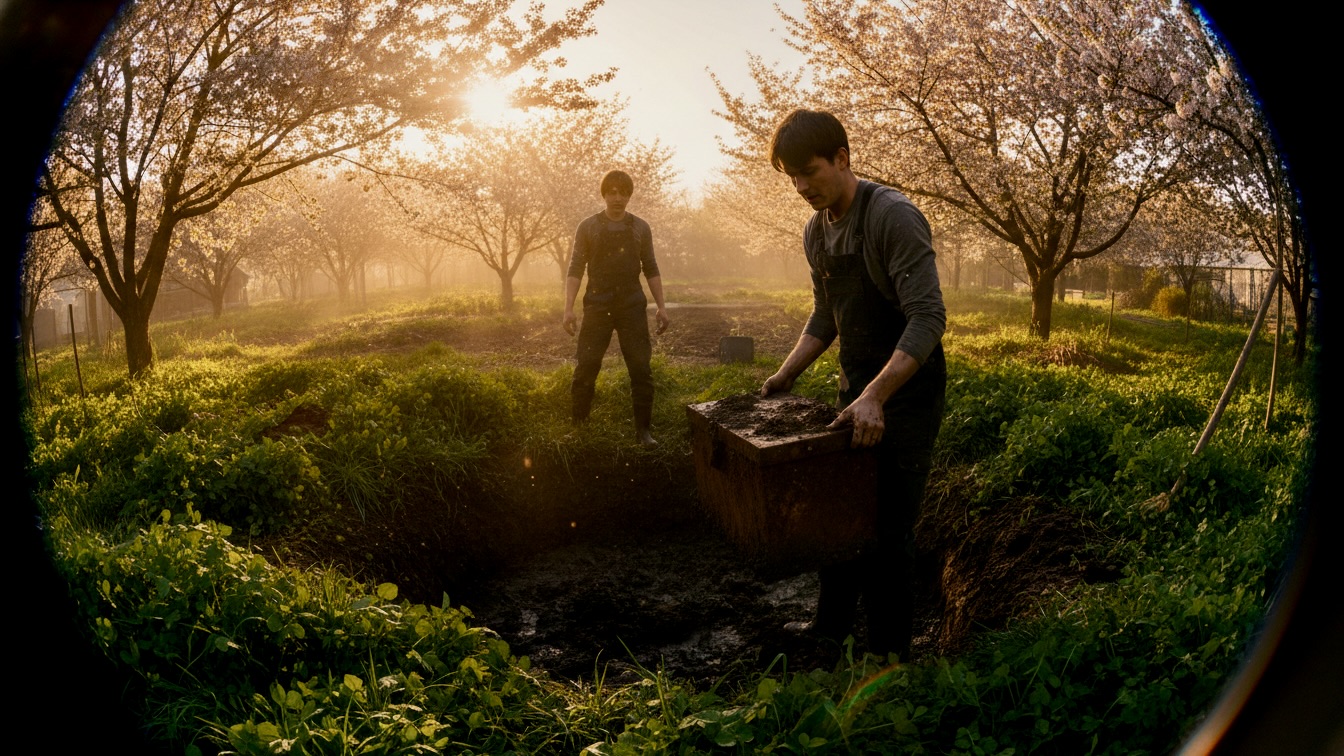
The chapter opens with Ben performing the grueling physical labor of digging a garden plot in a community garden. While he seeks to plant tomatoes, his partner Mark watches with a mixture of detachment and growing anxiety. The tension between the two men is palpable as Ben's shovel strikes a hard, metallic object buried deep within the mud.
Despite Mark's frantic pleas to abandon the site and move to a different plot, Ben becomes obsessed with unearthing the object. He discovers a rusted metal box that smells of iron and old blood, a stark contrast to the expected scent of spring earth. The physical struggle with the box serves as a proxy for the deeper, unresolved conflicts within their relationship.
The situation reaches a breaking point when Ben cuts his hand on the rusted metal, leading to a heated argument about responsibility and the "mess" left by previous generations. Mark’s fear of the unknown and the potential for contamination clashes with Ben’s need to confront what lies beneath. Ultimately, Ben uses a pry bar to force the box open, choosing to face the hidden contents regardless of the cost.
The central theme of the narrative revolves around the tension between avoidance and confrontation, specifically regarding the "rot" of the past. Mark represents a philosophy of abandonment, suggesting that when something becomes difficult or toxic, it is better to walk away and start fresh. He views the buried box as a symbol of inherited garbage that is not their responsibility to clean or investigate.
Conversely, Ben embodies the compulsion to dig up and examine the things that remain hidden. For him, the box is not merely trash but a deliberate obstacle that must be removed to ensure future growth. This struggle suggests that one cannot simply plant a new life on top of an unexamined past without eventually hitting something hard and sharp.
The story also explores the concept of generational trauma and the environmental or emotional wreckage left by those who came before. Mark’s outburst about the people before them who poisoned the world highlights a sense of nihilism and helplessness. He is terrified that by opening the box, they are inviting a permanent kind of damage that cannot be undone.
Finally, the physical blood Ben sheds over the box symbolizes the personal cost of seeking truth. His willingness to bleed and risk infection highlights a desperate need for agency in a world that feels broken. The act of opening the box is a violent rejection of the quiet life Mark prefers, suggesting that true progress requires a painful reckoning with what has been buried.
Ben is characterized by a stubborn, almost obsessive need for control and resolution. His physical labor in the garden serves as an outlet for internal frustrations that he cannot otherwise articulate. He is the more grounded of the two men, yet his grounding manifests as a refusal to look away from the ugly realities lurking beneath the surface.
His motivation for digging up the box transcends the practical goal of planting tomatoes. He views the buried object as a personal challenge and a symbol of the resistance he feels in his life and relationship. By forcing the box open, he is attempting to break through the emotional stasis that has defined his interactions with Mark.
Ben's internal state is one of simmering resentment and a desire for authenticity. He is tired of the conversations they never finished and the way Mark pulls away from intimacy. For Ben, the rusted edges of the box are synonymous with the jagged parts of their partnership that he is no longer willing to ignore.
Mark acts as the emotional foil to Ben, characterized by a profound fear of vulnerability and messiness. His clean white sneakers and small plastic trowel symbolize his desire for a sanitized, superficial engagement with the world. He is deeply uncomfortable with the visceral, dirty reality of the excavation, preferring to stay on the periphery of the conflict.
His panic is not merely about the physical threat of tetanus or toxic waste, but rather the emotional threat of what the box represents. Mark fears that some things are better left buried because their contents might be too heavy or too dark to handle. He views the act of digging as an unnecessary invitation to suffering.
Mark’s behavior reveals a man who is perpetually ready to flee when the soil of his life becomes contaminated. He would rather lose the investment of the garden plot than risk the infection of a difficult truth. His plea for Ben to stop is a desperate attempt to maintain the fragile peace of their current existence.
The pacing of the chapter is expertly handled, beginning with the slow, rhythmic labor of digging and accelerating into a frantic, high-stakes confrontation. The author uses the physical resistance of the earth and the metal box to mirror the psychological friction between the two characters. As the box becomes more visible, the narrative tension tightens, culminating in the violent crack of the lock.
Sensory details are used with clinical precision to create a sense of unease and visceral reality. The transition from the smell of wet leaves to the metallic scent of copper and old blood signals a shift from the natural to the traumatic. The descriptions of the orange scabs of rust and the violent vibration of the shovel create a tactile experience that emphasizes the characters' discomfort.
The tone is oppressive and heavy, reflecting the weight of the municipal dirt and the heat of the morning. There is a sense of impending doom that contrasts with the traditional associations of spring and gardening. Instead of rebirth and beauty, the spring described here is violent and loud, suggesting that growth can only occur through a disruptive and painful process.
The narrative voice is close and intense, focusing on Ben’s physical sensations and Mark’s escalating verbal distress. This narrow focus creates a feeling of claustrophobia despite the outdoor setting. By the end of the chapter, the garden is no longer a place of leisure but a site of excavation, where the characters are forced to confront the harsh reality of what they have inherited.


