Format: Short Film / Anthology Episode | Est. Length: 10-12 minutes
Imagine this story as a visceral, tactile entry in a prestige anthology series titled Urban Rot, where the physical decay of a modern city serves as a mirror for the psychological disintegration of its residents. The series explores the "archaeology of the self," following different characters as they unearth literal and metaphorical remnants of a forgotten past buried beneath the concrete and mud of their daily lives. Each episode is a standalone character study linked by the recurring motif of an urban environment that refuses to keep its secrets buried, forcing protagonists to choose between the safety of ignorance and the violent clarity of the truth.
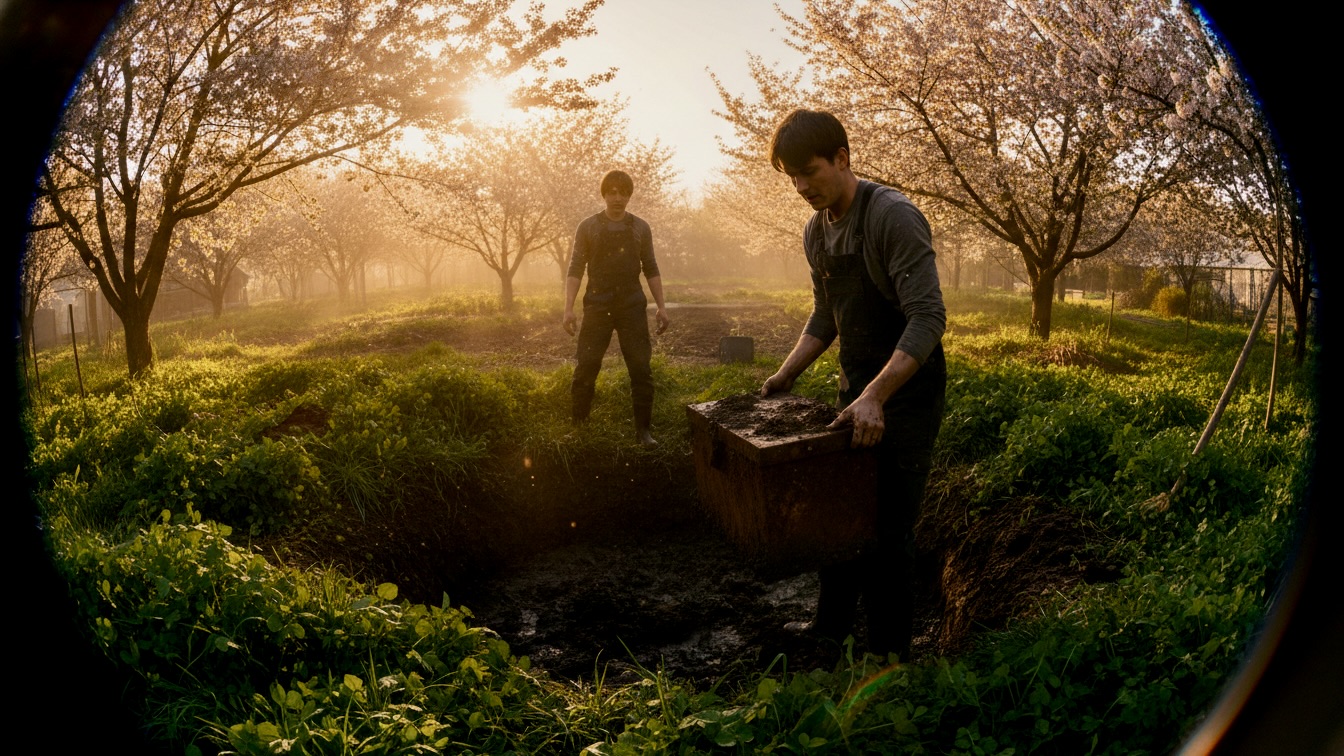
Ben’s shovel strikes a metallic object buried deep in the mud of a community garden, sending a bone-rattling vibration through his arms that signals the end of a quiet morning. The sharp, clanking sound immediately shifts the tone from domestic chore to an ominous discovery.
A stubborn gardener’s obsession with unearthing a buried metal box forces a confrontation with his partner’s deep-seated fear of the past. As the physical rust is stripped away, the structural decay of their relationship is laid bare.
The primary theme is the "Inheritance of Rot," exploring how individuals deal with the literal and metaphorical garbage left behind by previous generations. It examines the conflict between the compulsion to excavate and fix problems versus the instinct to abandon them to avoid further pain.
Secondary themes include the toxicity of urban environments and the fragility of modern domesticity. The story highlights how a single "rusted edge" can puncture the thin veneer of a stable life, suggesting that the "broken world" Mark fears is already inside their relationship.
For Ben, the stakes are his sense of agency and his need to prove that he can cultivate a life in a "broken world" without running away. For Mark, the stakes are his psychological safety; he fears that opening the box will irrevocably shatter the fragile peace he has maintained by ignoring their underlying issues. The ultimate risk is the survival of their relationship, which hangs in the balance as the box is pried open.
The external conflict is the physical resistance of the compacted clay and the rusted, locked box itself, representing a stubborn past that refuses to stay buried. The internal conflict is the ideological rift between Ben’s obsessive persistence and Mark’s avoidant anxiety. Mark serves as the primary antagonist to Ben's goal, his escalating panic acting as a barrier to the "truth" Ben is determined to uncover.
Ben and Mark spend a humid spring morning preparing a community garden plot, but the task turns sour when Ben’s shovel hits a buried metal box. Despite Mark’s growing distress and pleas to abandon the plot, Ben becomes obsessed with excavating the object, seeing it as an obstacle that must be removed to move forward. The physical labor becomes a proxy for their relationship's tension, with Ben digging deeper into the "toxic" municipal dirt while Mark retreats into a defensive, panicked state.
As Ben ignores a bloody injury to pry the box open, the dialogue reveals a history of avoidance and unresolved tension between the two men. The episode reaches its climax when Ben successfully snaps the lock, choosing the potentially devastating truth of the box's contents over the safety of Mark’s silence. The story ends on the precipice of the reveal, leaving the characters to face whatever rot they have finally disturbed.
Ben: A man driven by a compulsive need to repair and resolve, Ben starts the episode as a determined gardener and ends as a bloodied excavator of his own life. His psychological arc moves from constructive labor to destructive obsession, reflecting his inability to leave "ugly" things buried. He represents the painful necessity of confrontation.
Mark: Anxious and avoidant, Mark begins the episode trying to maintain a clean, detached presence and ends in a state of near-catatonic panic. His arc is one of increasing vulnerability, as his white sneakers are stained by the mud he desperately tried to avoid. He represents the paralyzing fear of what lies beneath a polished surface.
Ben struggles with the heavy spring soil, establishing the physical toll of the labor and the oppressive, pollen-heavy atmosphere of the garden. Mark stands by, clean and detached, highlighting the immediate disconnect between the two partners before the shovel hits the box with a metallic clank. The discovery triggers Mark’s immediate instinct to retreat, but Ben’s decision to kneel in the mud and dig with his bare hands marks the beginning of his descent into obsession.
The discovery of the box’s "rusted edges" and the smell of iron and blood heightens the tension, as Mark begins to project his fears of "toxic runoff" onto the object. Ben demands the pry bar, turning the physical tool into a point of contention that forces their relationship's power dynamic into the light. Ben cuts his finger on the rusted metal, a moment of physical injury that serves as the midpoint and escalates Mark’s panic into a full-blown argument about their "broken world."
Mark’s outburst reveals that his fear isn't just about the box, but about Ben’s refusal to walk away from things that are already ruined. In the climax, Ben ignores Mark’s pleas and uses his full body weight to snap the lock, the sound of the metal breaking echoing like a finality. The lid shifts upward, and the episode ends on the threshold of the unknown, with the characters forever changed by the act of opening it.
The episode begins with a sense of heavy, humid frustration that gradually sharpens into a cold, metallic dread. The audience experiences a claustrophobic escalation as the "garden" setting feels less like a place of growth and more like a burial ground. The final beat provides a jarring, violent release of tension that leaves the viewer in a state of suspended anxiety, mirroring the characters' transition from avoidance to unavoidable truth.
If expanded, the season would follow Ben and Mark as the contents of the box—perhaps old letters or evidence of a forgotten crime—slowly poison their daily lives. The "rot" would spread from the garden to their apartment, with each subsequent episode featuring a new discovery in the city that mirrors their deteriorating mental states.
The season finale would see the couple returning to the garden plot, not to plant, but to re-bury the secrets they unearthed, realizing too late that some things are meant to stay in the mud. This arc would explore the impossibility of returning to a state of innocence once the "lock" has been broken, cementing the series' theme of the inescapable past.
The visual style is "Grit-Realism," characterized by extreme close-ups of tactile textures: wet clay, rusted iron, stinging sweat, and bright red blood. The color palette should be dominated by "violent" spring colors—sickly yellow pollen, aggressive greens, and deep brown mud—contrasted with the sterile white of Mark’s sneakers.
The tone is a blend of psychological thriller and domestic drama, reminiscent of the claustrophobic tension in Take Shelter or the environmental dread of Safe. The sound design is crucial, emphasizing the "wet squelch" of the earth and the "metallic clank" of the shovel to create an immersive, unsettling experience that feels both grounded and nightmarish.
This episode is intended for an adult audience (25-45) who appreciates high-concept psychological drama and "prestige" anthology series. It appeals to viewers interested in character-driven stories that use genre elements to explore complex emotional landscapes and the anxieties of modern life.
The pacing is a "slow burn" that accelerates rapidly once the box is hit, moving from the lethargy of a humid morning to the frantic energy of the excavation. The 10-12 minute runtime follows a traditional three-act structure: the discovery (Act I), the escalation/argument (Act II), and the breaking of the lock (Act III).
The production requires a highly detailed, practical "mud pit" set that can withstand repeated digging and water saturation to maintain visual consistency. The "rusted box" must be a custom prop designed to "flake" realistically and produce a specific, resonant metallic sound when struck by the shovel and pry bar.
Special attention must be paid to the makeup for Ben’s cut finger and the "clay smear" on his brow to ensure continuity and visual impact during high-tension close-ups. The use of macro lenses for the digging sequences will be essential to capture the "tactile" nature of the story and the physical struggle against the earth.


