From Martyrdom to Chocolate Hearts
Every February 14, we hand out roses, chocolate, and heart-shaped cards to the people we care about. It’s a day full of sweetness and sentiment. But the story behind Valentine’s Day is far from soft and rosy. It begins with a man whose life ended violently—Saint Valentine, a Christian living in Rome during the reign of Emperor Claudius II in the 3rd century.
The details are hazy, and historians still debate exactly who he was. What we do know is that Claudius believed unmarried men made better soldiers, and supposedly banned young men from marrying. Valentine, a priest devoted to his faith, refused to obey. He secretly performed Christian marriage ceremonies for couples who wanted to be together. When the emperor found out, Valentine was arrested.
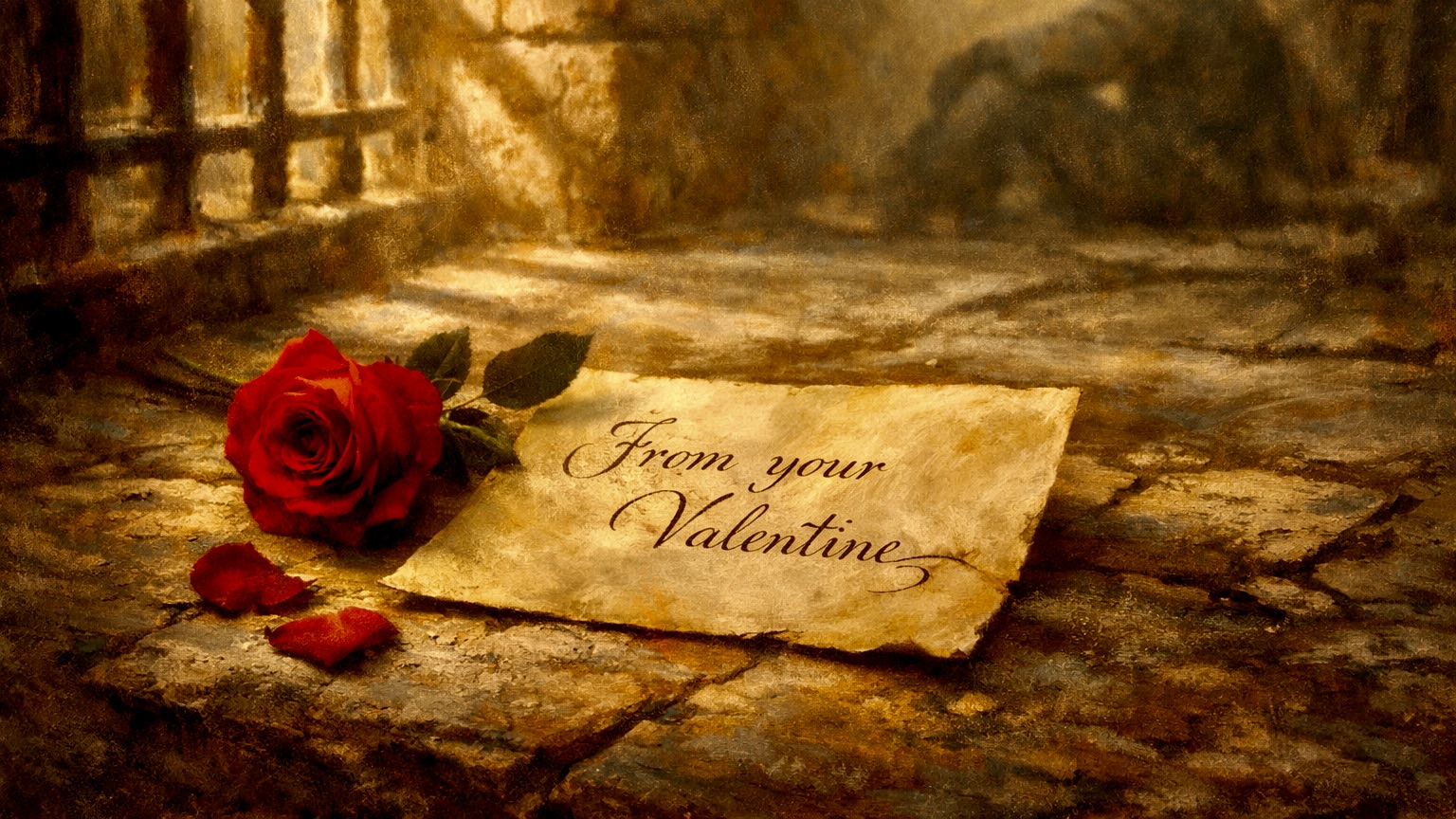
While in prison, legend says he befriended the jailer’s blind daughter. Somehow, he healed her sight, and before his execution, he left her a note signed “From your Valentine.” Around the year 269 AD, Valentine was beaten and beheaded for defying the emperor. There were no chocolates, no ribbons, no fancy cards—just a man who stood up for love, and paid the ultimate price.
It took over a thousand years before Valentine’s story became romantic in the way we think of today. In 1382, English poet Geoffrey Chaucer wrote Parliament of Fowls, a poem linking St. Valentine’s Day with birds choosing their mates. People in England and France already believed that mid-February marked the start of mating season for birds. Chaucer’s lines connected the saint’s feast day to the idea of romantic pairing, and suddenly, Valentine’s Day became a day for lovers.
By the 1400s, exchanging love notes on February 14 became common among European nobility. These weren’t the mass-produced cards we know today, but handwritten messages filled with longing, admiration, and sometimes secret affection. Over the centuries, the practice spread and became more widely celebrated.
The real transformation happened in the 19th century. With cheaper printing and paper, Valentine’s cards could be mass-produced. In the United States, Esther Howland began selling ornate, factory-made Valentine’s cards in the 1840s. She made it possible for anyone, not just the wealthy, to give a token of love. Soon after, chocolatiers, florists, and candy makers joined in, turning Valentine’s Day into the commercial celebration we recognize today.
Now, Valentine’s Day is a global phenomenon, often more about candy and cards than martyrdom. But behind the heart-shaped boxes and pink wrapping paper lies the story of a man who risked—and lost—his life for love and faith. It’s a reminder that the holiday is not just about commerce or romance, but about courage, sacrifice, and the human desire to stand up for what matters.
And while the details of his life may be shrouded in legend, the essence of St. Valentine—the man who defied authority for love—still lingers quietly beneath all the roses and ribbons.
Happy Valentine’s Day!
About the Author