Question: What issues have not been effectively communicated? What are some of the concerns and gaps that we should be looking at?
Executive Summary
The Revell Site Deep Geological Repository (DGR) project, proposed by the Nuclear Waste Management Organization (NWMO), faces significant public and technical opposition. Our analysis indicates that the proponent has failed to effectively communicate the cumulative socio-economic impacts on unorganized territories, the specific risks associated with the 50-year transportation corridor, and the long-term governance of the site post-closure. Key gaps include the lack of site-specific hydrogeological modeling for the immediate Melgund area, the absence of a comprehensive emergency response plan for unorganized territories, and the reliance on ‘conceptual’ safety cases that defer critical technical validation to future licensing phases.
Detailed Analysis
Socio-Economic and Infrastructure Gaps
The proponent’s engagement strategy disproportionately favors the Township of Ignace and the Wabigoon Lake Ojibway Nation (WLON), effectively marginalizing the residents of Melgund Township (Dyment and Borups Corners). These unorganized communities, located less than 10 km from the project centroid, lack the municipal infrastructure and emergency service capacity of Ignace or Dryden. The NWMO’s reliance on ‘regional’ baseline data obscures the acute, localized pressures on these residents, including potential property devaluation, infrastructure strain, and the ‘stigma effect’ of hosting a nuclear facility [Analysis: Section 15.7].
Transportation and Safety Deficiencies
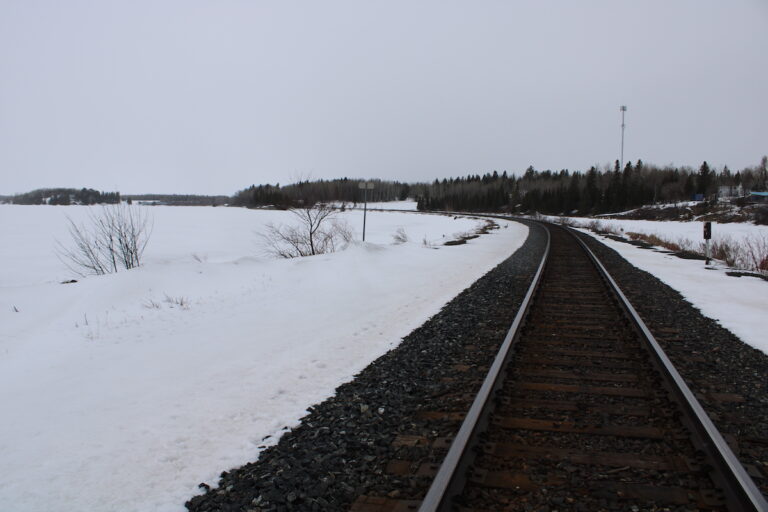
The exclusion of off-site transportation from the formal Impact Assessment (IA) scope is a primary point of contention. Public comments consistently highlight the hazardous nature of Highway 17, citing frequent accidents and severe winter conditions [Comment Ref: 603, 609]. The proponent’s assertion that transportation is ‘independently regulated’ fails to address the cumulative risk of thousands of shipments over 50 years. There is a critical lack of self-sufficient emergency response planning for the transit corridors passing through unorganized territories [Analysis: Section 19.2.3.13].
Evidence from Public Registry
- Indigenous Opposition: The Grand Council Treaty #3 and several First Nations, including Eagle Lake First Nation, have expressed formal opposition, citing violations of Manito Aki Inaakonigewin (MAI) and a lack of Free, Prior, and Informed Consent (FPIC) [Comment Ref: 705, 660].
- Transportation Risks: Numerous commenters identify the Trans-Canada Highway as a ‘mobile Chernobyl’ scenario, noting that the proponent has not provided adequate emergency response plans for remote, accident-prone stretches [Comment Ref: 255, 271].
- Data Transparency: Residents of unorganized territories report being excluded from the ‘willing host’ decision-making process, leading to deep social fragmentation and distrust [Comment Ref: 192, 200].
Technical Deficiencies & Gaps
Our internal technical review identifies several critical gaps:
- Hydrogeological Uncertainty: The reliance on only six deep boreholes to characterize the Revell Batholith is statistically insufficient for a project of this scale [Analysis: 14.2.2].
- Geochemical Assumptions: The claim that excavated rock is ‘non-acid generating’ is based on preliminary testing; kinetic testing results are currently absent [Analysis: 14.3.1].
- Climate Resilience: The project’s GHG assessment omits Scope 3 emissions (embodied carbon in construction materials) and lacks a long-term climate adaptation strategy for the 160-year lifecycle [Analysis: 23].
Recommendations & Mandates
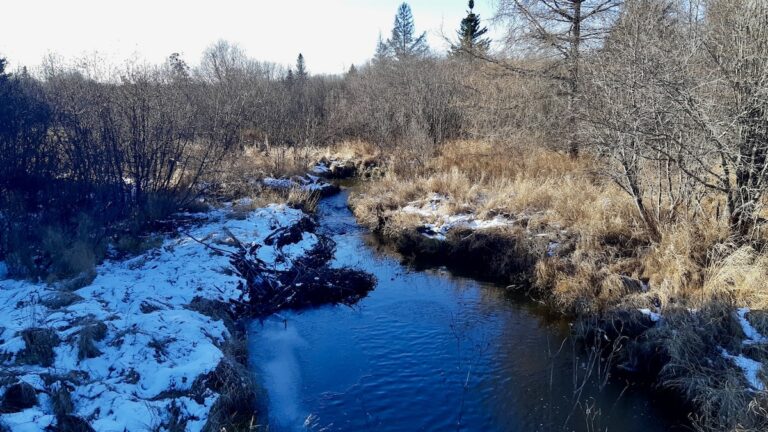
We strongly recommend that the NWMO conduct a comprehensive, site-specific hydrogeological study that includes private well testing for all residents in the Melgund area. This baseline is essential to ensure that any future contamination can be definitively attributed or ruled out.
We strongly recommend the development of a ‘Self-Sufficient Emergency Response Plan’ for the Revell site and the immediate transportation corridor. Given the lack of local fire, police, and ambulance services in unorganized territories, the proponent must demonstrate that it can manage industrial and radiological incidents without downloading costs or risks onto local volunteer services.
We strongly recommend the formal inclusion of ‘Unorganized Territory Socio-Economic Stability’ as a Valued Component (VC) in the Impact Statement. This must include specific metrics for property value protection, housing affordability, and the preservation of local recreational land use, which are currently ignored in the proponent’s municipal-centric baseline.
Conclusion
The Revell Site DGR project is currently characterized by a significant disconnect between the proponent’s promotional narrative and the technical/social realities of the immediate vicinity. Without addressing the identified gaps in transportation safety, regional emergency response, and the inclusion of unorganized territories in the decision-making framework, the project faces a high risk of sustained social and legal opposition. The path forward requires a shift from ‘engagement’ to ‘co-management’ and a commitment to empirical, site-specific data over generalized industry standards.
About the Deep Geological Repository (DGR) for Canada’s Used Nuclear Fuel Project
The Nuclear Waste Management Organization (the NWMO) is proposing a new underground deep geological repository system designed to safely contain and isolate used nuclear fuel. Wabigoon Lake Ojibway Nation (WLON) and the Township of Ignace have been selected as the host communities for the proposed project, which is located 21 kilometres southeast of the WLON and 43 kilometres northwest of the Town of Ignace, Ontario along Highway 17. As proposed, the Deep Geological Repository (DGR) for Canada’s Used Nuclear Fuel Project would provide permanent storage for approximately 5.9 million bundles of used nuclear fuel. The project is expected to span approximately 160 years, encompassing site preparation, construction, operation and closure monitoring. The project assessment is being conducted in collaboration with the Canadian Nuclear Safety Commission.
Learn more about the Integrated Impact Assessment process which is led by the Impact Assessment Agency of Canada and Canadian Nuclear Safety Commission.
- Read the Summary of Issues (February 16, 2026)
- Read the Summary of the Initial Project Description (January 5, 2026)
- Read the Initial Project Description (January 5, 2026)
- Learn More about the Melgund Integrated Nuclear Impact Assessment (MINIA) Project
- Learn More about the Nuclear Waste Management Organization (NWMO)
About the Author