What issues have been raised with Ignace claiming to be the main host community? What are the key issues and concerns commenters have raised?
Executive Summary: The designation of the Township of Ignace as the primary host community for the Revell Site Deep Geological Repository (DGR) has faced significant opposition. Commenters, including the Grand Council Treaty #3 (GCT3), argue that the repository is located in unorganized territory, approximately 40 kilometers from Ignace, and that the Township lacks the jurisdictional authority to represent the interests of the actual impacted area. Key concerns center on the exclusion of transportation risks from the project scope, the potential for long-term environmental contamination of the Canadian Shield and interconnected watersheds, and the perceived lack of Free, Prior, and Informed Consent (FPIC) from Indigenous Nations whose traditional territories are directly affected.
Detailed Analysis
The core of the controversy lies in the disconnect between the proponent’s administrative site selection and the physical reality of the project’s footprint. The Revell Site is situated in unorganized territory along the Trans-Canada Highway (Highway 17), far removed from the municipal infrastructure of Ignace. Commenters argue that this designation is a strategic choice to simplify the regulatory process while ignoring the residents of unorganized territories and the Indigenous Nations with inherent jurisdiction [Comment Ref: 705, 660].
Evidence from Public Registry
- Jurisdictional Disputes: Commenters, particularly GCT3 and the Manitoba Métis Federation, assert that the project is located within Treaty #3 territory and that the NWMO’s engagement process has failed to recognize their inherent authority and traditional laws, such as Manito Aki Inaakonigewin [Comment Ref: 705, 660, 517].
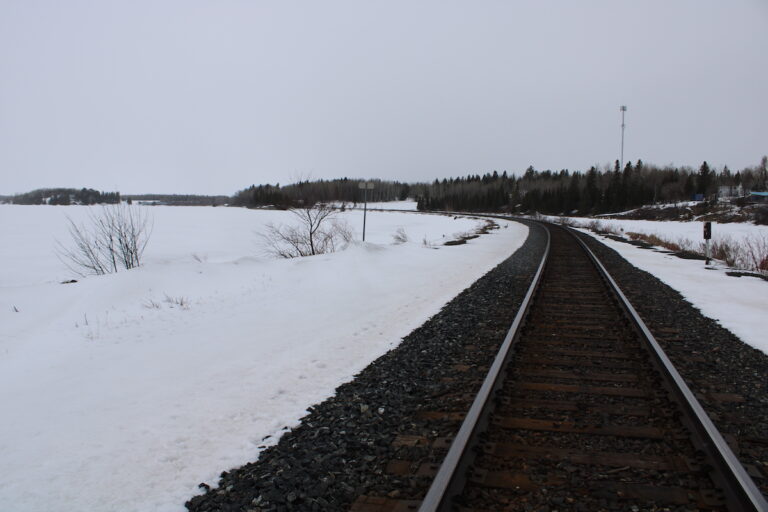
- Transportation Risks: A recurring theme is the exclusion of waste transportation from the Impact Assessment. Commenters describe Highway 17 as accident-prone and unsuitable for the daily transit of high-level nuclear waste over a 50-year period [Comment Ref: 671, 609, 274].
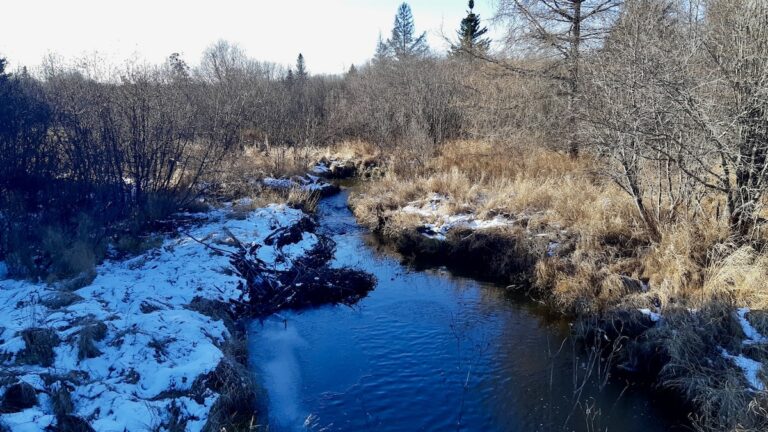
- Environmental Integrity: There is profound concern regarding the long-term containment of radioactive waste. Commenters cite the potential for groundwater contamination, seismic instability of the Canadian Shield, and the failure of engineered barriers over a million-year timeframe [Comment Ref: 641, 588, 401].
- Social License and Coercion: Several commenters allege that the NWMO used financial incentives—referred to by some as ‘bribery’—to secure support from economically vulnerable communities, creating social divisions and undermining the legitimacy of the ‘willing host’ designation [Comment Ref: 604, 595, 600].
Technical Deficiencies & Gaps
Internal analysis indicates that the proponent’s reliance on ‘industry-standard’ mitigation measures lacks site-specific validation. The current baseline data for hydrogeology and surface water quality is insufficient, particularly regarding the connectivity of fracture zones in the Revell Batholith [Analysis: Section 14.6]. Furthermore, the proponent’s decision to scope out transportation from the federal assessment creates a significant regulatory gap, as the project’s operational viability is entirely dependent on the movement of waste through sensitive corridors [Analysis: Section 10].
Recommendations & Mandates
It is strongly recommended that the NWMO conduct a comprehensive, site-specific hydrogeological study that includes high-resolution fracture network modeling to validate the containment assumptions. The proponent strongly recommends that the Impact Assessment Agency of Canada (IAAC) mandate the inclusion of transportation routes as a core Valued Component (VC) in the Impact Statement. Furthermore, the NWMO strongly recommends establishing an independent, Indigenous-led oversight body with the authority to audit environmental monitoring data in real-time to ensure that ‘negligible risk’ claims are empirically verified.
Conclusion
The Revell Site DGR project faces substantial opposition rooted in concerns over jurisdictional legitimacy, transportation safety, and long-term environmental stewardship. The path forward requires a shift from a proponent-led, administrative approach to a transparent, co-managed framework that respects Indigenous sovereignty and addresses the specific safety concerns of the communities situated along the transportation corridors.
About the Deep Geological Repository (DGR) for Canada’s Used Nuclear Fuel Project
The Nuclear Waste Management Organization (the NWMO) is proposing a new underground deep geological repository system designed to safely contain and isolate used nuclear fuel. Wabigoon Lake Ojibway Nation (WLON) and the Township of Ignace have been selected as the host communities for the proposed project, which is located 21 kilometres southeast of the WLON and 43 kilometres northwest of the Town of Ignace, Ontario along Highway 17. As proposed, the Deep Geological Repository (DGR) for Canada’s Used Nuclear Fuel Project would provide permanent storage for approximately 5.9 million bundles of used nuclear fuel. The project is expected to span approximately 160 years, encompassing site preparation, construction, operation and closure monitoring. The project assessment is being conducted in collaboration with the Canadian Nuclear Safety Commission.
Learn more about the Integrated Impact Assessment process which is led by the Impact Assessment Agency of Canada and Canadian Nuclear Safety Commission.
- Read the Summary of Issues (February 16, 2026)
- Read the Summary of the Initial Project Description (January 5, 2026)
- Read the Initial Project Description (January 5, 2026)
- Learn More about the Melgund Integrated Nuclear Impact Assessment (MINIA) Project
- Learn More about the Nuclear Waste Management Organization (NWMO)
About the Author