Question: What are supporters of the NWMO Revell Site Deep Geological Repository for Nuclear Waste Fuel saying about the project?
Executive Summary: Supporters of the Nuclear Waste Management Organization (NWMO) Revell Site Deep Geological Repository (DGR) project primarily emphasize the necessity of nuclear energy for climate change mitigation, the rigorous safety protocols of the nuclear industry, and the potential for long-term economic revitalization in Northwestern Ontario. Proponents argue that the project is a responsible, science-based solution to a national waste management issue, viewing it as a necessary step to ensure a low-carbon energy future [Ref: 672, 670, 653, 539, 537, 558, 341, 316, 310, 309, 291, 268].
Detailed Analysis
Supporters of the project generally categorize their stance into three primary pillars: environmental responsibility, economic opportunity, and technical confidence.
- Environmental Responsibility: Supporters frequently frame the DGR as a critical component of Canada’s transition to net-zero emissions. They argue that nuclear energy is a clean, reliable baseload power source and that the repository is the only responsible way to manage the resulting waste, rather than leaving it as an ‘interim’ burden for future generations [Ref: 672, 653, 512, 341, 310, 291].
- Economic Opportunity: A significant driver for local support in the Ignace area is the prospect of high-paying, long-term employment. Supporters view the project as a catalyst for regional economic growth, potentially reversing trends of youth out-migration and providing stability for local businesses [Ref: 672, 653, 539, 309, 268, 187].
- Technical Confidence: Proponents express high confidence in the NWMO’s safety protocols and the geological stability of the Canadian Shield. They often dismiss opposition as being driven by misinformation or competing energy interests, arguing that the industry is highly regulated and that the transportation containers are engineered to withstand extreme scenarios [Ref: 670, 653, 558, 316, 309, 268, 138].
Evidence from Public Registry
Public comments from supporters highlight a clear divide in how the project is perceived. While opponents focus on transportation risks and environmental justice, supporters emphasize the ‘internationally recognized best practice’ of deep geological disposal [Ref: 672, 512, 341]. Some supporters explicitly state that the opposition is based on a lack of public education and suggest that more accessible information facilities would resolve community concerns [Ref: 558]. Others argue that the project is a vital economic opportunity that should not be delayed by ‘unnecessary’ regulatory hurdles [Ref: 539].
Technical Deficiencies & Gaps
Our internal technical review [Analysis: Section 13] notes that while supporters emphasize the ‘safety’ of the site, the proponent’s current documentation lacks granular, site-specific data for the immediate vicinity of Melgund Township. The reliance on regional averages for health and economic baselines may mask localized vulnerabilities. Furthermore, the proponent’s ‘graded approach’ to oversight, while standard, creates a transparency gap regarding how ‘low risk’ designations are determined before quantitative modeling is finalized [Analysis: Section 19.2.3.5].
Recommendations & Mandates
We strongly recommend that the NWMO move beyond qualitative assurances of safety and provide a quantitative ‘Failure Mode and Effects Analysis’ (FMEA) for the repository’s engineered barriers. This is essential to address the concerns of both supporters and opponents regarding long-term containment integrity. Furthermore, we strongly recommend that the proponent establish a ‘Regional Economic Diversification Fund’ that is decoupled from the project’s operational status. This would ensure that the economic benefits cited by supporters are not subject to a ‘boom-bust’ cycle, providing long-term stability for the region regardless of the repository’s lifecycle phase.
Finally, we strongly recommend that the NWMO formalize a ‘Joint Oversight Committee’ that includes independent technical experts and representatives from all impacted communities, including the unorganized territories of Melgund. This committee should have the authority to audit environmental monitoring data in real-time, ensuring that the ‘safety’ claimed by supporters is empirically verified and transparently communicated to all stakeholders.
Conclusion
The support for the Revell Site DGR is largely predicated on the belief that the project is a necessary, safe, and economically beneficial endeavor. However, the path forward requires a transition from promotional narratives to transparent, site-specific technical validation. By addressing the identified data gaps and formalizing independent oversight, the NWMO can bridge the divide between supporters and those who remain skeptical of the project’s long-term impacts.
About the Deep Geological Repository (DGR) for Canada’s Used Nuclear Fuel Project
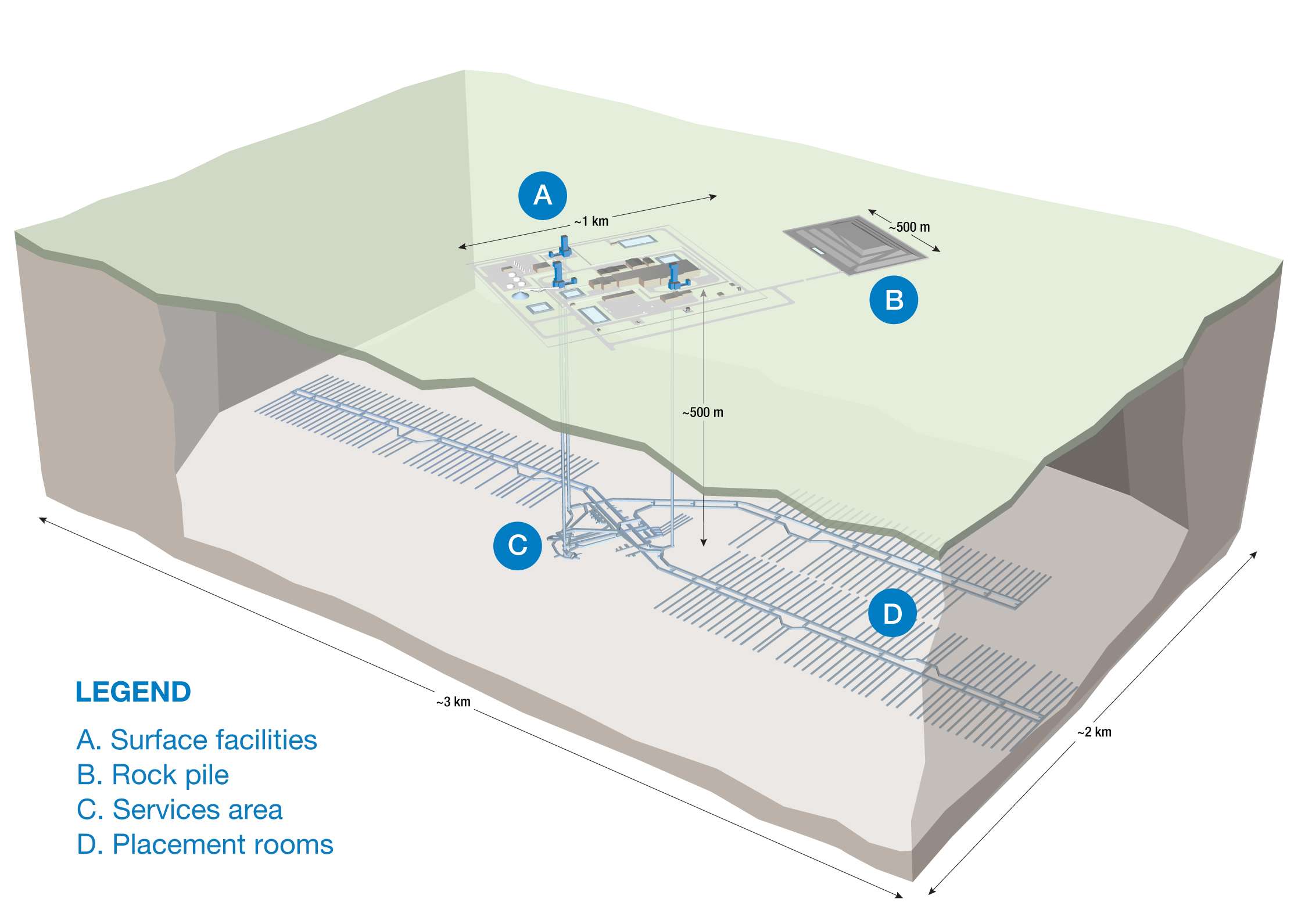
The Nuclear Waste Management Organization (the NWMO) is proposing a new underground deep geological repository system designed to safely contain and isolate used nuclear fuel. Wabigoon Lake Ojibway Nation (WLON) and the Township of Ignace have been selected as the host communities for the proposed project, which is located 21 kilometres southeast of the WLON and 43 kilometres northwest of the Town of Ignace, Ontario along Highway 17. As proposed, the Deep Geological Repository (DGR) for Canada’s Used Nuclear Fuel Project would provide permanent storage for approximately 5.9 million bundles of used nuclear fuel. The project is expected to span approximately 160 years, encompassing site preparation, construction, operation and closure monitoring. The project assessment is being conducted in collaboration with the Canadian Nuclear Safety Commission.
Learn more about the Integrated Impact Assessment process which is led by the Impact Assessment Agency of Canada and Canadian Nuclear Safety Commission.
- Read the Summary of Issues (February 16, 2026)
- Read the Summary of the Initial Project Description (January 5, 2026)
- Read the Initial Project Description (January 5, 2026)
- Learn More about the Melgund Integrated Nuclear Impact Assessment (MINIA) Project
- Learn More about the Nuclear Waste Management Organization (NWMO)
About the Author