Why a Stronger Regulatory Process is Required for the NWMO DGR
The proposed Revell Site Deep Geological Repository (DGR) for used nuclear fuel has generated significant public concern, particularly regarding the adequacy of the current regulatory framework. The Nuclear Waste Management Organization (NWMO) has faced intense scrutiny over its site selection process, which many stakeholders characterize as a unilateral, self-guided framework that has avoided independent, rigorous scrutiny for nearly two decades [Comment Ref: 705].
Regulatory Capture and Consent Manufacturing
A primary concern raised by the Grand Council Treaty #3 (GCT3) and other Indigenous Nations is the perceived ‘consent manufacturing’ inherent in the NWMO’s approach. The proponent has been accused of utilizing financial incentives—often termed ‘learning funds’ or ‘hosting agreements’—to secure community support in economically vulnerable areas, a practice critics describe as a form of bribery that undermines the legitimacy of the consent process [Comment Ref: 604, 595]. Furthermore, the NWMO’s designation of the Township of Ignace as a ‘host community’ is contested, as the project site is located 40 kilometers outside municipal boundaries in unorganized territory, where the Township lacks regulatory authority [Comment Ref: 705, 660].
Technical Deficiencies and Scoping Gaps
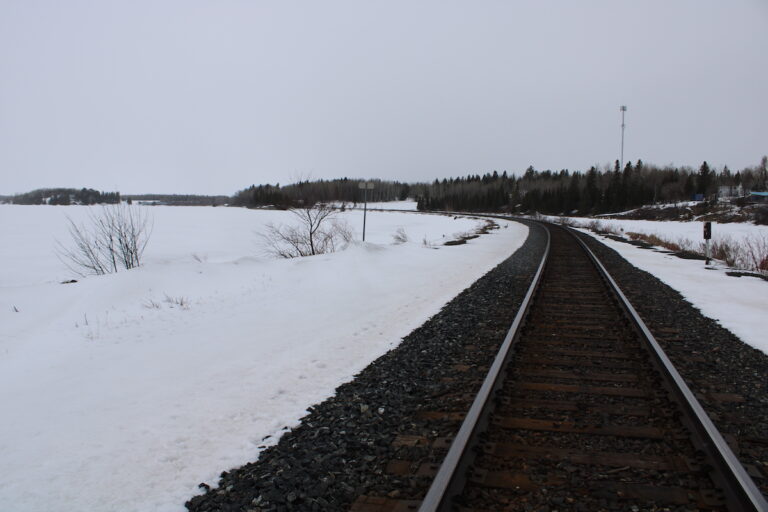
Our internal technical review and public registry submissions highlight a critical deficiency: the exclusion of used nuclear fuel transportation from the federal Impact Assessment (IA) scope. The NWMO classifies transportation as an ‘incidental activity’ regulated separately by the Canadian Nuclear Safety Commission (CNSC) [Analysis: Section 18]. However, stakeholders argue that moving 5.9 million fuel bundles over 50 years across accident-prone highways (Highway 17) constitutes a central project risk that must be evaluated under the Impact Assessment Act (IAA) [Comment Ref: 439, 585]. The current regulatory process is viewed as ‘project splitting,’ designed to avoid a ‘deal-breaker’ issue that would likely lead to the project’s rejection [Comment Ref: 580].
Recommendations for Regulatory Reform
To ensure the integrity of the regulatory process, we strongly recommend the following corrective measures:
- Mandatory Inclusion of Transportation: The Impact Assessment Agency of Canada (IAAC) must mandate that the transportation of used nuclear fuel be included as a core component of the federal Impact Assessment, rather than deferring it to separate CNSC licensing.
- Independent Review Panel: The project requires a full, independent review panel to investigate alternatives to the DGR, such as ‘Extended Interim Storage with Continual Reassessment’ (EISCR), which would keep waste closer to the point of generation and avoid the risks of long-distance transport [Comment Ref: 627].
- Indigenous-Led Impact Assessment: The Crown must harmonize the Impact Assessment Act with traditional laws, such as the Manito Aki Inaakonigewin (MAI), ensuring that Indigenous Nations have the resources to independently verify the NWMO’s technical work [Comment Ref: 705, 660].
- Transparency in Hosting Agreements: The NWMO should be required to publish a non-confidential summary of all hosting agreements to prevent the perception of ‘secret deals’ and ensure that neighboring communities in unorganized territories are aware of the safety and infrastructure commitments made by the proponent [Analysis: Section 18].
Conclusion
The current regulatory process for the Revell Site DGR is perceived by many as a mechanism to facilitate project approval rather than a rigorous safety and social impact review. Without a fundamental shift toward transparency, the inclusion of transportation in the IA scope, and a genuine commitment to Free, Prior, and Informed Consent (FPIC), the project risks facing sustained legal and social opposition that could jeopardize its long-term viability [Comment Ref: 627].
About the Deep Geological Repository (DGR) for Canada’s Used Nuclear Fuel Project
The Nuclear Waste Management Organization (the NWMO) is proposing a new underground deep geological repository system designed to safely contain and isolate used nuclear fuel. Wabigoon Lake Ojibway Nation (WLON) and the Township of Ignace have been selected as the host communities for the proposed project, which is located 21 kilometres southeast of the WLON and 43 kilometres northwest of the Town of Ignace, Ontario along Highway 17. As proposed, the Deep Geological Repository (DGR) for Canada’s Used Nuclear Fuel Project would provide permanent storage for approximately 5.9 million bundles of used nuclear fuel. The project is expected to span approximately 160 years, encompassing site preparation, construction, operation and closure monitoring. The project assessment is being conducted in collaboration with the Canadian Nuclear Safety Commission.
Learn more about the Integrated Impact Assessment process which is led by the Impact Assessment Agency of Canada and Canadian Nuclear Safety Commission.
- Read the Summary of Issues (February 16, 2026)
- Read the Summary of the Initial Project Description (January 5, 2026)
- Read the Initial Project Description (January 5, 2026)
- Learn More about the Melgund Integrated Nuclear Impact Assessment (MINIA) Project
- Learn More about the Nuclear Waste Management Organization (NWMO)
About the Author