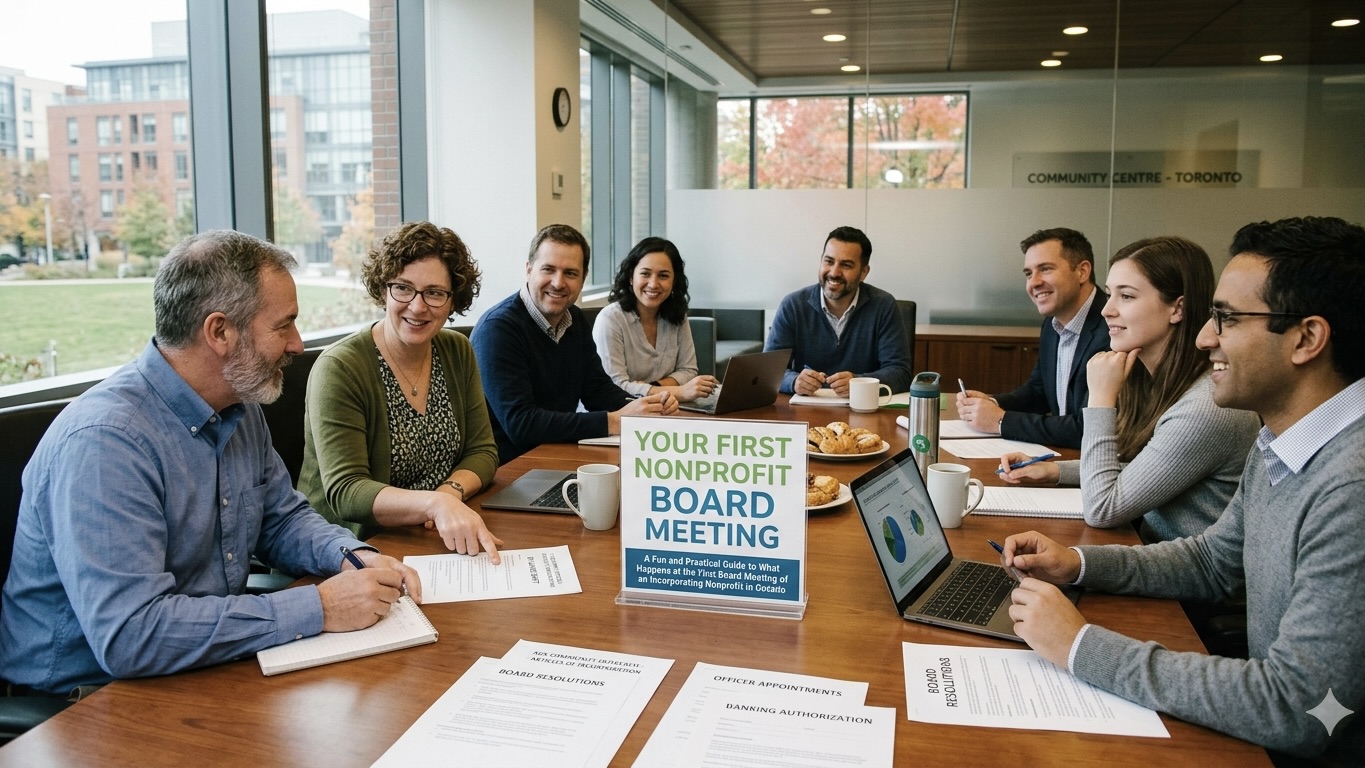
A Fun and Practical Guide to What Happens at the First Board Meeting of an Incorporating Nonprofit in Ontario
When a nonprofit is newly incorporated in Ontario, the first board meeting is where everything officially starts to feel real.
It’s often called the organizational meeting, and while it may sound formal, it’s really just the moment when the board shifts from “we exist on paper” to “we are ready to operate.” Under the Ontario Not-for-Profit Corporations Act, 2010, this meeting is required, but it’s designed to be practical and foundational rather than complicated or ceremonial.
The main purpose of this meeting is to set up the basic structure of the organization. Think of it as assembling the toolkit your nonprofit will use for everything that follows. The board typically starts by confirming incorporation documents, then moves into adopting by-laws. The by-laws are especially important because they act like the internal rulebook—defining how decisions are made, how meetings work, and how roles are assigned.
Once the by-laws are in place, the board usually turns to appointments. This is where officers are named, such as the Chair, Secretary, and Treasurer. These roles help distribute responsibility so the organization can actually function day-to-day. Without this step, everything remains technically incomplete, even if the nonprofit exists legally.
Another key part of the agenda is banking. The board will pass a resolution to open a bank account and authorize who can sign for the organization. This may sound routine, but it is one of the most important decisions made in the early stage because it allows the nonprofit to receive funding, pay expenses, and begin real operations.
The meeting also often includes decisions about the fiscal year, record-keeping systems, and sometimes whether an auditor is required or waived. These might feel like technical details, but they shape how transparent and organized the nonprofit will be in the long run. Even small decisions here can have big impacts later when funding applications or reporting requirements come into play.
Finally, the board wraps up by setting expectations for future meetings and confirming any immediate next steps. There’s no need for public advertising of this meeting—only directors need to be notified—but careful documentation is essential. Minutes are recorded, resolutions are written down, and everything becomes part of the organization’s official record.
In short, the first board meeting is less about complexity and more about clarity. It’s where a group of people formally agrees on how they will work together, how money will be handled, and how the organization will move forward. Once it’s done properly, everything else in the nonprofit becomes much easier to build.