What concerns and comments have been made about Ignace’s role in the Nuclear Waste Management Organization (NWMO) Deep Geological Repository (DGR) project?
The proposed Deep Geological Repository (DGR) near the Revell Site, situated in the unorganized territory near Ignace, Ontario, has elicited a wide range of responses from the public, Indigenous Nations, and regional stakeholders. As a Senior Regulatory Intelligence Analyst, this report synthesizes the primary concerns and sentiments extracted from the public registry and internal technical reviews.
Executive Summary
Community sentiment regarding the Revell Site DGR is deeply polarized. While some proponents highlight the potential for economic revitalization and the project’s role in Canada’s net-zero energy transition [Ref: 672, 653], a significant majority of public submissions express strong opposition [Ref: 685, 610, 587]. The core concerns revolve around the safety of transporting nuclear waste along the Trans-Canada Highway (Highway 17), the potential for long-term environmental contamination of the regional watershed, and the perceived lack of meaningful consultation with communities outside the immediate host municipality of Ignace [Ref: 609, 623, 437].
Detailed Analysis
The opposition is not merely localized; it spans the entire transportation corridor. Key technical and social issues include:
- Transportation Risks: Commenters frequently cite the high frequency of accidents on Highway 17 and the lack of specialized emergency response capacity in remote, unorganized territories [Ref: 603, 585, 561].
- Environmental Integrity: Concerns are focused on the potential for radioactive leaks into the Wabigoon and Winnipeg River watersheds, which are vital for both local ecosystems and downstream communities [Ref: 435, 392, 578].
- Indigenous Rights and Consent: The Grand Council Treaty #3 and other Nations have asserted that the project violates the Manito Aki Inaakonigewin (MAI) and the United Nations Declaration on the Rights of Indigenous Peoples (UNDRIP), citing a lack of Free, Prior, and Informed Consent (FPIC) [Ref: 705, 660, 627].
- Procedural Fairness: Many commenters criticized the 30-day public comment period as insufficient for a project with a 160-year lifecycle and million-year hazard profile [Ref: 612, 434, 586].
Evidence from Public Registry
Public comments reflect a deep-seated distrust of the proponent’s engagement strategy. Submissions from the Grand Council Treaty #3 emphasize that the project is proposed within Treaty #3 Territory and that the current process ignores the Crown’s constitutional duties [Ref: 705]. Conversely, supporters emphasize the rigorous safety protocols and the necessity of nuclear energy as a clean power source [Ref: 670, 653].
Technical Deficiencies & Gaps
Internal technical reviews of the NWMO’s Initial Project Description (IPD) highlight several critical gaps:
- Scope Exclusion: The proponent’s attempt to exclude long-distance transportation of used nuclear fuel as an ‘incidental activity’ is a major point of contention and potential non-compliance with the Impact Assessment Act [Analysis: Section 19.2.3.13].
- Baseline Data: There is a lack of site-specific hydrogeological and seismic data to support the claim of ‘homogeneity’ in the Revell Batholith [Analysis: Section 14.2].
- Socio-Economic Modeling: The current baseline fails to account for the ‘boom-bust’ cycle and the strain on existing, limited emergency services in unorganized territories [Analysis: Section 15.7].
Recommendations & Mandates
We strongly recommend that the NWMO conduct a comprehensive, site-specific hydrogeological and seismic risk assessment that includes the entire transportation corridor. The proponent strongly recommends establishing a formal, independent oversight committee that includes representatives from all affected Indigenous Nations and the Local Services Board of Melgund. Furthermore, we strongly recommend that the proponent provide a detailed ‘Emergency Response Self-Sufficiency Plan’ for the Revell site, as the current reliance on regional municipal hubs is insufficient for a project of this scale in an unorganized territory.
Conclusion
The path forward requires a fundamental shift from ‘information sharing’ to ‘co-management.’ Without addressing the jurisdictional concerns of Treaty #3 Nations and the safety anxieties of the communities along the transportation corridor, the project faces significant social and legal risks that could jeopardize its long-term viability.
About the Deep Geological Repository (DGR) for Canada’s Used Nuclear Fuel Project
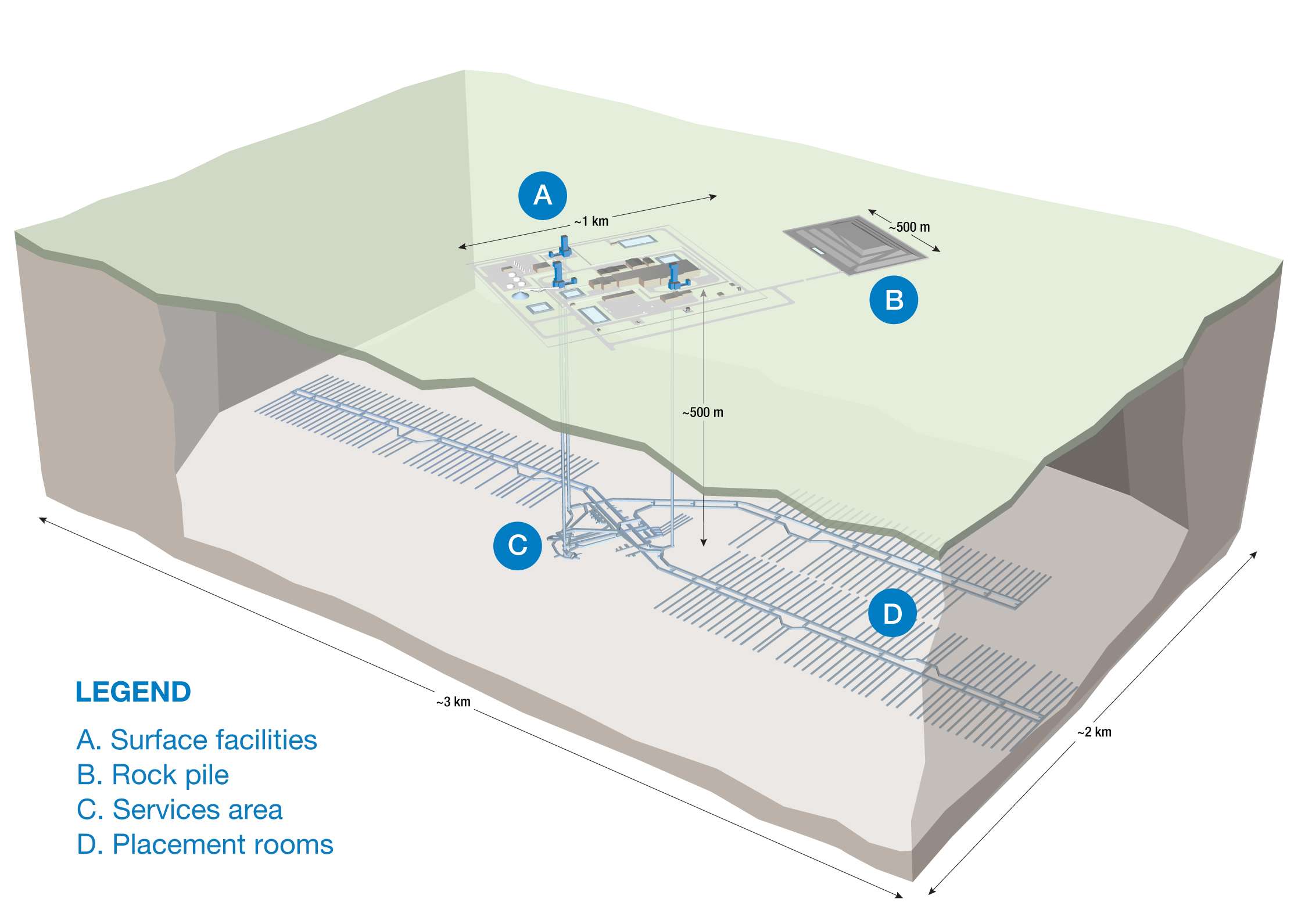
The Nuclear Waste Management Organization (the NWMO) is proposing a new underground deep geological repository system designed to safely contain and isolate used nuclear fuel. Wabigoon Lake Ojibway Nation (WLON) and the Township of Ignace have been selected as the host communities for the proposed project, which is located 21 kilometres southeast of the WLON and 43 kilometres northwest of the Town of Ignace, Ontario along Highway 17. As proposed, the Deep Geological Repository (DGR) for Canada’s Used Nuclear Fuel Project would provide permanent storage for approximately 5.9 million bundles of used nuclear fuel. The project is expected to span approximately 160 years, encompassing site preparation, construction, operation and closure monitoring. The project assessment is being conducted in collaboration with the Canadian Nuclear Safety Commission.
Learn more about the Integrated Impact Assessment process which is led by the Impact Assessment Agency of Canada and Canadian Nuclear Safety Commission.
- Read the Summary of Issues (February 16, 2026)
- Read the Summary of the Initial Project Description (January 5, 2026)
- Read the Initial Project Description (January 5, 2026)
- Learn More about the Melgund Integrated Nuclear Impact Assessment (MINIA) Project
- Learn More about the Nuclear Waste Management Organization (NWMO)