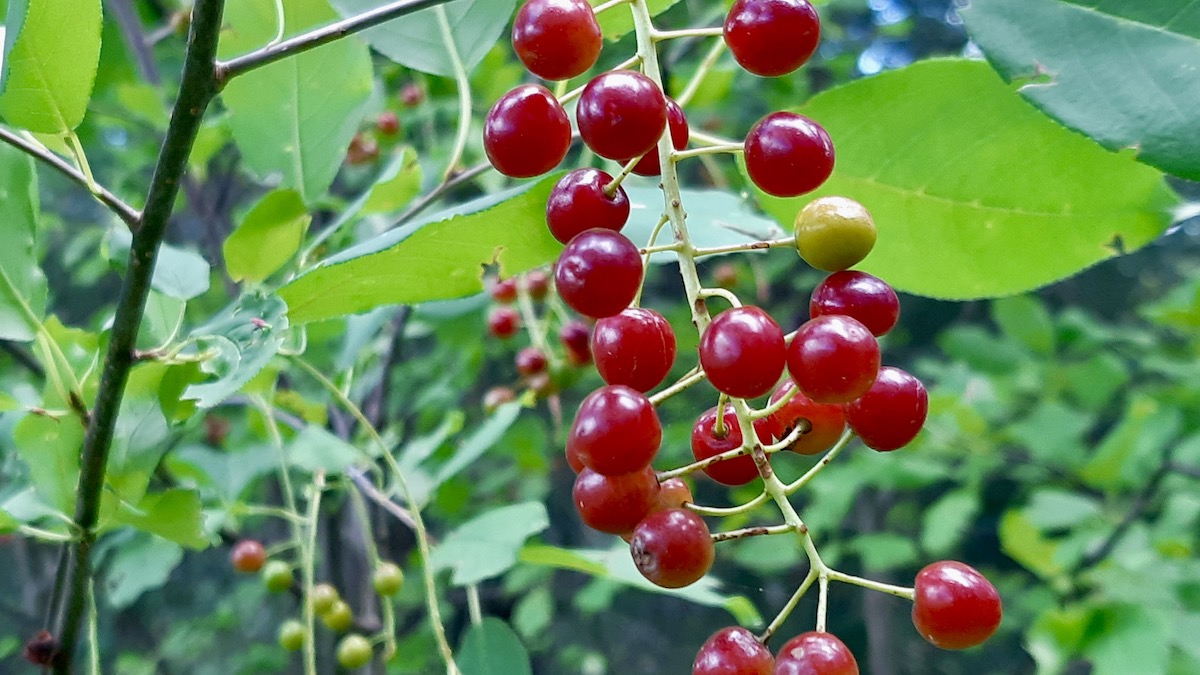
Wild Chokecherries: Watching August’s Berry Harvest Ripen
As late summer takes over the bush around Melgund Township, the fruit clusters hanging from local thickets start telling the story of the season. Among the many plants, insects, and flowers we love to document during our summer living lab programming, chokecherries (Prunus virginiana) are one of the most reliable indicators that August is in full swing. Right now, these hanging sprays—known as racemes—are in the middle of their color transition, shifting from mid-summer green to bright crimson before finally darkening into a deep, near-black purple.
Unlike pin cherries, which spout outward from a central point like tiny umbrellas, chokecherries grow in long, cascading strands along forest edges and sunny roadsides. They might have a notorious reputation for their raw mouth-puckering astringency (and their toxic pits, which need to be strained out or avoided), but they’ve been a northern staple for generations when processed into jellies, syrups, and traditional pemmican.
For the living lab, keeping an eye on wild fruit crops like these gives us a front-row seat to local wildlife activity. As these berries hit peak ripeness over the next few weeks, they’ll become a major food hub for migrating songbirds, ruffed grouse, black bears, and small mammals fueling up for the coming season.