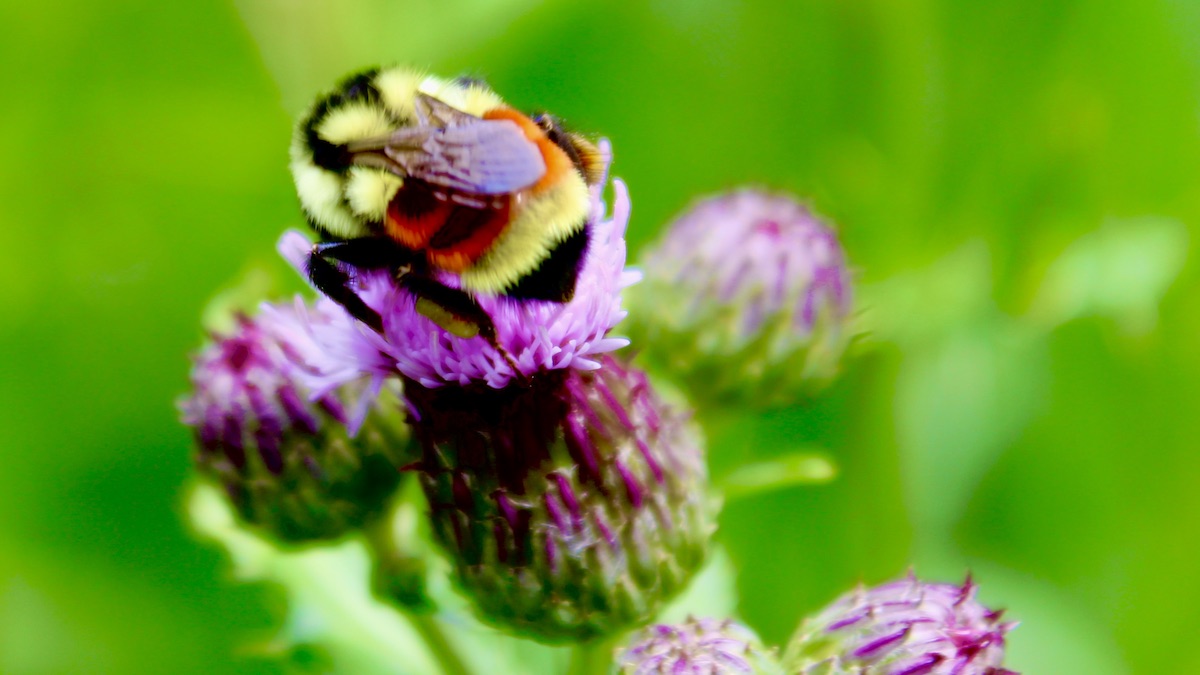
Beyond the Buzz: Why Our Community Garden is Betting Big on the Tri-colored Bumble Bee
The Tri-colored Bumble Bee on our cover isn’t just a lucky find; it’s a sign that our local food system is working.
While most people are just starting to think about their seed orders, these orange-belted powerhouses are the reason we’ll actually have a harvest to talk about come August. This year, our community garden program is moving past the “pretty flower” stage and getting serious about building functional habitat that keeps these bees right where we need them: in our plots.
Built for the Boreal
The bee in that photo is Bombus ternarius, a species that doesn’t mind the erratic Northwestern Ontario spring. They are “buzz pollinators,” which means they can vibrate flowers to release pollen that honeybees simply can’t reach. In a region with a short growing season and unpredictable frost, they are the most reliable labor force we have. If you want tomatoes, peppers, or berries in your basket this fall, you need this bee.
Moving Past the Manicured Lawn
We’re done with the “green desert” mentality. This season, our program is prioritizing native perennials like Milkweed, Joe Pye Weed, and Wild Bergamot—plants that have evolved to handle a -40°C winter and a June cold snap. By creating high-density forage zones, we’re cutting down the energy these bees spend flying between food sources. It’s a simple trade: we provide the high-octane fuel, and they provide the pollination that drives our garden yields.
Leave the Mess, Save the Bee
Being “human” about gardening means admitting that a perfectly tidy yard is actually a dead zone.
This year, we’re encouraging gardeners to leave the leaf litter and old hollow stems alone. These are the nesting sites where our queens overwinter. A “messy” corner in the community garden is actually a nursery for next year’s workforce. We’re building a space that supports the entire lifecycle of the bee, not just the parts that look good in a photo.
The Year Ahead
This year is about more than just planting; it’s about community resilience. We’re expanding our pollinator-specific beds across all our sites and inviting everyone to get their hands dirty. Whether you’re a master gardener or just tired of looking at a patch of weeds, there’s a place for you in this project. Let’s make this the season we turn our local gardens into the most productive pollinator sanctuaries in the North.