How a rugged post-war pickup traded the Taché bush country for a quiet retirement in the pines.
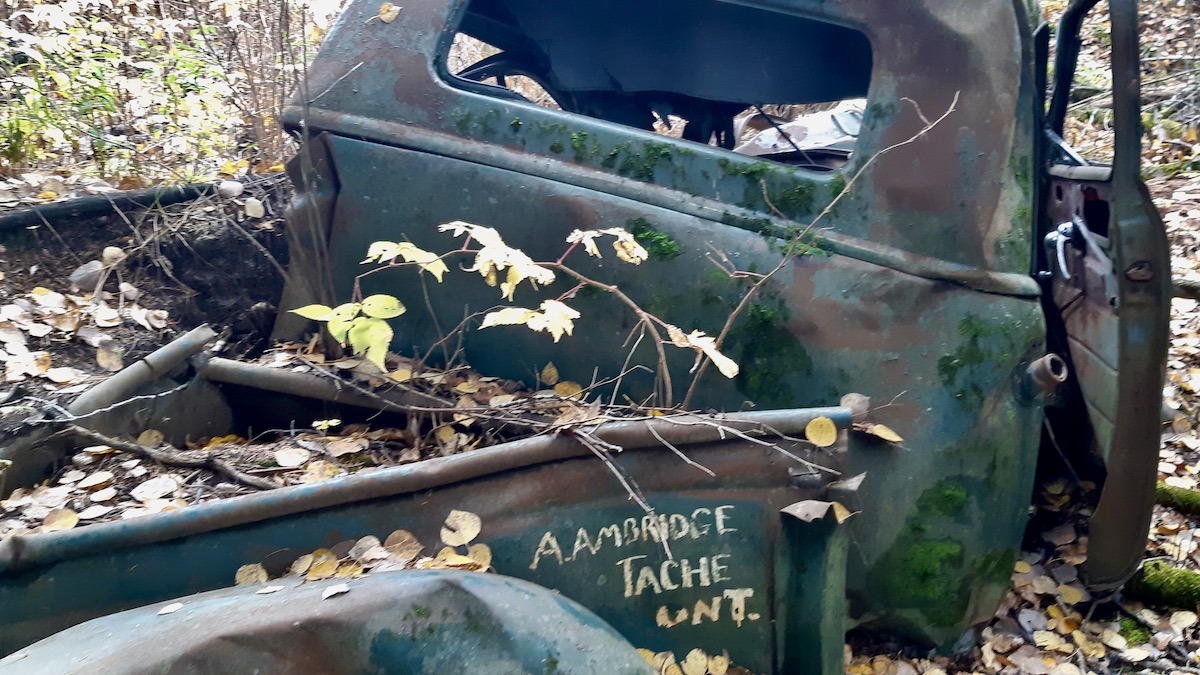
When General Motors unveiled their “Advance-Design” truck series in the summer of 1947, they weren’t just building another work truck—they were setting the gold standard for what a pickup could be. Wider, lower, and vastly more comfortable than pre-war rigs, this series quickly became North America’s top-selling truck line, filling farms, logging camps, and backroads throughout the late 1940s and early 1950s. What we uncovered here is a 1951 Chevrolet 3100 stepside pickup, crushed and rolled onto its side, but still proudly wearing the visual cues that made it an icon.
In its prime, this truck was a pure utilitarian machine powered by Chevrolet’s bulletproof 216.5-cubic-inch “Thriftmaster” inline-six engine, cranking out 92 horsepower through a manual gearbox. The 1951 model year holds a special place for truck historians because it introduced side vent windows on the doors for better cab airflow, while keeping the classic two-piece flat windshield and iconic five-slat horizontal grille. The bold CHEVROLET block-letter embossing on the tailgate and the single round left-hand taillight served as the trailing signature for every driver following behind on a dusty northern road.
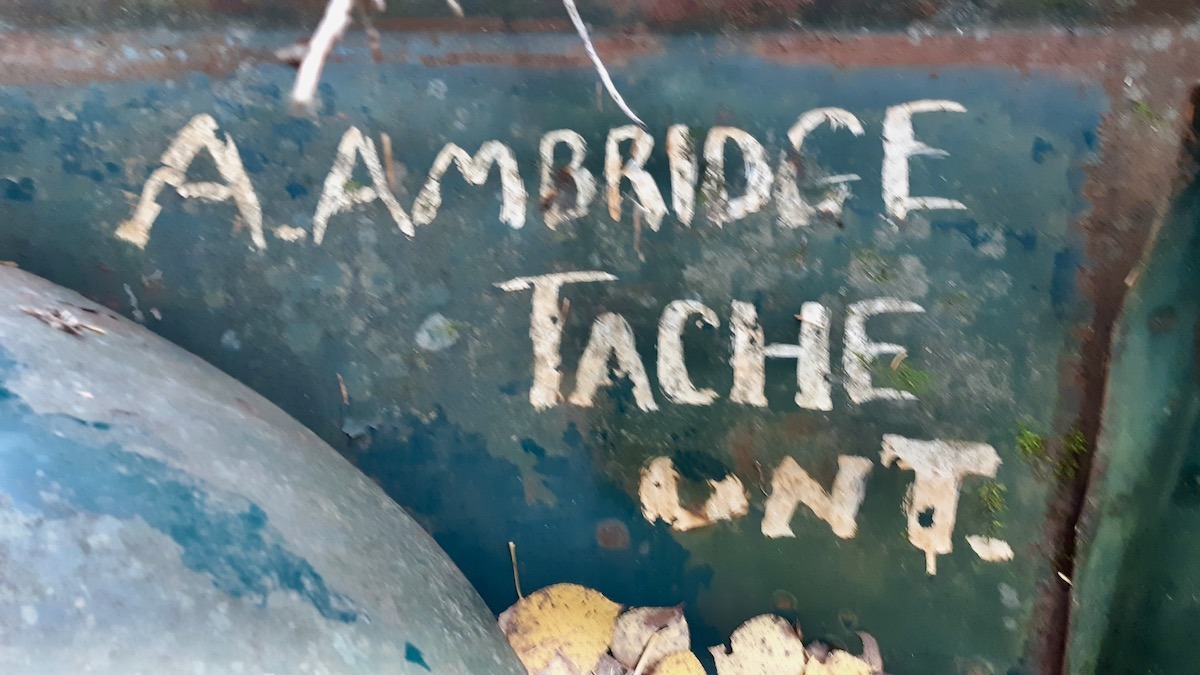
What makes this particular wreck extra special is the surviving history brush-painted right onto its body panels. Crisp white lettering on the side of the bed reads A. AMBRIDGE, TACHE, ONT., linking this truck directly to a local worker operating in the rugged Taché area of Northwestern Ontario. Long after its bed boards rotted away and moss claimed the dashboard, that heavy-gauge sheet metal still holds the memory of early northern mornings, heavy bush loads, and decades of honest work.