An Analysis of The Bronco's Last Stand
Synopsis
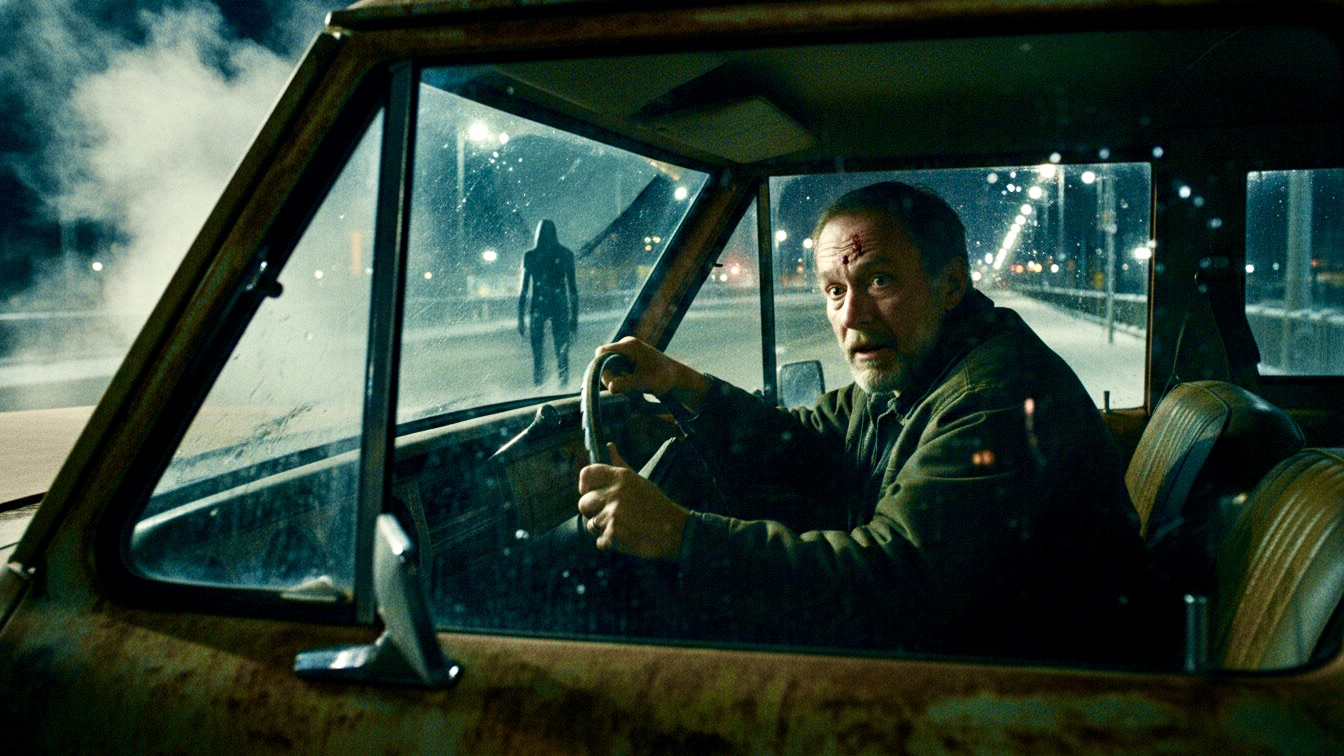
The chapter, "The Bronco's Last Stand," plunges the reader into a high-stakes car chase through a nocturnal city. Silas, an aging man with gnarled hands, desperately drives his dilapidated 1978 Bronco, which bears the fresh damage of a violent encounter. He is relentlessly pursued by multiple aggressive vehicles, including an armored transport and a fast sedan, all intent on either him or a mysterious "package" wedged in his backseat. Silas employs desperate maneuvers, navigating narrow alleys and heavy traffic, while his old Bronco strains under the pressure, its engine overheating and body battered. Despite his skill and stubborn defiance, his efforts to escape seem increasingly futile, his body failing him as much as his vehicle. The chase culminates on a bridge, where Silas, having seemingly outmaneuvered his vehicular pursuers, encounters a terrifying, humanoid figure standing silently in his path. The Bronco dies, and Silas realizes, with chilling certainty, that the entire chase was orchestrated to deliver him to this ominous entity, marked by a symbol he dreads.
Thematic Analysis
The chapter intricately weaves several compelling themes, primarily focusing on the **futility of escape and the nature of predetermined fate**. Silas's desperate flight, portrayed with visceral intensity, ultimately leads him exactly where his pursuers intended. The final, chilling realization that the chase was not to catch him but to "drive him here" underscores a profound sense of cosmic inevitability, suggesting that some destinies cannot be outrun, no matter how fiercely one struggles. This theme transforms a mundane car chase into a more existential struggle against unseen, powerful forces.
Another prominent theme is the **struggle of man against machine, and the relentless march of age against resilience**. Silas and his '78 Bronco are presented as relics, old and worn, battling against modern, ruthless, and highly organized technology. The Bronco's "tired roar" and "wheezing complaint" mirror Silas's own physical decline—his gnarled hands, aching hip, and "old man's despair." This parallel emphasizes the vulnerability of the individual and the aging body in the face of overwhelming, impersonal power, highlighting a poignant fight against time and technological superiority.
**Isolation and loneliness** also permeate Silas's journey. He is explicitly "alone in this. Always alone," a sentiment that intensifies the psychological burden of his flight. This isolation makes his struggle more personal and desperate, as there is no one to share the burden or offer aid. His repeated glances at the empty passenger seat underscore this profound solitude, amplifying the sense of dread as he confronts his ultimate, solitary fate.
Finally, the chapter explores the theme of **duty and obsession**, centered around the mysterious "package." Silas's unwavering focus on this object, his repeated internal declarations that he "needed it now" and "had to get it," elevates its importance beyond a mere MacGuffin. It suggests a deep-seated commitment or burden that drives his actions, even at the cost of his own life and well-being. This powerful motivation provides a psychological anchor for Silas, even as the narrative veers into the realm of the **unknown and the supernatural** with the final, terrifying encounter on the bridge.
Character Analysis
Silas
Silas is presented as a man defined by his **stubborn resilience and a desperate, almost primal, determination**. Despite his evident age and physical limitations—his "gnarled with age and work" hands, the "jolt of pain" up his hip, and his "old muscles protested"—he possesses an unyielding will to survive and fulfill his mission. His internal monologue, filled with curses and defiant grunts like "You want it, you gotta earn it," reveals a man who refuses to yield, even when confronted with overwhelming odds and physical pain. This defiance is a core aspect of his character, making his ultimate realization of futility all the more poignant.
Beneath this hardened exterior, Silas experiences profound **fear and desperation**. His "knuckles white" on the wheel, his "heart hammered against his ribs," and his "desperate, animal sound" when he roars "Leave me alone!" all betray the intense terror gripping him. He is constantly battling not just his pursuers, but also the encroaching "old man's despair," a psychological weariness that threatens to engulf him. This internal conflict between his fear and his defiant spirit drives much of his character arc throughout the chapter.
Silas's primary **motivation** is inextricably linked to the "package" in his backseat. This object, whose nature remains unknown, is his singular focus, the reason he endures such a brutal chase. His repeated thoughts about needing to "get that package" and that "This was why he was out here" suggest a deep sense of duty or a profound personal stake tied to its delivery. This unwavering focus, even in the face of imminent death, hints at a past narrative or a commitment that transcends his immediate survival.
Psychologically, Silas grapples with profound **isolation**. The text explicitly states, "He was alone in this. Always alone." This deep-seated loneliness amplifies his struggle, as he faces terrifying adversaries without support or companionship. The empty passenger seat serves as a constant reminder of his solitude, making his battle feel even more desperate and personal. His final realization, that he was merely a pawn in a larger, predetermined game, delivers a crushing blow to his will and sense of agency, leaving him utterly defeated not by force, but by a chilling, orchestrated fate.
Stylistic Analysis
The narrative employs a **relentlessly fast and urgent pacing** that immediately immerses the reader in Silas's desperate flight. The opening lines thrust us into the action, with short, declarative sentences and rapid shifts in focus—from the damaged door to the rearview mirror, then to the approaching lights. This frenetic rhythm is maintained throughout the chase, punctuated by moments of intense action like swerving through an alley or squeezing between vehicles, effectively mirroring Silas's frantic state of mind and the escalating danger. The pacing only briefly slows when Silas is trapped in traffic, creating a suffocating tension before surging forward again, culminating in an abrupt, chilling halt at the chapter's end.
The **tone** of the chapter is consistently tense, desperate, and increasingly fatalistic. It begins with raw urgency, transitions into grim determination as Silas fights back, and then settles into a sense of growing despair as his resources dwindle. The final encounter introduces an element of cosmic horror and inevitability, shifting the tone from a grounded chase to something more unsettling and otherworldly. This tonal progression effectively guides the reader through Silas's emotional journey, from defiance to a chilling resignation.
The author masterfully uses **vivid sensory details** to bring the chase to life. Visually, we experience the "harsh blue light," the "splintered mess" of the door, the "black grille" filling the mirror, and the "sickly white plume" of steam. Auditory details are particularly strong, from the "tires shrieked" and the "shrill whine" of scraping brick to the "guttural growl" of pursuers, the "wheezing complaint" of the Bronco, and the "crunch of metal." Olfactory senses are engaged with the "smell of exhaust, thick and acrid" and the "burnt oil," while tactile sensations include Silas's "knuckles white," the "jarring impact" of rams, and the "deep tremor" of the failing engine. Even taste is invoked with "tasted copper," grounding the reader firmly in Silas's visceral experience of pain and adrenaline.
The **narrative voice** is third-person limited, providing intimate access to Silas's internal thoughts, physical sensations, and emotional turmoil. This close perspective allows the reader to experience the relentless pressure and fear alongside him, making his struggle deeply personal. The language is direct and visceral, reflecting the raw urgency of the situation. The integration of Silas's fragmented thoughts and exclamations, such as "Damn it all to hell" and "Leave me alone!", further immerses the reader in his immediate, desperate reality, enhancing the psychological intensity of his harrowing journey.