Overview
The Winter City Stories project explored narrative fragments—stories without beginnings or endings—as a site for both artistic experimentation and applied AI research. Each story begins and ends with human input and direction: we provide the core concepts, notes, background information, and ideas in the form of a basic plot summary and outline. From that foundation, a diverse set of programmatic and AI-powered functions guides the exploratory process.
The project focused on the moments where tension shifts, characters pause, or worlds feel slightly off-kilter, treating these fragments as both creative material and subjects for study. Artists, writers, and designers worked with human-written and AI-generated fragments as raw material, curating and shaping them into stories that emphasized perspective, emotion, and thematic depth. By centering incomplete narratives, the project highlighted the artistic act of interpretation, decision-making, and reflection, making the process itself a creative practice. Each fragment became an opportunity to explore narrative form, experiment with voice, and test the boundaries of storytelling.
Artists, writers, and designers worked with human written and AI-generated fragments as raw material, curating and shaping them into stories that emphasized perspective, emotion, and thematic depth. By focusing on incomplete narratives, the project highlighted the artistic act of interpretation, decision-making, and reflection, making the process itself a creative practice. Each fragment was treated as an opportunity to explore narrative form, experiment with voice, and test the boundaries of storytelling.
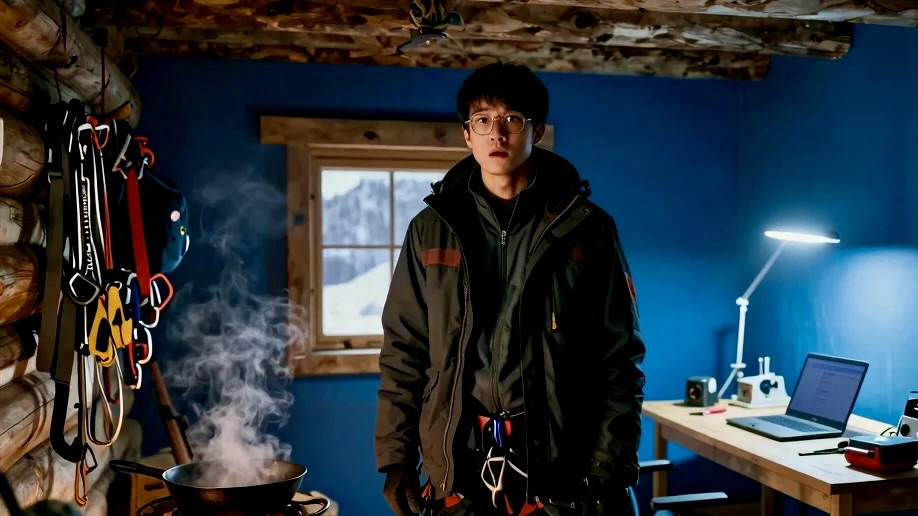
At the same time, the project functioned as an applied research program. AI systems were used both as tools and objects of investigation. Researchers and participants observed model behavior, tested different approaches to prompts and workflows, and documented patterns, limitations, and ethical concerns. Community-based participatory research (CBPR) methods ensured outputs remained culturally relevant and responsive to participant knowledge, with local insight shaping interpretation and selection at every stage.
Combining artistic practice, interdisciplinary methods, and structured AI research, Winter City Stories showed how storytelling, experimentation, and applied technology can intersect. The project highlighted that AI does not replace creativity; it expands possibilities, prompting reflection on narrative form, human interpretation, and the relationships between art, technology, and community knowledge.
Methodology
Research Design
The project employed a mixed-methods research design that combined community-based participatory research (CBPR) with experimental approaches to applied AI research. This dual framework allowed for the rigorous study of generative systems while ensuring that research outputs remained culturally grounded, ethically aligned, and reflective of lived experiences. CBPR principles ensured that community members were not passive participants but active collaborators, contributing knowledge, context, and evaluative feedback at every stage of the research process. Simultaneously, experimental AI research examined the capabilities and limitations of generative models in producing narrative fragments, testing prompt structures, schema designs, and emergent behaviors of AI outputs.
Community Engagement (CBPR)
Community engagement was central to the methodology. Participants were involved in conceptualizing research questions, evaluating narrative outputs, and interpreting AI behaviors. Workshops, storytelling sessions, and iterative review meetings allowed participants to provide real-time feedback and co-design narrative outputs. By prioritizing local knowledge, cultural context, and participant agency, the project ensured that AI-facilitated stories were not merely technological artifacts but reflections of the communities and individuals shaping them. This engagement model emphasized reciprocity: participants influenced outputs, while outputs provided a mirror for community reflection and creative experimentation.
Experimental AI Research
Generative AI was approached as both a creative collaborator and a subject of inquiry. Iterative testing of AI models involved systematically adjusting prompts, evaluating outputs, and observing patterns of emergent narrative behavior. Models were pushed to generate fragments that were coherent, compelling, and contextually resonant without relying on conventional story structure. Ethical and practical considerations, such as bias mitigation, cultural sensitivity, and interpretive nuance, were addressed through structured experimentation, ensuring that AI outputs complemented human creativity rather than substituting for it. Through this process, the project generated insights into how AI can extend narrative possibilities, highlight emergent patterns, and provoke new forms of storytelling.
Data Collection and Analysis
Data was collected across multiple modalities, including narrative fragments, participant reflections, workshop discussions, and model performance logs. Analysis combined qualitative coding, thematic interpretation, and iterative review of AI outputs. By documenting errors, successes, and emergent patterns, the project mapped the intersection of algorithmic behavior and human interpretation. This approach allowed researchers and artists alike to understand how narrative coherence, tension, and meaning could emerge from structured AI-assisted workflows, producing insights that were both technically and artistically significant.
Where is the Art?
While much of the methodology might appear technical—schemas, prompts, and system outputs—the art of the project was deliberately foregrounded at every stage. The project was never about producing “finished” stories. Instead, it focused on artists exploring, shaping, and interrogating narrative form and creative process.
Narrative Craft
Every fragment, schema, and iteration was a deliberate artistic choice. Artists engaged deeply with character, perspective, and narrative tension, experimenting even as AI systems generated outputs. The fragments produced were curated and refined with human judgment, ensuring that the work retained artistic resonance.
Curated Outcomes
Final outputs were not the product of automation; they were artist-guided compositions. Selection and refinement were guided by considerations of expressive depth, thematic resonance, and narrative intrigue. The AI provided raw material, but the artistic vision determined what became part of the curated output.
Exploration of Form
By working with incomplete scenes and fragmented narratives, the project encouraged artists to move beyond traditional story structures. Meaning was derived not from linear plot development but from evocative moments, unspoken tensions, and implicit storylines, challenging both creators and audiences to engage with narrative in new ways.
Cross-Disciplinary Practice
Visual arts, literature, design, and experimental narrative practice informed every stage of the project. The integration of cross-disciplinary approaches created a laboratory environment where methods from multiple fields informed both the creation and evaluation of AI-assisted storytelling. This intersection reinforced the central thesis: the art resides not just in the output but in the entire creative process.

Storytelling
At its core, the project was a structured and immersive exploration of narrative possibilities, using fragments, incomplete scenes, and experimental prompts to probe the boundaries of storytelling. By engaging directly with AI-assisted workflows, artists explored how stories could be modeled, analyzed, and iteratively developed, treating each narrative fragment as both a creative experiment and a site of analytical observation. The process emphasized active, reflective engagement, encouraging artists to consider not only what the story conveyed, but how the mechanics of narrative—timing, perspective, conflict, and tension—interacted with the generative system itself.
Artists and researchers collaborated closely to identify essential narrative elements, including character development, emotional arcs, conflict structures, pacing, and shifting points of view. These elements were examined systematically: how they could be preserved, subtly altered, or amplified through AI-assisted experimentation, and how different manipulations of prompts influenced narrative outcomes. By testing variations in prompt structure, phrasing, and context, artists observed how changes affected coherence, tension, and emotional resonance, producing a rich dataset of insights into the interplay between human intention and algorithmic behavior.
Iterative documentation of outputs, decision-making processes, and emergent patterns allowed the project to reveal both predictable and surprising behaviors of narratives. Artists could trace recurring narrative motifs, structural anomalies, and moments of unexpected creativity, gaining practical knowledge about how to guide AI without constraining its imaginative potential. In doing so, the project demonstrated that storytelling can be methodically structured and analyzed without sacrificing the subtlety, unpredictability, and expressive depth that make narrative compelling. It provided a framework for understanding storytelling as both a craft and a system, where human creativity and AI-supported experimentation coexist, challenge one another, and co-produce new narrative possibilities.
Interdisciplinary Arts
The project engaged multiple disciplines, deliberately integrating methods and approaches from literature, visual arts, digital design, and experimental narrative practice. Visual and spatial thinking informed the design of schemas, the organization of narrative fragments, and the structuring of outputs, enabling artists to map story elements and observe emergent patterns in real time. Literary analysis guided the refinement of prompts, evaluation of narrative coherence, and assessment of thematic depth, ensuring that content retained expressive subtlety and structural integrity. Principles from digital design enhanced workflow visualization, system monitoring, and the usability of interfaces, supporting both experimentation and systematic evaluation. This cross-disciplinary engagement established a dynamic feedback loop: innovations in one domain informed and enriched practices in others, reinforcing both creative insight and methodological rigor.
By combining these disciplines, the project demonstrated that artistic experimentation and applied research could coexist seamlessly. It provided a model for creative laboratories where technical sophistication and methodological discipline support expressive depth, and where artists are empowered to iterate, reflect, and co-create within a structured yet flexible environment. The interdisciplinary framework also illustrated how creative research can transcend traditional boundaries, fostering innovation while maintaining critical engagement with both artistic and technological processes.
Digital Literacy and Skills Development
A core objective of the project was to cultivate digital fluency among artists. By working directly with complex generative systems, artists developed practical and analytical skills that are increasingly relevant across artistic, academic, and professional contexts. The hands-on engagement with these systems allowed artists to bridge technical understanding with creative exploration, fostering confidence in navigating digital tools while maintaining critical and imaginative agency over outputs.
Practical Skills Development
Artists acquired expertise in structured data management, advanced prompt engineering, and iterative system evaluation. By engaging with well-defined workflows, artists were able to track outputs, document changes, and observe patterns of system behavior over time. This real-time engagement enabled them to identify errors, analyze system tendencies, and implement corrective strategies, transforming routine experimentation into a disciplined, reflective practice that strengthened both technical competence and creative control.
Critical Engagement
Interaction with human and AI-generated outputs demanded that artists continually evaluate, critique, and curate material. This iterative process reinforced analytical thinking, encouraging artists to make intentional decisions about narrative direction, stylistic choices, and conceptual framing. By embedding human judgment at every stage, the project highlighted the essential role of interpretive insight in AI-assisted creative work, ensuring that technology served as a collaborator rather than a replacement for artistic agency.

The resulting skillset is widely transferable. Artists developed capabilities that extend beyond the immediate project context, equipping them for diverse applications in literary practice, visual and digital design, pedagogy, experimental narrative research, and other applied creative fields. This integration of technical literacy with artistic insight demonstrates how structured, practice-based engagement with emerging technologies can empower artists to operate critically, creatively, and confidently in digitally mediated environments.
UX/UI Design
The project applied principles of user experience (UX) and user interface (UI) design to make complex workflows transparent, intelligible, and artist-friendly. Dashboards, visualizations, and interactive tools were designed to map the progression of outputs, track prompt variations, and organize schemas in ways that foregrounded clarity, efficiency, and interpretive control. Every element of the interface was intended to support artists in navigating iterative processes without being overwhelmed by technical complexity, allowing them to focus on creative exploration and reflective practice.
Visual organization and consistent presentation were central to the design strategy. By structuring workflows with clearly defined sections, consistent labels, and intuitive layouts, the system reduced cognitive load and supported deeper engagement with narrative experimentation. Artists could quickly locate outputs, compare different iterations, and trace the effects of subtle adjustments in prompts or schemas. This clarity fostered a reflective working environment, where technical and creative decision-making were integrated seamlessly, enabling artists to focus on shaping narrative, tone, and form rather than grappling with process management.
Interfaces were iteratively refined in response to direct observation of workflow interactions and artist feedback. Adjustments to layout, navigation, and visual cues were made to improve efficiency, reduce errors, and better support both structured evaluation and open-ended creative experimentation. Logs, metadata, and output files were organized systematically, ensuring that artists could document decisions, analyze patterns, and reproduce workflows reliably. By embedding accessibility, comparability, and transparency into every aspect of the UI, the project created a digital environment where artists could work rigorously, experiment freely, and maintain methodological discipline without sacrificing expressive potential.
Ultimately, the UX/UI design approach reinforced the project’s commitment to integrating technical literacy with artistic practice. The interfaces were not simply tools for managing data—they were extensions of the creative process, mediating the relationship between artist, AI system, and narrative material, and providing a structured yet flexible environment for iterative learning, critical reflection, and cross-disciplinary experimentation.
Design and Systems Thinking
The project approached workflows, outputs, and processes through a lens of structured design and systems thinking, treating each element as part of an interconnected, dynamic ecosystem. Schemas, prompts, evaluation protocols, and iterative review processes were not isolated tools but components of a larger methodological architecture, with each adjustment reverberating across the system. Artists engaged with these structures not merely as operational guidelines but as frameworks for experimentation, exploring how small changes in one area—prompt phrasing, schema organization, or evaluation criteria—could influence the narrative outputs and the interpretive possibilities of the work.
Iterative testing was central to the methodology. Errors, inconsistencies, and unexpected behaviors were systematically documented and analyzed, producing detailed records that informed successive cycles of refinement. Rather than being treated as failures, these anomalies were understood as opportunities for insight, revealing the affordances and limitations of both the AI systems and the creative processes they were embedded within. This reflective, adaptive approach allowed artists to maintain reliability and clarity in workflows while simultaneously nurturing an environment that encouraged experimentation, curiosity, and creative risk-taking.
To support scalability and flexibility, the project emphasized modular design. Schemas, prompts, and evaluation components were constructed as reusable modules, enabling artists to apply, adapt, and recombine them across multiple chapters, storylines, and creative scenarios. This modularity allowed for rapid iteration, comparison of approaches, and the cultivation of emergent practices that could be consistently documented and analyzed. Patterns of workflow behavior, emergent narrative structures, and system interactions were tracked and evaluated to optimize efficiency without constraining creative freedom.
Cross-disciplinary perspectives were central to the system’s design. Principles from literature, visual arts, design thinking, and digital media informed the structure of workflows, the visualization of outputs, and the organization of evaluation processes. By integrating diverse artistic methodologies, the project demonstrated how structured systems thinking could enhance creative research, creating a robust environment in which technical rigor and imaginative exploration could coexist. The resulting framework allowed artists to operate confidently within a complex, iterative system, producing outputs that were both methodically informed and deeply expressive, bridging the domains of applied AI research and interdisciplinary artistic practice.
Epistemology: Knowledge in Practice
The project approached knowledge as deeply emergent, arising from the continuous, dynamic interplay between structured prompts, AI system outputs, and the nuanced interpretive decisions of the artists. Each story was treated simultaneously as creative material and analytical data, forming the backbone of iterative workflows that combined hands-on experimentation, reflective observation, and critical discussion. Artists engaged in a process of continuous feedback, tracing patterns, exploring inconsistencies, and interrogating unexpected behaviors within outputs to uncover insights into both the mechanics of the AI systems and the subtleties of narrative structure, character development, and thematic resonance.
This methodology positioned artistic practice as a rigorous form of inquiry, where the act of creation itself became a site of knowledge production. Outputs from AI were never accepted passively; instead, they were actively interrogated, curated, and reshaped. This created a layered dialogue between human intention and machine behavior, revealing how structured systems can interact with human creativity in ways that are both generative and illuminating. Through this process, the project demonstrated that complex artistic practices could be studied and formalized without reducing the depth, unpredictability, and nuance that give narrative work its richness and expressive power.

The epistemological stance emphasized that understanding is not derived solely from abstract theorization but from active, embodied engagement with materials and systems. Artists gained knowledge through cycles of experimentation, observation, adaptation, and reflection, connecting technical skill with conceptual insight and creative intention. In this way, knowledge was co-constructed: it arose from the intersection of system behavior, artistic decision-making, and interpretive reflection. By situating practice at the center of inquiry, the project created a model for applied knowledge in creative research, where experimentation, critical reflection, and artistic intuition are inseparably linked to technical understanding and methodological rigor.
Ultimately, the project reframed epistemology as a living, iterative process, showing that knowledge in applied AI and narrative arts emerges most powerfully when artists are fully engaged as co-investigators, exploring not only what AI can produce but also what those productions reveal about the creative process itself, the structures of storytelling, and the interpretive lens of human imagination.
Pedagogy: Learning Through Doing
The project adopted a hands-on, practice-based approach to learning, emphasizing that deep understanding arises from direct engagement rather than abstract instruction. Artists and participants interacted with structured workflows, iterative experimentation, and AI-supported outputs, treating each fragment as a site for exploration and critical reflection. This approach allowed participants to internalize complex concepts—such as narrative construction, prompt design, and output evaluation—through active practice, observing the immediate consequences of their decisions and adjusting strategies in real time.
Reflective exercises were a key component of the pedagogical framework. Artists were encouraged to document their observations, annotate outputs, and consider both technical behaviors and artistic outcomes. This process created a dialogue between experimentation and intention, where participants could see how creative choices shaped AI outputs and how AI behaviors in turn informed artistic decisions. Over time, participants developed a sophisticated understanding of the interplay between human creativity and machine-generated material, including the opportunities, constraints, and ethical considerations inherent in working with generative systems.
The pedagogical design also emphasized replicability and knowledge transfer. Documented workflows, schema structures, and evaluation protocols provide a reusable framework for other artists, researchers, or organizations. By embedding learning in experiential, iterative cycles, the project offered a model for creative research pedagogy that integrates technical skill-building, artistic reflection, and critical engagement with emerging technologies. Participants did not simply acquire skills—they developed a way of thinking that links artistic intention, methodological rigor, and technological fluency, creating a foundation for sustained creative and research practice.
Capacity Building
A central objective of the project was to develop both technical and creative capacities within an arts-focused context, recognizing that proficiency in emerging technologies is increasingly intertwined with contemporary artistic practice. Participants gained hands-on experience with structured data management, learning to organize and track narrative outputs, metadata, and iterations in ways that supported both creative experimentation and rigorous analysis. This practice fostered a deeper understanding of how systematic approaches can coexist with artistic intuition, ensuring that outputs were not only aesthetically compelling but also traceable and reproducible for research purposes.
In parallel, participants engaged with advanced prompt design and iterative testing, developing nuanced skills in crafting instructions and contextual cues for AI systems. Rather than treating prompts as mere technical commands, artists learned to see them as a creative medium: a tool for shaping narrative voice, controlling pacing, and exploring perspective. Through repeated cycles of testing, reflection, and adjustment, participants honed their ability to anticipate system behavior, critically evaluate outputs, and intervene creatively where needed, transforming raw AI-generated content into expressive, meaningful fragments.
The project also emphasized evaluation and quality control, teaching participants to identify patterns, errors, and emergent behaviors in outputs. This involved systematic documentation, comparison across iterations, and reflective discussion on both artistic and technical dimensions. By integrating these practices into the workflow, participants developed a dual literacy: a fluency in technical processes and a critical lens for interpreting and shaping narrative material.
Beyond individual skill development, the project demonstrated how small arts organizations can build operational discipline and methodological rigor without sacrificing creativity. Teams learned to manage complex workflows, maintain organized records of outputs, and balance experimentation with structured evaluation. This capacity not only enhanced the immediate quality of the work but also created a foundation for sustainable practice, enabling communities to continue engaging critically and creatively with generative systems in future projects.
Finally, the capacity-building work reinforced community empowerment. Participants left the project not only with tangible technical and artistic skills but also with a deeper understanding of how to navigate emerging technologies in ways that are culturally relevant, ethically grounded, and creatively generative. The project showed that technical literacy, methodological sophistication, and artistic insight are not separate domains—they can be cultivated together to strengthen both individual practice and collective creative capacity.
Conclusion
The Winter City Stories project provides a detailed, replicable model for managing generative outputs in creative and research contexts. By foregrounding both artistic practice and methodological rigor, it demonstrates that experimental AI research can coexist with cultural, ethical, and creative imperatives. The project is a platform for applied learning, structured experimentation, and skill development, providing a comprehensive framework for artists, researchers, and communities to engage meaningfully with AI-generated narratives. Every fragment, every workflow, and every curated output is part of a larger exploration of storytelling, creativity, and knowledge in practice, offering a rich, nuanced, and fully articulated approach to AI-assisted creative research.