Format: Short Film / Anthology Episode | Est. Length: 10-12 minutes
Imagine a series titled The Common Ground, an anthology that digs into the friction and fusion of disparate lives within a shared community garden in the rugged landscape of Northern Ontario. Each episode focuses on a different pair of gardeners forced to share space, where the overarching narrative tracks the garden’s struggle against municipal redevelopment, but the heart of the show lies in the intimate, often combative relationships that bloom amidst the dirt. The Common Ground follows the seasonal rhythms of the Kenora Community Garden, exploring how the act of cultivation can bridge the deepest of personal divides.
Helen, a rigid perfectionist obsessed with soil pH, discovers her plot is failing just as her chaotic neighbor, Steve, begins dumping a steaming, odorous pile of raw manure onto the plot directly adjacent to her prize tomatoes.
Two rival gardeners with opposing philosophies must merge their plots to meet a desperate harvest quota or lose their land to the city. As nature and bureaucracy conspire against them, they discover that the only way to save the garden is to let their own rigid boundaries erode.
The primary themes revolve around the tension between order and chaos, specifically how rigid systems (Helen’s grid) and wild abundance (Steve’s mess) must coexist to survive. The story explores the concept of "functional harmony," suggesting that true growth requires both the structure of the stake and the richness of the rot.
Additionally, the episode delves into food insecurity as a shared trauma. It highlights how past scarcity drives current obsession, transforming the act of gardening from a hobby into a desperate mission for survival and community solidarity.
For Helen and Steve, the stakes are deeply personal; the garden is their primary defense against the "ketchup soup" poverty of their pasts. If they fail to hit the 1,000-pound grant threshold, the city will cut the water subsidy, the land will be sold to developers, and the local food bank will lose its only source of fresh produce for the winter.
The external conflict is a "man vs. nature" struggle exacerbated by a "man vs. bureaucracy" ticking clock, as the duo faces unseasonal frosts, pests, and a violent microburst storm. Internally, the conflict is rooted in Helen’s need for control and Steve’s defensive non-conformity, both of which serve as masks for their shared history of childhood hunger. The city council acts as the distant, cold antagonist, valuing metrics and land value over community sustenance.
Helen and Steve are rival gardeners in Kenora, separated by a neon pink string and a deep-seated hatred for each other's methods. When the garden committee head, Martha, announces that the city is cutting the water subsidy unless they can double their harvest to 1,000 pounds, the two are forced to merge their adjacent plots into a single micro-farm. They spend weeks bickering over planting layouts and soil nutrients, but a shared history of poverty and a series of environmental disasters—a frost, a raccoon raid, and a devastating storm—force them into a desperate alliance.
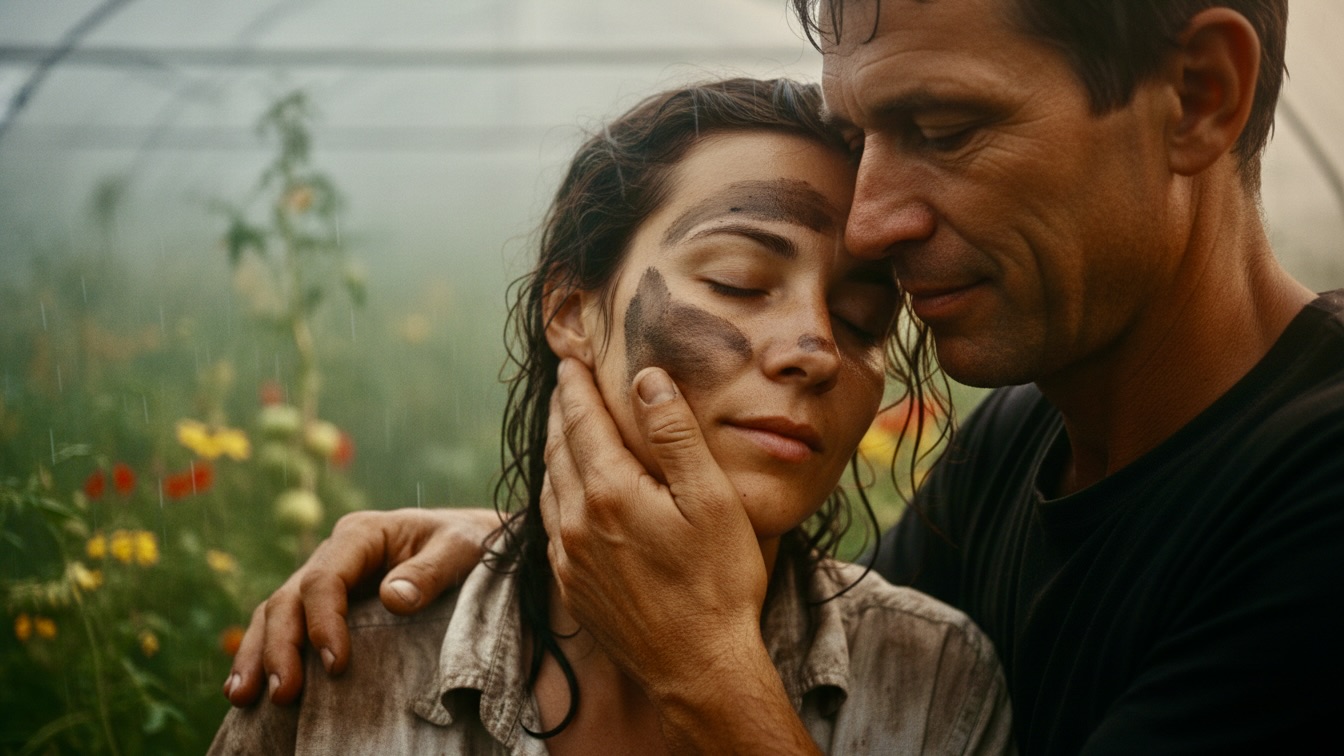
Following a catastrophic microburst that levels their crops, Steve is ready to quit, but Helen rallies the entire community garden to salvage what remains. Through a collective effort of washing mud-caked vegetables and foraging wild greens, they narrowly exceed the grant threshold. In the aftermath, sheltered in a greenhouse during a second storm, the professional tension between Helen and Steve finally snaps, leading to a romantic reconciliation that mirrors the mixing of their soil.
Helen: A meticulous, high-strung retiree whose trauma from childhood food insecurity manifests as a pathological need for order and "the grid." Her psychological arc moves from rigid isolation and judgment to vulnerability and community leadership, realizing that survival requires flexibility. At the start, she is a "control freak" who views Steve as a liability; by the end, she is a collaborator who recognizes the value in his chaos.
Steve: A rugged, seemingly careless gardener who favors "organic breakdown" over aesthetics, using his chaotic methods to mask his own history of lack. He begins as a defensive provocateur who scoffs at Helen’s rules, but his arc leads him to become a supportive partner who provides the physical and emotional strength Helen lacks. He moves from a state of cynical independence to one of committed partnership.
Martha (Supporting): The stern, clipboard-wielding head of the garden committee who serves as the voice of the looming municipal threat. She is the catalyst for the plot, representing the cold reality of metrics that the protagonists must overcome.
The episode opens with Helen and Steve arguing over a soil meter reading and a pile of manure until Martha delivers the ultimatum: merge plots and double the yield or lose the water. The "Pink String" is pulled up, and the two struggle to integrate Helen’s sterile rows with Steve’s wild planting, eventually bonding over a shared taste of wild sorrel and the trauma of childhood hunger. A sudden frost forces the pair into a frantic midnight scramble to save the seedlings, leading to a moment of physical closeness that shifts their dynamic from rivals to allies. A violent microburst storm destroys the garden's infrastructure, leaving Steve defeated in the mud until Helen calls in the "flower gardeners" to help with an emergency salvage operation. The community weighs the final harvest on the blue tarp, hitting the 1,042-pound mark just as a second storm drives Helen and Steve into the greenhouse for a long-awaited romantic climax.
The episode begins with sharp, comedic irritation and high-contrast tension, transitioning into a somber, vulnerable middle act as the characters' backstories are revealed. The mood shifts from the heat of anger to the cold of fear during the frost and storm sequences. The final act is a high-stakes, muddy race against time that culminates in a triumphant, warm, and romantic resolution amidst a second, more peaceful storm.
If expanded, the season would track the garden's transformation from a collection of "hobby plots" into a politically active "micro-farm" fighting a season-long battle against a specific developer. Each episode would introduce a new pair of gardeners whose personal conflicts mirror larger social issues, such as gentrification, aging, and environmental collapse.
Helen and Steve’s relationship would serve as the emotional anchor for the season, testing whether their new "mixed soil" philosophy can withstand the pressures of a full growing season. Their arc would escalate from this initial truce to a leadership role where they must defend the entire community's right to the land against the city council's final vote.
The visual style is tactile and "dirty," utilizing close-up macro shots of soil, insects, and sweating skin to emphasize the physical labor of gardening. The lighting shifts from the harsh, overexposed glare of the Kenora summer to the soft, blue-hued moonlight of the night watches and the bruised purples of the storm clouds. The camera work is handheld and intimate during the bickering, smoothing out into wider, more stable shots as the community comes together.
The tone is a "grounded romantic dramedy," comparable to the rustic intimacy of Minari mixed with the sharp, character-driven bickering of The Bear. It avoids sentimentality by focusing on the grit, the smell of manure, and the genuine fear of hunger, ensuring the romance feels earned through shared labor.
The target audience consists of adults (30-65) who enjoy character-driven dramas, gardening enthusiasts, and viewers interested in stories about community resilience and late-in-life romance. It appeals to those who appreciate "slow TV" aesthetics combined with high-stakes emotional narratives, fitting well within a prestige anthology format or a public broadcasting lineup.
The pacing is brisk, mirroring the compressed growing season of Northern Ontario, with a three-act structure: the forced merger, the environmental trials, and the community salvage. The 12-minute runtime necessitates quick, punchy dialogue and visual storytelling to establish the stakes. The tempo accelerates during the storm and salvage scenes, providing a rhythmic contrast to the quieter, more intimate moments in the greenhouse.
The production requires a realistic garden set capable of being "destroyed" by wind and water, necessitating practical rain rigs and mud pits that can be reset for multiple takes. The "steaming manure" effect can be achieved with practical steam or smoke machines to maintain the grounded, visceral feel of the environment.
Special attention should be paid to the "wild sorrel" and "heirloom tomato" props to ensure they look authentic and appetizing, as the food itself is a central character. Sound design is critical, particularly the contrast between the buzzing cicadas of the heatwave and the deafening roar of the microburst, to immerse the audience in the volatile Kenora climate.


