Format: Short Film / Anthology Episode | Est. Length: 10-12 minutes
Imagine this story as a cornerstone episode of The Watchers, an anthology series exploring the intersection of indigenous land defense, near-future surveillance technology, and the evolving legal landscape of environmental activism. Each episode follows a different group of "land defenders" as they navigate the tightening grip of corporate-state collusion, shifting the narrative from traditional protest to high-stakes information warfare. The series maintains a grounded, gritty realism that highlights the physical and psychological toll of standing in the way of "economic flow."
Sarah sits on a dairy crate in the sweltering heat, feeling the grit of the road in her skin, as she learns that a new law has just effectively criminalized her presence on her own ancestral land.
When a draconian new law threatens to crush their blockade, a group of land defenders must abandon the road and take to the high country to expose a catastrophic environmental violation. They trade physical barriers for digital leverage, proving that in a surveillance state, being a witness is the most dangerous form of resistance.
The story explores the evolution of protest in a modern surveillance state, shifting the focus from physical obstruction to the power of the "witness." It delves into the concept of perspective—how moving from the narrow view of a road to the high-ground vantage of a ridge can transform a sense of victimhood into tactical agency.
The narrative also examines the "machinery" of the state, contrasting the rigid, bureaucratic nature of law and industry with the fluid, adaptive resilience of the land and its defenders. It highlights the emotional transition from claustrophobia and hopelessness to a cold, clear resolve born of seeing the "whole picture."
For Sarah and her team, the immediate stake is the survival of the river watershed, which faces permanent contamination from a rushed pipeline project. On a personal level, they risk federal imprisonment and the total erasure of their legal rights under the "Public Order Streamlining Act." Failure means not only the destruction of the land but the final silencing of their movement by a government that has stopped pretending to listen.
The primary external conflict is the state-corporate machine, represented by the faceless tactical teams, the "Public Order Streamlining Act," and the massive drilling rig threatening the river. Internally, the group faces a conflict of ideology: Leo’s aggressive desire for a physical fight clashes with Sarah’s realization that they must adapt to a new kind of battle. The environmental conditions—oppressive heat, rugged terrain, and the "dry air" of the forest—act as a constant physical antagonist, testing their endurance.
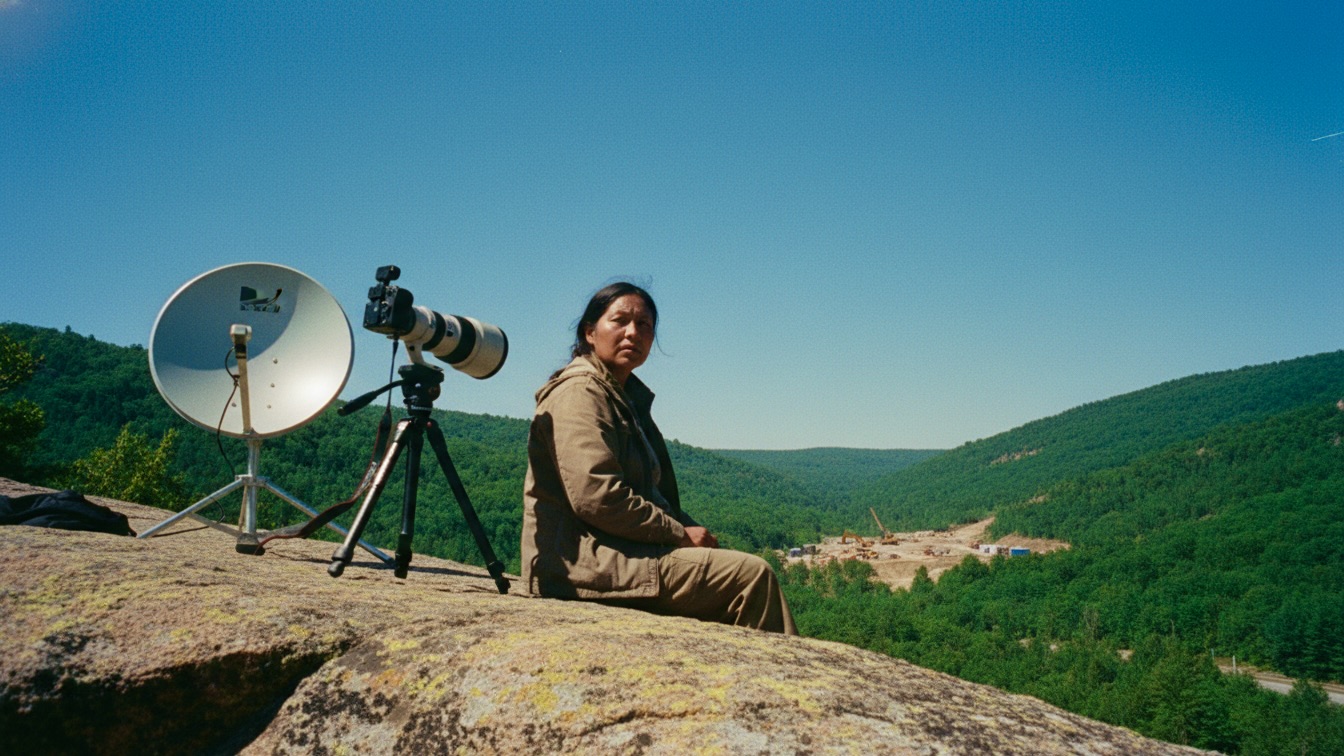
In the sweltering heat of a northern forest, Sarah and a small group of land defenders learn of a new law that will allow the government to forcibly clear their blockade within hours. Realizing that a direct confrontation on the access road is a losing game against tactical teams and drones, Sarah leads a core group on a grueling midnight trek up a decommissioned, overgrown logging road to a ridge overlooking the pipeline's river-crossing site. The climb is a physical and psychological test, forcing them to leave behind their camp and their traditional methods of resistance to gain a new perspective.
From their new vantage point at dawn, they witness the pipeline company hitting a geological fissure, causing a massive "bentonite leak" of toxic slurry into the pristine river. Realizing the company intends to hide the spill and continue drilling to meet their schedule, Sarah’s team uses a satellite uplink to broadcast high-definition, GPS-tagged evidence of the violation to regulators and the media. The digital leverage forces an immediate emergency stop-work order, proving that while the law can move the goalposts, it cannot erase the physical reality of environmental destruction when the world is watching.
* Sarah Two Rivers: A weary but resolute leader who transitions from feeling trapped by the law to finding power in surveillance. She begins the episode physically and mentally exhausted, feeling the "walls moving in," but ends with a sharpened sense of purpose and a "high ground" perspective. Her arc is one of reclaiming agency through sight rather than just presence.
* Leo: A twenty-two-year-old tech-specialist driven by aggressive, nervous energy who initially wants a physical fight to avoid "waiting to be picked up." He starts the episode frustrated by the "rules of the game" and ends as the technical architect of the group's digital victory, learning that information is a more effective weapon than a blockade.
* Ben: A fifty-year-old veteran of the bush who provides the tactical knowledge and grounding for the group. He serves as the bridge between old-school land defense and the new reality, moving from skepticism about the ridge path to a quiet pride in their success as he realizes the mountain itself has provided their best defense.
* Supporting Characters (Maya & David): Maya and David serve as the scouts and technical support, representing the physical toll of the struggle and the necessity of communal coordination. Maya’s hair matted with sweat and David’s fresh facial scrape emphasize the visceral reality of their environment.
* Beat 1: Sarah sits in the oppressive heat, feeling the grit of the road and the throb in her back as Leo reveals the details of the "Public Order Streamlining Act" that criminalizes their assembly. The atmosphere is heavy and claustrophobic, establishing the sense that the legal "walls" are closing in on the camp.
* Beat 2: Inside the communal tent, the group debates their next move as reports of tactical teams and dogs arrive, leading Sarah to propose a risky move to the abandoned ridge road. This is the turning point where the group decides to stop playing the "game" by the government's rules and instead "stop the machine."
* Beat 3: The group undergoes a grueling midnight climb through shale and brush, a physical manifestation of their struggle, arriving at the overlook just as dawn breaks over the valley. The change in air quality and the expansive view signal a shift in Sarah’s internal state from anxiety to clarity.
* Beat 4: Using long-range optics, the team spots a grey bentonite slurry leaking into the river, realizing the company is ignoring the spill to stay ahead of legal challenges. The tension peaks as they realize the "machinery" is failing and the company is attempting a cover-up in real-time.
* Beat 5: David initiates the satellite uplink, broadcasting the high-definition evidence to regulators and media while the group watches the drill rig grind to a halt below. The grinding roar of the machinery is replaced by the silence of the wind, marking the climax of their tactical shift.
* Beat 6: In the aftermath, Sarah sits on the ridge as the sun sets, feeling the weight of the world lift as she realizes they have established a permanent "high-ground watch" over the watershed. The episode ends with a sense of quiet, steady resolve, as Sarah finally feels she can breathe in the clear mountain air.
The episode begins with a heavy, claustrophobic atmosphere of heat and impending doom, mirroring the characters' sense of being trapped by both the weather and the law. As they ascend the mountain, the mood shifts to one of physical strain and tension, a "purgatory" of effort that eventually breaks into a sense of cold, clear clarity. The finale provides a cathartic release, moving from the "dry air" of anxiety to the "fresh air" of a tactical victory and a renewed sense of purpose.
Over a full season, the "High Ground" network would expand to other critical sites, creating a decentralized surveillance web that challenges the state's narrative across the entire province. The thematic escalation would involve the government deploying counter-surveillance, signal jammers, and drone warfare, forcing Sarah and her team to constantly innovate their tactics to stay one step ahead of the "machinery."
Character evolution would focus on the toll of living as "ghosts" on the ridge, exploring the isolation and the hardening of their resolve. The season would culminate in a massive, coordinated "Blackout" event where the group must choose between maintaining their hidden vantage points or descending for one final, public confrontation to protect the headwaters.
The visual style should emphasize the contrast between the "half-digital, half-primal" aesthetic, using the blue light of tablets against the orange flicker of campfires and the deep greens of the forest. The camera work should transition from tight, handheld, and shaky shots in the low-altitude camp to sweeping, stable, wide-angle vistas on the ridge to visually represent Sarah's expanding perspective and newfound control.
The tone is a blend of "Environmental Noir" and "Techno-Thriller," influenced by films like Night Moves and The East. The color palette should shift from the dusty, sepia-toned heat of the valley to the sharp, high-contrast blues and greens of the mountain ridge, emphasizing the clarity found at higher elevations.
This content is aimed at adults and young adults (18-45) interested in social justice, environmental thrillers, and near-future political dramas. It appeals to viewers who enjoy grounded, character-driven stories with a "David vs. Goliath" narrative arc and those who are engaged with contemporary issues surrounding indigenous rights and climate activism.
The pacing follows a "pressure cooker" model, with a slow-burn build-up in the first act to establish the atmospheric pressure and legal stakes. The middle act accelerates with the physical tension of the midnight climb, culminating in a high-stakes, fast-paced "race against the clock" as the data uploads during the climax. The final two minutes provide a meditative "cool down" to allow the emotional resonance of the victory to settle.
Production will require extensive location scouting for a rugged, mountainous forest setting that can accommodate night shoots and long-distance views of a simulated construction site. The "staging area" can be created using a mix of practical heavy machinery and digital extensions to minimize the environmental footprint of the production itself.
Practical effects for the "bentonite leak" (using non-toxic grey clay) and the use of real-time drone or long-lens cinematography will be essential to maintain the grounded, authentic tone of the environmental violation. The "communal tent" and "forestry cabin" sets should feel lived-in and weathered, using authentic materials to ground the high-tech elements of the story in a rugged, physical reality.


