Format: Short Film / Anthology Episode | Est. Length: 10-12 minutes
This episode serves as a haunting entry in a dystopian anthology series exploring the erosion of individual identity within a hyper-regimented, technologically absolute regime. The series, set in a near-future landscape where human connection is treated as a systemic inefficiency, follows various citizens as they attempt small, futile rebellions against the State’s algorithmic control. Each episode uncovers a different layer of the regime’s architecture, building a macro-narrative of a society that has successfully commodified the human spirit.
Under the blinding, artificial light of a forced spring festival, Brian stands before genetically engineered flowers that bloom on schedule, his body already reacting to the toxic, metallic pollen that permeates the air. He shares a tense, whispered exchange with his friend Nate, confirming the presence of a smuggled, modified flash drive hidden against his ribs.
Two desperate young adults attempt to hack the State’s mandatory labor assignment algorithm to ensure they are stationed together. Their small act of defiance triggers a catastrophic system failure that exposes the true, merciless nature of the regime.
The episode explores the theme of "radical intimacy" as an act of rebellion in a world designed for isolation. It highlights the tension between the organic, messy nature of human connection and the cold, clinical precision of a government that views friendship as a threat to productivity.
Secondary themes include the environmental cost of authoritarianism and the psychological toll of living in a state of constant, low-grade surveillance. The "Sun-Daisies" serve as a metaphor for the State’s control over reality, where even nature is forced to conform to the calendar of the ruling power.
Brian and Nate are risking immediate, permanent relocation to the brutal "Mining Sector," a death sentence for most young citizens. Beyond their lives, they are gambling with the only thing they have left: their shared history and the comfort of their mutual presence in an otherwise hollow existence.
The primary conflict is the struggle between the protagonists' desperate desire for companionship and the State’s "pairing algorithm," which is specifically designed to break social bonds. The antagonistic force is the faceless, omniscient surveillance network that monitors every electrical pulse and biometric shift, represented physically by the armored Guards and the unblinking, white-plastic terminals.
Brian and Nate navigate the crowded, oppressive plaza of Sector 4, waiting for the Spring Selection process to begin. They rely on their history of shared, minor rebellions to manage their growing panic, ultimately executing a high-stakes hack on the assignment terminal to force a joint placement in a safer agricultural district.
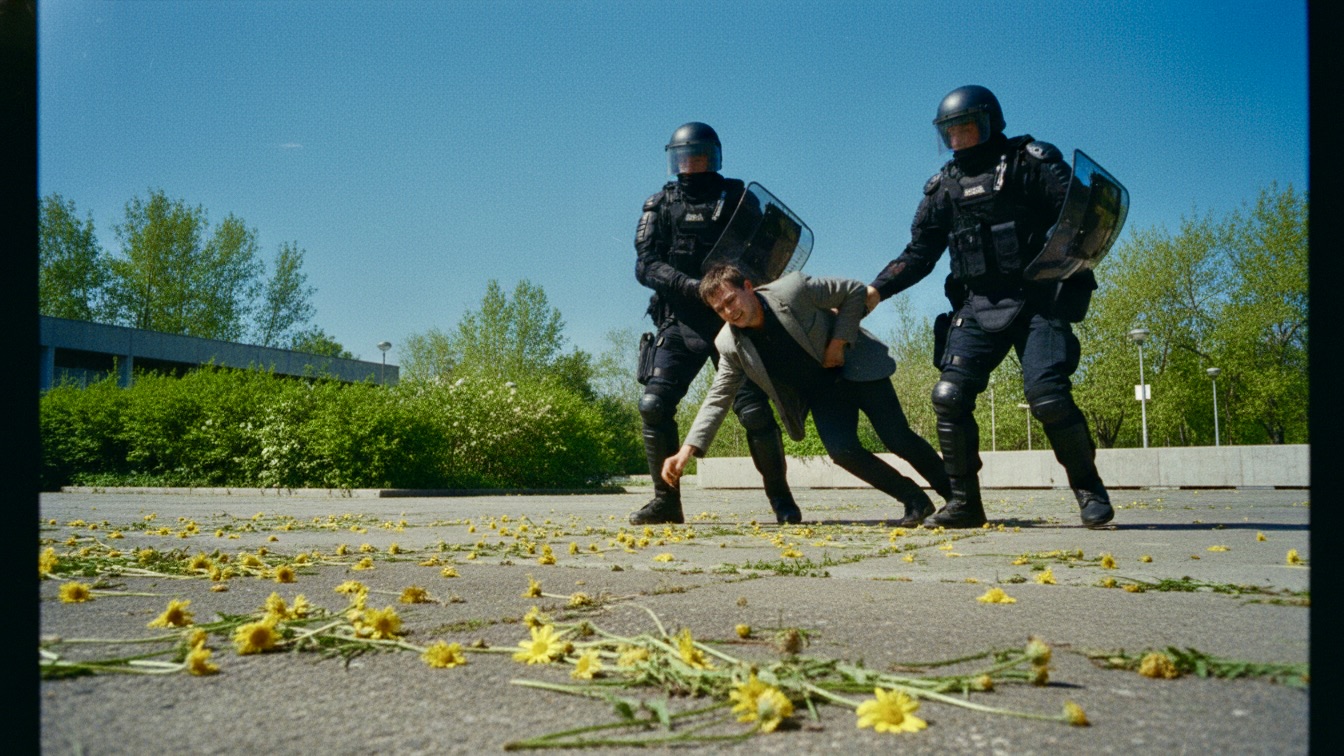
The plan succeeds momentarily, but a minor hardware power surge triggers a systemic security breach, instantly alerting the Guard. As the plaza descends into a violent crackdown, Brian and Nate are separated; Nate is brutally incapacitated and dragged away, while Brian is pinned and arrested, realizing that the system was not only aware of their plan but used it to identify and punish their specific emotional attachment.
Brian is a cautious, observant twenty-one-year-old whose primary motivation is the preservation of his only meaningful relationship. He begins the episode with a fragile, intellectual confidence in his technical skills but ends in a state of total psychological collapse as he realizes the futility of his struggle.
Nate is the more volatile, kinetic counterpart to Brian, acting as the externalized manifestation of their shared anxiety. He begins the episode in a state of high-strung, nervous energy and ends as a broken, physically defeated victim, illustrating the swift, crushing efficiency of the State’s response to dissent.
The opening beat establishes the oppressive atmosphere of the plaza, where Brian and Nate use their familiar, cynical banter to mask the physical and psychological pain caused by the environment. Tension escalates as they move through the line, highlighting the contrast between the grimy reality of the citizens and the sleek, alien technology of the State terminals.
The midpoint occurs at the terminal, where the successful injection of the code provides a fleeting, euphoric moment of hope that is immediately shattered by the hardware-induced alarm. The climax erupts in a sudden, jarring transition from the silent, shuffling crowd to a violent, chaotic crackdown by the Guards, stripping away any illusion of control.
The final beat finds Brian in the back of a transport truck, where the silence of the dark, enclosed space forces him to confront the absolute finality of his failure. The loss of Nate is not just a physical separation, but the destruction of his last link to humanity, leaving him in a state of hollow, permanent isolation.
The episode follows a trajectory from a low-level, pervasive hum of anxiety to a brief, sharp spike of hope, followed by a plummet into absolute despair. The audience is meant to feel the claustrophobia of the setting, the metallic, acidic taste of the environment, and the crushing weight of the final realization that the State’s surveillance is inescapable.
If expanded, the series would follow the "glitch" created by Brian’s drive, which inadvertently leaks fragments of the State’s true, hidden history into the public network. Each subsequent episode would focus on different characters discovering these digital breadcrumbs, leading to a slow-burning, decentralized movement that the State struggles to suppress.
The character evolution would shift from individual, selfish attempts at survival to the realization that the system’s cruelty is a feature, not a bug, of the regime. The overarching narrative would track the transition from quiet, internal resistance to a broader, more dangerous confrontation with the central authority.
The visual style is defined by a "clinical dystopian" aesthetic, characterized by high-contrast, overexposed lighting that makes the world feel bleached and artificial. The color palette centers on sterile whites, harsh greys, and the sickly, vibrant yellow of the engineered flowers, creating a sense of visual discomfort.
The tone is grounded, gritty, and relentlessly oppressive, drawing inspiration from the cold, industrial dread of Children of Men and the psychological claustrophobia of 1984. The camera work should be handheld and intimate during the character interactions, shifting to static, wide-angle "surveillance" shots to emphasize the presence of the State.
The target audience is young adults and adults (18-35) who enjoy high-concept science fiction, dystopian narratives, and character-driven dramas. The viewing context is best suited for streaming platforms that cater to viewers who appreciate slow-burn tension and thematic depth over traditional action-heavy sci-fi tropes.
The pacing is rhythmic and deliberate, mimicking the slow, agonizing shuffle of the crowd before accelerating into a frantic, chaotic final act. The 10-12 minute runtime is structured to maintain a constant, tightening pressure on the viewer, ensuring that the transition from the "banter" phase to the "arrest" phase feels sudden and jarring.
The "Sun-Daisies" should be designed as practical, slightly uncanny props—bright, plastic-looking flowers that feel inherently wrong in a natural environment. The sound design is critical; the "shadow mass" silence should be punctuated by the grating, synthetic sounds of the State’s technology, emphasizing the auditory assault of the alarm system.
The transition from the bright, overexposed plaza to the dark, claustrophobic interior of the transport truck should be emphasized through color grading and lighting contrast. The physical toll of the environment—the bleeding gums, the metallic taste, the abrasive cots—should be portrayed through subtle, visceral practical effects to ground the dystopia in physical reality.


