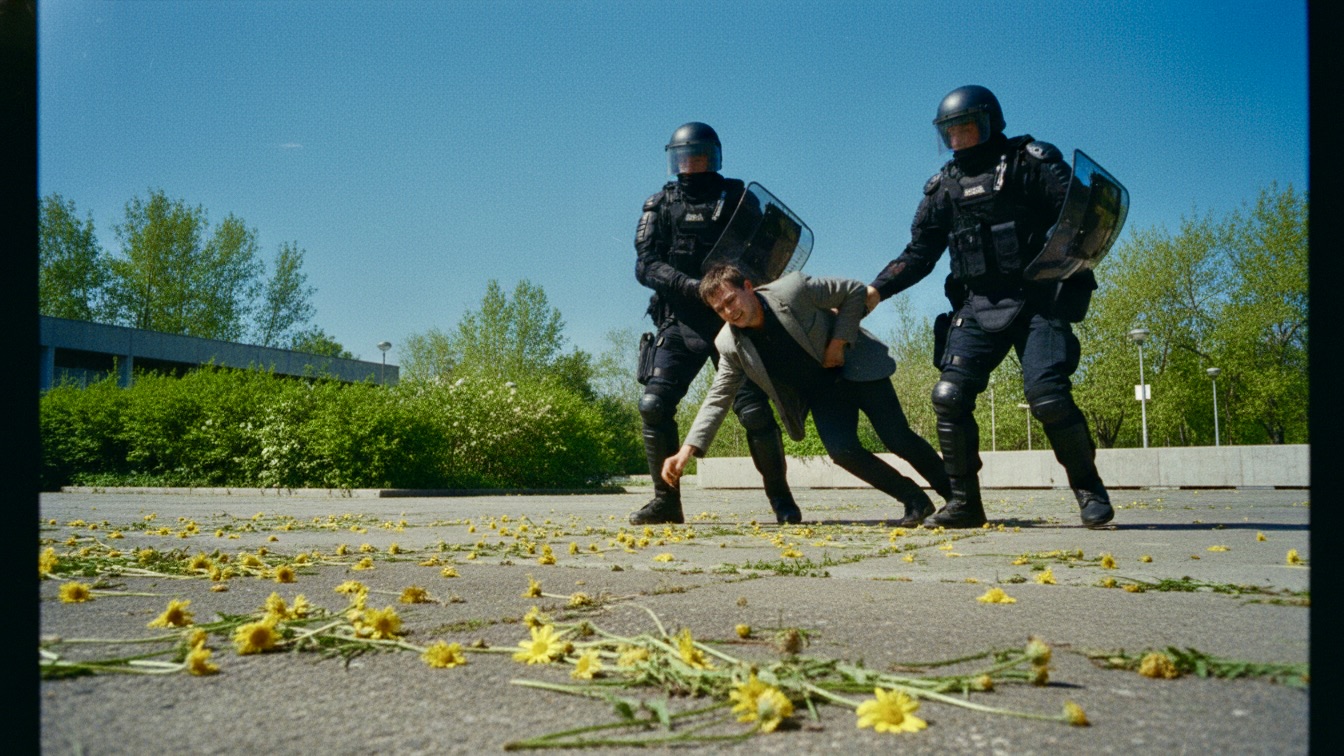
The story follows Brian, a young man living in a dystopian society where the State enforces mandatory labor assignments through a dehumanizing, algorithmic selection process. Alongside his companion, Nate, Brian attempts to hack a terminal in Sector Four to ensure they are assigned to the same agricultural district. Despite their meticulous planning and the use of a modified flash drive, a minor hardware power surge triggers a security breach. The State’s enforcers immediately intervene, violently subduing both men and dragging them away to separate fates. The chapter concludes with Brian locked in a transport truck, realizing that his attempt to assert agency has only resulted in the permanent destruction of his only meaningful connection.
The central theme of the narrative is the fragility of human connection within a totalizing, authoritarian regime. The State functions as a psychological predator that understands the necessity of isolation; by deliberately breaking social bonds, the regime ensures that its citizens remain too atomized to organize or revolt. Brian and Nate’s attempt to manipulate the system is not driven by a political ideology but by a desperate, selfish need for companionship. Their failure underscores the futility of seeking individual agency when the infrastructure of daily life is designed to detect and punish even the smallest deviation from the norm.
Environmental control serves as another potent theme, illustrating how the State enforces its reality through artificiality. The Sun-Daisies, engineered to bloom on a specific date regardless of nature, serve as a metaphor for the citizens themselves. Just as the flowers are forced into a synthetic cycle, the humans are forced into a schedule of labor and state-mandated existence. The pervasive, metallic taste of the pollen and the blinding, clinical light suggest a world that has been stripped of its organic vitality. This environmental hostility reflects the internal decay of the characters, whose physical health is deteriorating alongside their hope.
Brian is defined by a deep-seated, quiet desperation that manifests as a constant hum of anxiety. He is not a revolutionary in the grand sense; his rebellion is profoundly personal and limited to his desire to remain with Nate. He manages his terror through a reliance on technical knowledge and a cynical, detached internal monologue. Brian views the world through a lens of suspicion, constantly analyzing the mechanisms of his oppression to find a crack in the armor. His ultimate defeat is not just physical; it is the realization that his attempt to carve out a small space of humanity has been anticipated and weaponized against him.
Nate represents the psychological toll of life under the State’s constant surveillance. He is characterized by a frantic, kinetic energy that betrays his internal fragility and deep-seated fear. Unlike Brian, who tries to maintain a facade of control, Nate is visibly fraying, marked by the physical signs of exhaustion and the trauma of his environment. His reliance on banter and shared memories acts as a fragile shield against the encroaching darkness of his reality. When he is ultimately struck down by the Guard, his vulnerability highlights the total lack of protection afforded to those who attempt to subvert the established order.
The narrative voice is tight, clinical, and claustrophobic, mirroring the mechanical nature of the State. The pacing is expertly managed, beginning with a deceptive stillness and accelerating into a frantic, high-stakes climax. By focusing on the 0.4-second window required for the hack, the author emphasizes the crushing pressure of the moment. This temporal focus heightens the tension, making the eventual failure feel both inevitable and devastatingly sudden.
Sensory details are used effectively to establish a sense of unease and physical discomfort. The recurring motifs of metallic tastes, blinding light, and the "shadow mass" create a setting that feels fundamentally wrong and oppressive. By describing the Guard’s violence with blunt, visceral imagery, the narrative avoids glorifying the conflict, instead grounding it in the grim, mundane cruelty of the regime. The transition from the buzzing tension of the plaza to the suffocating darkness of the transport truck provides a final, jarring shift in tone that cements the feeling of hopelessness.


