Format: Short Film / Anthology Episode | Est. Length: 10-12 minutes
This episode serves as a standalone entry in a series titled The Thaw, an anthology exploring the fragile, transitional periods of young adulthood in rural, isolated landscapes. Each episode focuses on the unspoken anxieties of characters standing on the precipice of life-altering departures, capturing the quiet, desperate intimacy found in places where the seasons—and the people—are rapidly changing.
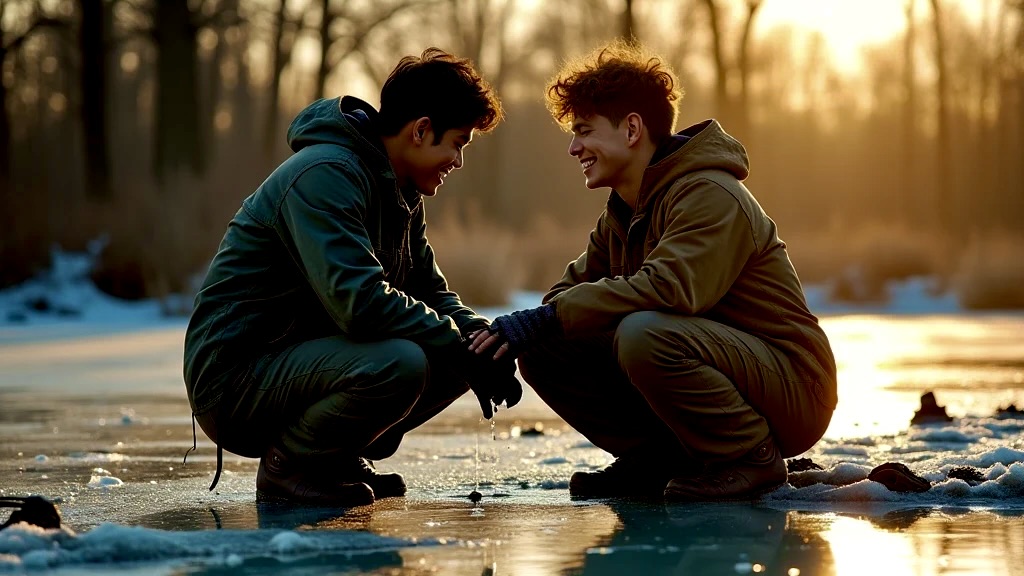
Leo and Gabe drag a heavy power auger across a landscape of melting slush and exposed mud, their heavy winter gear a pathetic, performative armor against an unseasonably warm March day. As they reach the center of a decaying pond, the ice emits a hollow, warning groan that signals the end of their shared childhood.
Two lifelong friends attempt a final, ritualistic ice fishing trip on a dangerously melting pond before moving to separate cities. Their desperate cling to tradition forces a confrontation with the reality of their impending separation and hidden feelings.
The episode explores the theme of liminality—the uncomfortable space between who we were and who we are becoming. It contrasts the rigidity of tradition with the fluidity of a changing climate, using the melting ice as a metaphor for the structural collapse of long-term friendships under the pressure of adult expectations.
Beneath the surface lies a study of repressed intimacy and the fear of vulnerability. The characters use the masculine, stoic ritual of ice fishing to mask their grief over the end of their shared history, ultimately discovering that the "thaw" is as much internal as it is environmental.
The primary stake is the survival of the bond between Leo and Gabe as they face a future in different cities. Beyond the immediate physical danger of falling through the ice, they risk losing the only person who truly understands their history, potentially leaving them both isolated in their new, unfamiliar environments.
The external conflict is the environment itself; the pond is literally disappearing, forcing the characters into a confined, sinking space that mirrors their internal pressure. Internally, the antagonist is their own inability to articulate their fear of abandonment, leading to a cycle of deflection, irony, and posturing that prevents them from being honest with one another until the ice finally breaks.
Leo and Gabe trek to Miller’s Pond, an act of ritualistic defiance against the arrival of spring and their upcoming relocation to different universities. As the ice begins to fail under their weight, they engage in a tense, circular conversation about their future, using the gear and the activity as a buffer against the emotional weight of their impending goodbye.
The situation escalates as the ice forms a literal island beneath them, forcing a moment of raw, unvarnished honesty. When the ice finally gives way, the physical shock of the freezing water strips away their defenses, leaving them to grapple with the reality of their separation and the depth of their connection on the muddy, thawing bank.
Leo is a cautious, observant young man who uses planning and logistics—like his upcoming move to Winnipeg—to manage his anxiety. He starts the episode hiding behind a mask of pragmatism but ends it by choosing to prioritize his emotional connection with Gabe over his own comfort.
Gabe is the more volatile, cynical of the two, masking his fear of the future with bravado and dark humor. He begins the episode as a resistant, defensive force, but his arc concludes with a moment of desperate vulnerability, signaling his transition from a boy hiding in "tradition" to a young man acknowledging his need for companionship.
The opening sequence establishes the physical struggle of the trek, emphasizing the absurdity of their winter gear in the spring heat to highlight their refusal to accept change. The midpoint occurs when they settle onto the ice, where the conversation shifts from casual updates to the crushing reality of their impending separation, punctuated by the ominous, artillery-like booming of the shifting pond. The climax arrives when the ice island collapses, forcing the two into the freezing water and breaking the barrier of their performative masculinity, leading to a quiet, intimate resolution on the muddy shore.
The episode follows a trajectory from claustrophobic tension and cynical detachment to a sudden, chaotic release of emotion. The audience experiences a shift from the annoyance of the characters' posturing to a profound, empathetic understanding of their grief, ending on a note of bittersweet, fragile hope.
If expanded, the series would follow the "aftermath" of these departures, documenting how the characters navigate their new, separate realities while struggling to maintain the tethers of their past. Thematic escalation would involve the characters encountering different "thaws"—the end of relationships, the loss of family homes, or the failure of professional dreams—each episode serving as a snapshot of how they adapt to a world that refuses to stay frozen.
The visual style is grounded in naturalism, utilizing the stark contrast between the bright, aggressive sun and the murky, grey-green textures of the melting landscape. The camera work is intimate and handheld, emphasizing the characters' physical proximity and the claustrophobic nature of their shrinking environment, with a color palette that moves from sterile, cold tones to the muddy, organic hues of early spring.
The tone is melancholic yet grounded, reminiscent of the indie-realism found in works like Moonlight or The Florida Project. It balances the quiet, observational pacing of a character study with the mounting, visceral tension of a survival thriller.
The target audience is young adults and adults aged 18-35, particularly those navigating the transition from late adolescence to early adulthood. It is designed for viewers who appreciate character-driven narratives, atmospheric storytelling, and the nuanced exploration of platonic and romantic intimacy.
The pacing is slow and deliberate, mirroring the stagnation of the characters' lives before the ice breaks. The first half focuses on the rhythmic, repetitive nature of their ritual, while the second half accelerates as the structural integrity of the ice—and their conversation—begins to fail, culminating in a rapid, frantic climax followed by a long, lingering denouement.
The production requires a location that can realistically portray a "melting" pond, likely involving a mix of practical on-location shooting and subtle, controlled VFX to enhance the visual decay of the ice. The physical interaction with the freezing water necessitates careful safety protocols and the use of heated, quick-drying wardrobe layers to ensure the actors can maintain performance intensity during the water-submersion sequences.
The sound design is a critical element, utilizing the natural, unsettling groans and cracks of the ice as a constant, non-diegetic score. This auditory environment should intensify as the scene progresses, creating a sense of dread that underscores the dialogue, ensuring the audience feels the instability of the characters' world as much as they see it.


