Format: Short Film / Anthology Episode | Est. Length: 10-12 minutes
Step into a world where the past is a crime and the future is a subscription service; this treatment invites you to envision a high-stakes anthology series where the forgotten corners of humanity fight back against a sanitized digital horizon.
Set in a near-future dystopia where a corporate entity known as the "New Order" systematically erases non-conforming history to make way for high-efficiency infrastructure, the series follows various "Glitches"—outcasts and preservationists who inhabit the shadows of the old world. Each episode explores a different location being "optimized," focusing on the desperate measures taken by those the system has deemed obsolete to protect analog memories from a global digital wipe. The overarching narrative tracks the growth of an underground resistance that uses physical artifacts and "glitch" tactics to disrupt the clinical, AI-driven expansion of the city.
Two teenagers huddle inside the suffocating crawlspace of a decaying estate while high-tech demolition crews with sound-dampening gear hunt for "glitches" just inches away. The silence is broken only by the mechanical scream of a power saw tearing through the history they are risking their lives to save.
In a sanitized future where history is being systematically erased, two young outcasts must navigate the literal walls of a dying estate to rescue the only remaining proof of their existence. They face a choice between being paved over by the "New Order" or becoming a permanent glitch in a perfect system.
The primary theme explores the tension between "Optimization" and "Preservation," questioning what is lost when humanity trades its messy, tactile history for a clean, digital-only future. It highlights the inherent value of the "glitch"—the unpredictable, human elements that refuse to be categorized or monetized by a corporate-driven society.
The story also delves into the concept of "Analog Resistance," suggesting that in a world of total digital surveillance, the most radical act is the preservation of physical objects and unrecorded stories. It frames the act of remembering as a form of survival against a system that views history as a liability.
For the protagonist, the stakes are existential; losing the journals means the permanent erasure of her family's history and her own identity within the New Order's digital wipe. Failure to escape the house results in literal burial, as the developers are prepared to pave over the crawlspace with the teenagers still inside to meet their strict optimization deadlines.
The external conflict is a race against time and technology, embodied by the "white jumpsuits" and their high-grade sensors that turn a decaying house into a high-tech deathtrap. Internally, the protagonist struggles with the paralyzing fear of being "optimized" out of existence, while Jason’s reckless optimism serves as both a source of tension and a necessary catalyst for their survival.
In the claustrophobic walls of the Blackwood Estate, the Protagonist and her friend Jason hide from a demolition crew tasked with "optimizing" the site for crypto-mining servers. As the high-pitched whine of power saws draws closer, the Protagonist clings to a backpack containing her family's last physical journals, the only artifacts left after a global digital wipe of "unnecessary" history. Jason uses humor to mask their terror, but the situation turns dire when the crew begins clearing the library, forcing the pair to navigate the narrow, dust-choked skeleton of the house to avoid being entombed in concrete.
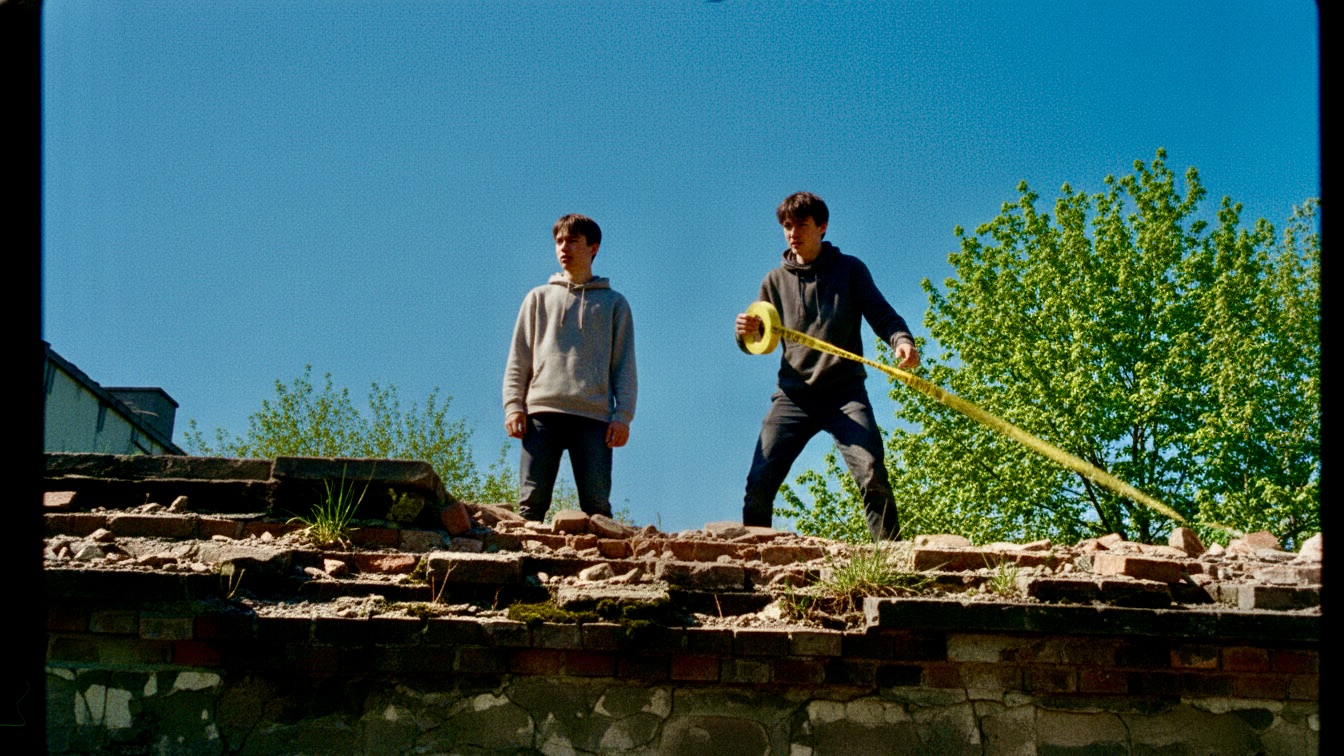
After a grueling and narrow escape through the house’s ancient chimney, the pair emerges onto the roof, transitioning from the suffocating dark into the blinding spring sun. From this vantage point, they witness the clinical destruction of the surrounding landscape, but also the resilient growth of nature in the cracks of the foundation. Inspired by this "glitch" in the New Order’s perfection, they decide to stop running; Jason marks the house with defiant yellow tape, and the duo prepares to sabotage the demolition equipment, transforming from victims of the system into its most persistent errors.
The Protagonist (Elara) begins as a terrified preservationist clinging to the past, paralyzed by the threat of optimization and the weight of her disappearing heritage. By the end of the episode, she experiences a psychological shift from a victim of the "digital wipe" to a defiant agent of the resistance, finding the courage to exist outside the system.
Jason is the "glitch" personified—a chaotic, clove-smoking rebel who uses levity and humor as a weapon against the New Order's clinical precision. He moves from a playful protector to a bold instigator, using his signature yellow tape to transform their survival into a public act of rebellion.
The White Jumpsuits represent the faceless, corporate efficiency of the New Order, acting as a collective, relentless, and mechanical force. They do not possess individual identities or arcs, serving instead as the static, clinical wall against which the protagonists must break to assert their humanity.
Trapped within the suffocating crawlspace of the Blackwood Estate, Elara and Jason remain motionless as high-tech sensors sweep the room for "glitches." The tension peaks when a power saw begins to shred the library wall just inches from their hiding spot, filling the air with pulverized history and forcing them to flee. They realize their only hope for survival is a desperate, vertical climb through the ancient, soot-clogged chimney before the house is leveled.
The ascent through the narrow chimney becomes a grueling physical battle against gravity and the encroaching sound of industrial demolition below. Elara nearly loses her grip when she spots a "white jumpsuit" patrolling the room beneath her, but Jason’s steady hand pulls her upward toward a sliver of blue sky. This midpoint transition marks their shift from passive hiders to active escapees as they break through the soot into the blinding, sensory-overload light of the roof.
On the roof, the vastness of the city’s clinical skyline contrasts with the resilient weeds blooming in the ruins below, sparking a newfound defiance in Elara. Jason marks the chimney with his signature yellow "glitch" tape, signaling their refusal to be erased by the New Order’s optimization protocols. Instead of fleeing the site, they descend toward the parked demolition equipment, ready to turn the tools of their destruction into instruments of active sabotage.
The episode begins with intense, sensory-heavy claustrophobia and a sense of impending doom, mirroring the protagonist's internal fear of erasure. This tension builds to a frantic peak during the chimney climb, finally breaking into a cathartic, wide-angle sense of liberation and hope upon reaching the roof. The final mood is one of defiant joy, shifting the audience from a feeling of victimhood to one of active resistance.
Throughout the season, Elara and Jason evolve from scavengers into key figures of an underground network dedicated to physical archiving and infrastructure sabotage. Their "Yellow Tape" mark becomes a viral symbol of resistance, inspiring other "glitches" to reclaim optimized spaces across the city and preserve the "messy" history the New Order seeks to delete.
The overarching narrative tracks the escalating conflict between the New Order’s AI-driven expansion and the human-led "Analog Underground." This culminates in a high-stakes season finale where the protagonists must infiltrate the central "Optimization Hub" to recover the master server containing the history lost during the initial Digital Wipe.
The visual style utilizes a sharp contrast between the suffocating, desaturated, and grainy interiors of the Blackwood Estate and the blindingly bright, clinical world of the New Order. The camera work is handheld and intimate during the crawlspace sequences to heighten the claustrophobia, transitioning to sweeping, stable wide shots once the characters reach the roof to emphasize their newfound freedom.
The tone is a blend of gritty dystopian thriller and hopeful "solarpunk" rebellion, emphasizing the tactile beauty of the old world against the sterile perfection of the new. Tonal influences include the grounded, high-stakes atmosphere of Children of Men combined with the vibrant, rebellious energy of Mirror's Edge.
This series targets Gen Z and Millennial viewers (ages 16-35) who resonate with themes of digital privacy, corporate overreach, and the preservation of physical media. It appeals to fans of dystopian sci-fi and "solarpunk" aesthetics, offering a narrative that balances grim social commentary with a hopeful, rebellious spirit suited for streaming platforms.
The episode follows a tight, three-act structure within its 12-minute runtime, maintaining a relentless pace that mimics a survival thriller. Act One establishes the immediate threat and claustrophobia, Act Two is a high-tension escape sequence through the house's "veins," and Act Three provides the emotional payoff and a setup for future rebellion, ensuring every minute contributes to the building tension.
Production requires a specialized "wall-slice" set design to allow for intimate, low-light filming within the narrow crawlspaces and chimney flue. These sets must be modular to accommodate camera movement while maintaining the illusion of a cramped, deteriorating environment.
Practical effects should be prioritized for the dust, debris, and demolition sequences to maintain the tactile, "analog" feel of the story. This creates a visceral contrast with the clean CGI used for the distant, futuristic city skyline, reinforcing the thematic divide between the human past and the corporate future.


