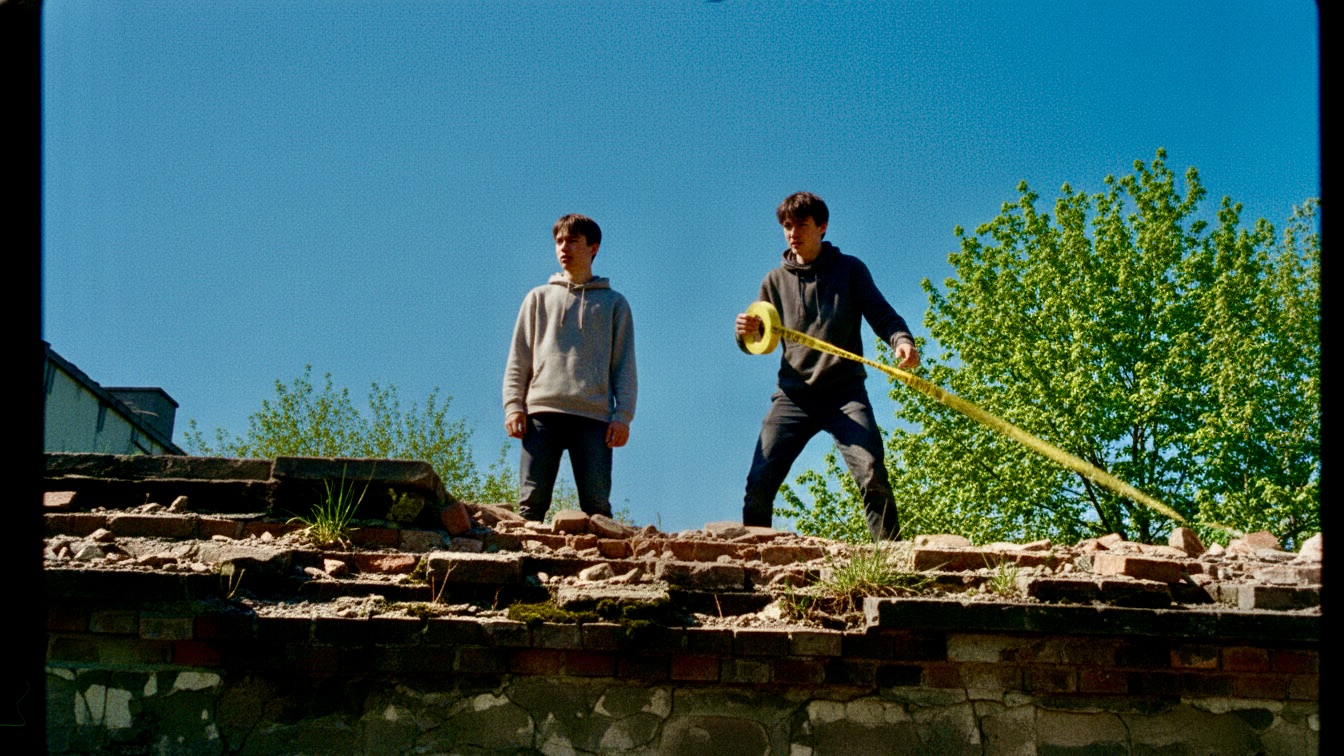
The narrative unfolds within the suffocating confines of the Blackwood Estate, an ancient structure currently being dismantled by the "New Order." The protagonist and her companion, Jason, are hiding within the wall cavities to evade high-tech contractors who treat historical remnants and human squatters as "glitches" to be optimized out of existence. While the house is systematically destroyed to make way for cryptocurrency servers, the pair attempts to rescue a collection of family journals that represent the only remaining evidence of the protagonist’s ancestry before a global digital wipe.
As the industrial destruction draws dangerously close, the duo is forced to navigate the narrow, dust-choked crawlspaces of the decaying mansion. They eventually find a desperate escape route through an old chimney flue, a relic of the Victorian era that the modern contractors have overlooked. The physical ascent is grueling, mirroring the psychological struggle of clinging to a fading past while being pursued by a sterile, clinical future.
Upon reaching the roof, the characters experience a profound sensory shift from the claustrophobia of the walls to the expansive freedom of the open air. From this vantage point, they witness the encroaching white towers of the city and the raw destruction of the estate’s grounds. Despite the looming threat, Jason performs a small act of defiance by marking the chimney with his personal tag. The story concludes with a newfound sense of agency as the protagonist and Jason prepare to sabotage the demolition equipment, choosing to remain "glitches" in a world obsessed with perfection.
The central conflict of the story revolves around the tension between human memory and technological optimization. The "New Order" represents a dystopian drive toward a frictionless future where history is viewed as a liability and everything must be monetized or assigned a QR code. By labeling the protagonist and the ghosts of the past as "glitches," the narrative explores how modern systems dehumanize those who do not fit into a pre-defined, efficient algorithm.
The Blackwood Estate serves as a powerful symbol of the "messy and human" elements that the new society seeks to erase. Its dark corners and creaky floorboards stand in stark opposition to the clean, glass-and-steel aesthetic of the developing city. The protagonist’s struggle to save her family journals highlights the theme of preservation in an era of digital erasure, suggesting that physical artifacts are essential for maintaining a sense of identity when the digital world is subject to manipulation and deletion.
Nature’s resilience provides a secondary but vital theme, offering a counterpoint to the destructive forces of the developers. Even as the old oaks are ripped out, the protagonist notices green shoots and yellow flowers pushing through the debris. This biological persistence mirrors the characters' own refusal to be "paved over," suggesting that life and history possess an inherent vitality that cannot be entirely suppressed by artificial systems.
The act of rebellion is framed not as a grand political movement, but as a series of small, personal defiances. Jason’s yellow tape and the protagonist’s laughter are portrayed as tools of survival in an increasingly sanitized world. The story suggests that being a "glitch" is a form of liberation, allowing individuals to exist outside the rigid structures of a society that demands constant subscription and surveillance.
The protagonist is a woman haunted by the loss of her heritage and the encroaching sterility of her environment. Her internal state is characterized by a profound sense of claustrophobia, which is both literal, as she hides within the walls, and metaphorical, as she feels squeezed out of a world that no longer values her history. She views the family journals not just as paper, but as the final anchors of her existence in a world that has undergone a "digital wipe."
Her initial fear and physical discomfort reflect a person who feels overwhelmed by the scale of the changes happening around her. She describes her lungs as feeling like "wet cardboard," signaling a psychosomatic response to the trauma of seeing her past demolished. However, as she moves from the darkness of the walls to the light of the roof, she undergoes a psychological transformation. The "oxygen" she breathes at the summit represents a reclamation of her own agency and a shedding of the fear that had been "sitting on her chest for weeks."
By the end of the chapter, she has moved from a state of passive hiding to active resistance. Her decision to follow Jason in sabotaging the bulldozer indicates that she has found a way to integrate her grief into a new, defiant identity. She no longer sees herself as a victim of the "New Order" but as a deliberate disruption to its clinical perfection. Her journey is one of moving from the suffocating weight of history to the liberating potential of the present moment.
Jason serves as the protagonist’s emotional anchor and the primary source of levity in a dire situation. He utilizes humor and irony as defense mechanisms against the existential dread of their circumstances, comparing their life-and-death struggle to a "bad indie movie." This playfulness is not a sign of flippancy, but rather a tactical choice to maintain his humanity in the face of a cold, mechanical enemy. He is the one who pushes the protagonist to move, acting as a catalyst for her survival.
His physical presence provides a grounding force for the protagonist, as seen when his "sweaty palm" helps her stay connected to reality in the dark. Jason represents a more proactive form of rebellion; he is not just trying to save the past, but is intent on marking the present. His act of placing the yellow tape on the chimney is a claim of territory, a way of signaling that he and the protagonist still exist despite the system's attempts to erase them.
Underneath his jokes, Jason possesses a deep situational awareness and a protective instinct. He understands the technical threats posed by the "New Order," such as the cooling fans of server racks and the logic of the developers' algorithms. His suggestion to steal the bulldozer at the end of the story reveals his philosophy: if the system cannot be escaped, it must be disrupted. He is the "glitch" personified, finding joy and purpose in the very disorder that the developers fear.
The narrative employs a heavy use of sensory details to create a vivid sense of atmosphere and tension. The author contrasts the "chalky, bitter film" of dust and the "mechanical scream" of power saws with the "fresh grass" and "blooming lilacs" of the outside world. These sensory shifts mirror the protagonist's emotional journey, moving from the sensory deprivation and grime of the walls to the overwhelming clarity of the roof. The use of visceral metaphors, such as the house "moaning" as it is killed "brick by brick," personifies the architecture and heightens the tragedy of its destruction.
The pacing of the chapter is expertly handled, beginning with a slow, heart-pounding tension that mirrors the characters' stillness in the crawlspace. As they begin their ascent through the chimney, the prose becomes more rhythmic and strained, reflecting their physical exertion. The final transition to the roof is described as "violent," a sudden explosion of light and air that breaks the preceding tension and shifts the tone from a survival horror to a defiant, dystopian adventure.
The narrative voice is intimate and grounded, using a first-person perspective to immerse the reader in the protagonist's anxiety. The dialogue between the two characters is sharp and modern, providing a realistic contrast to the "Victorian" setting of the chimney and the "clean, glass-and-steel" future. This linguistic blend reinforces the theme of the characters being caught between different eras. The author successfully uses the setting of the Blackwood Estate as a character in its own right, making its "rotting middle finger" to the modern aesthetic feel like a shared sentiment between the house and its inhabitants.


