Format: Short Film / Anthology Episode | Est. Length: 10-12 minutes
Imagine an anthology series titled The Restoration, where each episode explores a different facet of a "perfect" post-collapse society that has traded technological chaos for ecological harmony. This episode serves as a quiet, psychological character study of the "phantom limb" syndrome felt by those who remember—or were told about—the friction of the old world. While the series as a whole examines the global effort to save the planet, "Dead Charger Ports" focuses on the intimate, domestic cost of living in a world where every problem has been solved except for human boredom.
Ben stands in a silent, modern kitchen and runs his thumb over a non-functional plastic wall outlet, mourning a charging cord that hasn't existed for a decade. The house is perfectly clean and perfectly quiet, but the silence feels like a physical pressure against his ears.
In a world where humanity has successfully traded industrial chaos for ecological perfection, a young man finds himself haunted by the "ghosts" of a technological past he never lived through. He must decide if a life without struggle is a life worth living, or if the "glitch" in his brain is actually his humanity.
The primary theme is the nostalgia for dysfunction and the psychological cost of utopia. The narrative explores how the absence of struggle leads to a loss of meaning, suggesting that human identity is forged through friction and effort rather than passive comfort. By contrasting the "clean" water and "perfect" cooling tech with the "messy" reality of a hawk killing a rabbit, the story questions if "saving the world" has inadvertently resulted in the sterilization of the human spirit.
Secondary themes include the isolation of the digital-native generation in a post-digital world and the concept of "Source Reduction" as both an environmental and emotional policy. The story examines the "different kind of lonely" that occurs in a beautiful, well-provided room where the only thing missing is a sense of purpose. It posits that evolution did not prepare the human mind for total safety, leading to a romanticization of the very nightmares that nearly destroyed the species.
Ben’s sanity and sense of belonging are at the center of the conflict. If he cannot reconcile his internal dissatisfaction with the external paradise of the Restoration, he faces a lifetime of existential dissociation—a "Tuesday" that never ends. For the community, Ben represents a dangerous ideological leak; his dissatisfaction threatens the collective narrative that the Restoration is a total victory, suggesting that the "peace" they fought for might be a gilded cage.
The primary conflict is internal: Ben vs. his own "glitchy" brain that craves the chaos of the past. Externally, the antagonistic force is the Restoration itself, embodied by the Council’s "Source Reduction" policies and Sarah’s pragmatic defense of the new world. The environment acts as a passive antagonist; the "aggressive green" hills and the "too big" sky create a sense of exposure and insignificance that Ben cannot escape, making the very air he breathes a reminder of his own perceived emptiness.
Ben wanders through his silent, efficient home, feeling the weight of a world that has been "fixed" into sterility. He obsesses over relics of the past—dead charger ports and the memory of chlorine-tasted water—while struggling to find meaning in a communal society that has eliminated noise and waste. He meets Sarah, a woman who has fully integrated into the new agrarian lifestyle, and they hike to a ridge to watch the "ghosts" of old, dead satellites pass overhead.
On the ridge, Ben confesses his profound loneliness and his yearning for the "mess" of the past, while Sarah defends their survival as the ultimate achievement. They return to their quiet lives, but Ben remains haunted by a raw moment of nature—a hawk killing a rabbit—that felt more real than the curated peace of the village. The episode ends with Ben back in his dark kitchen, touching the cold charger port, trapped between a dead past and a perfect, empty future.
Ben: A melancholic "stargazer" who feels out of sync with his environment. He starts the episode in a state of quiet dissociation, physically touching the remnants of the old world to feel grounded. By the end, he reaches a state of resigned realization that his longing for struggle is not a "glitch" to be fixed, but a fundamental part of his identity that the new world cannot accommodate.
Sarah: A pragmatist and "maker" who uses manual labor and community involvement to fill the void left by technology. She begins as a supportive but firm anchor for Ben, representing the success of the Global Accord. Her arc is one of defensive stability; she clings to the "peace" of the Restoration because the alternative—the "nightmare" of the past—is too terrifying to acknowledge, leaving her unable to truly comfort Ben.
The Dead Port: Ben explores his silent home, touching a non-functional charger port and drinking "tasteless" clean water that lacks the "effort" of chlorine. The silence of the passive cooling tech creates an auditory pressure that highlights his isolation within the "perfect" house. He stares at the empty space where a microwave once sat, feeling a physical twitch of loss for a world he barely knew but deeply misses.
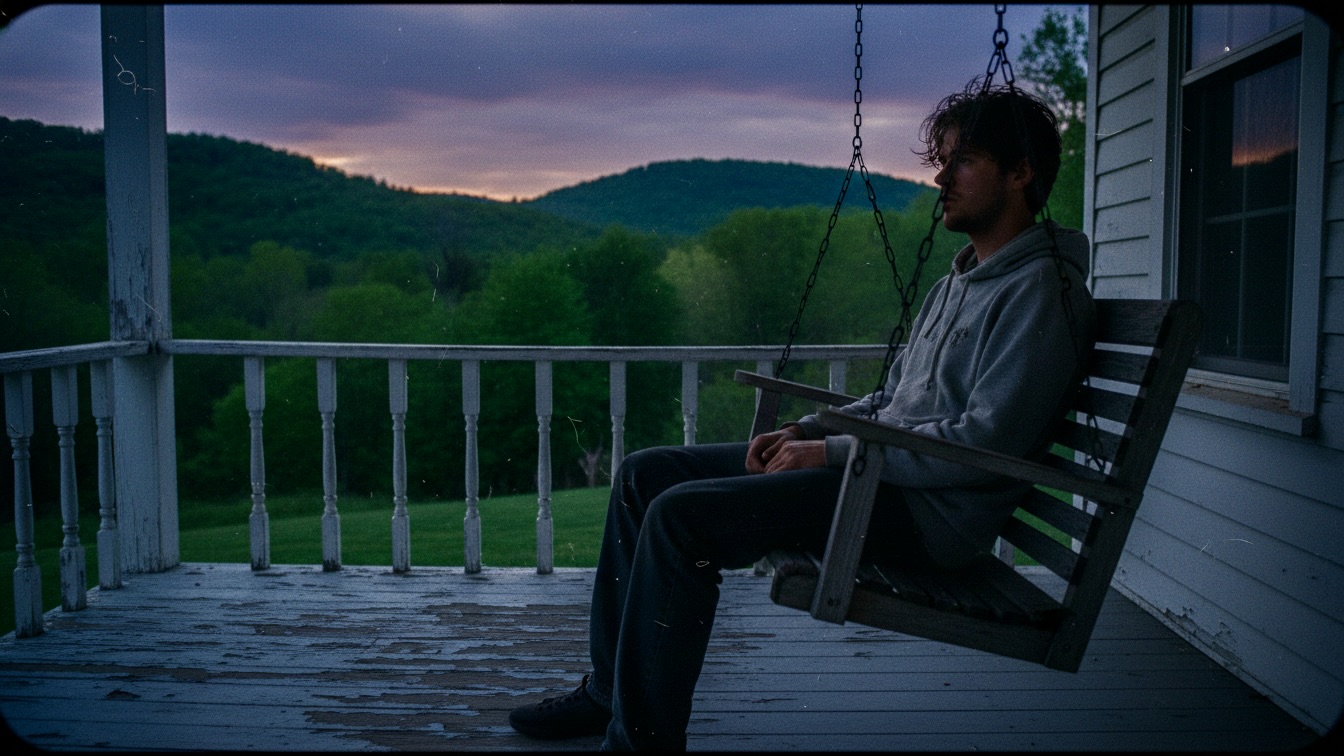
The Meeting: Ben meets Sarah on the porch, lying about why he's late to cover for his obsessive staring at the walls. They discuss the "Restoration" and the aggressive green of the hills, establishing the contrast between the beautiful exterior and Ben's internal rot. Sarah challenges his "password" look, sensing his growing detachment from their communal reality and his inability to be "okay" with the quiet.
The Ascent: The pair hikes up the ridge, where the soft, damp earth feels heavy and saturated with "too much peace." Ben questions the loss of billions of digital photos stored on dead servers, viewing their archival as a form of death rather than preservation. Sarah dismisses his concerns as "sleeping," emphasizing the ideological divide between those who mourn the digital age and those who embrace the dirt.
The Satellite Watch: At the summit, they watch the "dead hardware" of the old communication net pass overhead like shiny, orbiting ghosts. Ben reminisces about his father's stories of connectivity and scrolling, while Sarah argues that those people were actually lonelier than they are now. Ben admits his current loneliness, describing the world as a "nice room" where he is still fundamentally alone despite the lack of "pollution."
The Conflict of Reality: Ben describes a hawk killing a rabbit, calling the bloody mess the most "real" thing he has seen in months because it wasn't "clean." Sarah reacts with frustration, accusing him of romanticizing a nightmare and failing to appreciate the survival of the species. The tension peaks as Ben realizes that the "glitch" of wanting struggle might be the core of human identity, while Sarah insists that the air not tasting like ash is the only thing that matters.
The Return: They descend the hill in the dark, utilizing their "superpower" of night vision which has become just another mundane chore in a world without streetlamps. Sarah leaves Ben with a warning not to stare at the walls, offering a cool kiss that lacks the warmth he craves. Ben returns to his dark kitchen, touching the dead port one last time as the raw, lonely howl of a distant coyote emphasizes the hollow silence of his "perfect" world.
The episode moves from a sense of sterile boredom to a peak of existential frustration, finally settling into a cold, lingering melancholy. The audience should feel the "pressure" of the silence alongside Ben, transitioning from an initial appreciation of the beautiful, green world to a claustrophobic feeling of being trapped by its perfection. The mood is one of "quiet dread," where the horror isn't what is happening, but what isn't happening—the lack of noise, the lack of mess, and the lack of a future that feels different from today.
A full season of The Restoration would track the growing "Malcontent" movement—a underground group of citizens who begin sabotaging Restoration infrastructure to reintroduce "friction" into society. Ben’s journey would serve as the emotional core, as he is eventually recruited by this group and forced to decide if he is willing to destroy the planet’s health to save his own sense of purpose.
The thematic escalation would move from personal boredom to systemic rebellion, exploring how different regions of the world handle the "Global Accord." While Ben’s village is a success story, other episodes would reveal "Dead Zones" where the Restoration failed, creating a geopolitical tension between the "Perfected" and the "Forgotten." The season would conclude with Ben standing before a functioning server farm, holding a power cable, deciding whether to turn the "ghosts" back on.
The visual style is "Aggressive Naturalism," featuring hyper-saturated greens and deep, bruised indigos to make the world look almost too perfect, like a high-definition museum exhibit. The cinematography should use wide, static shots to emphasize the "big sky" and the silence of the landscape, making the characters look small and isolated. Tonal influences include the quiet, clinical dread of Never Let Me Go and the sterile, high-contrast beauty of Gattaca.
The tone is one of "Post-Utopian Melancholy," where the lighting is naturalistic—dominated by starlight, candles, and low-wattage LEDs—to create a world that feels both ancient and futuristic. The sound design is the most critical element, utilizing a "heavy silence" filled with subtle natural textures (wind, soil, breath) while completely stripping away the electronic hums and mechanical noises of modern life to create a sense of sensory deprivation for the audience.
The target audience consists of adults and young adults who enjoy "soft" sci-fi, philosophical dramas, and character-driven anthologies like Black Mirror or Tales from the Loop. It appeals to viewers interested in contemporary conversations about climate change, digital minimalism, and the mental health implications of a post-technological society. The episode resonates with "doom-scrollers" and those who feel a paradoxical exhaustion with modern connectivity, offering a "careful what you wish for" look at a world without it.
The pacing is slow and deliberate, mirroring the "silent, passive" tech of the world Ben inhabits. The narrative structure follows a single evening in real-time, using long takes and minimal dialogue to emphasize the atmospheric weight of the setting. With a runtime of 10-12 minutes, the episode functions as a "mood piece" that prioritizes sensory experience and internal monologue over traditional plot beats, building toward a quiet climax of emotional resignation.
Sound design is the primary production challenge; the "silence" must be engineered to feel heavy and pressurized, requiring a sophisticated foley layer of natural sounds (the "scratch" of a wool sweater, the "sink" of a heel into mud). The absence of electronic "room tone" will be jarring for the audience, which is a deliberate creative choice to align the viewer with Ben’s sensory experience.
Visually, the production requires high-dynamic-range (HDR) cinematography to capture the "starlight" scenes without artificial fill light, maintaining the "no light pollution" aesthetic. Practical effects should be used for the "dead" technology—the charger ports and the dust rings on counters—to ground the story in a tactile, physical reality. The "aggressive green" of the hills can be enhanced in post-production to create a slightly surreal, "too-perfect" environment that feels like a projection.


