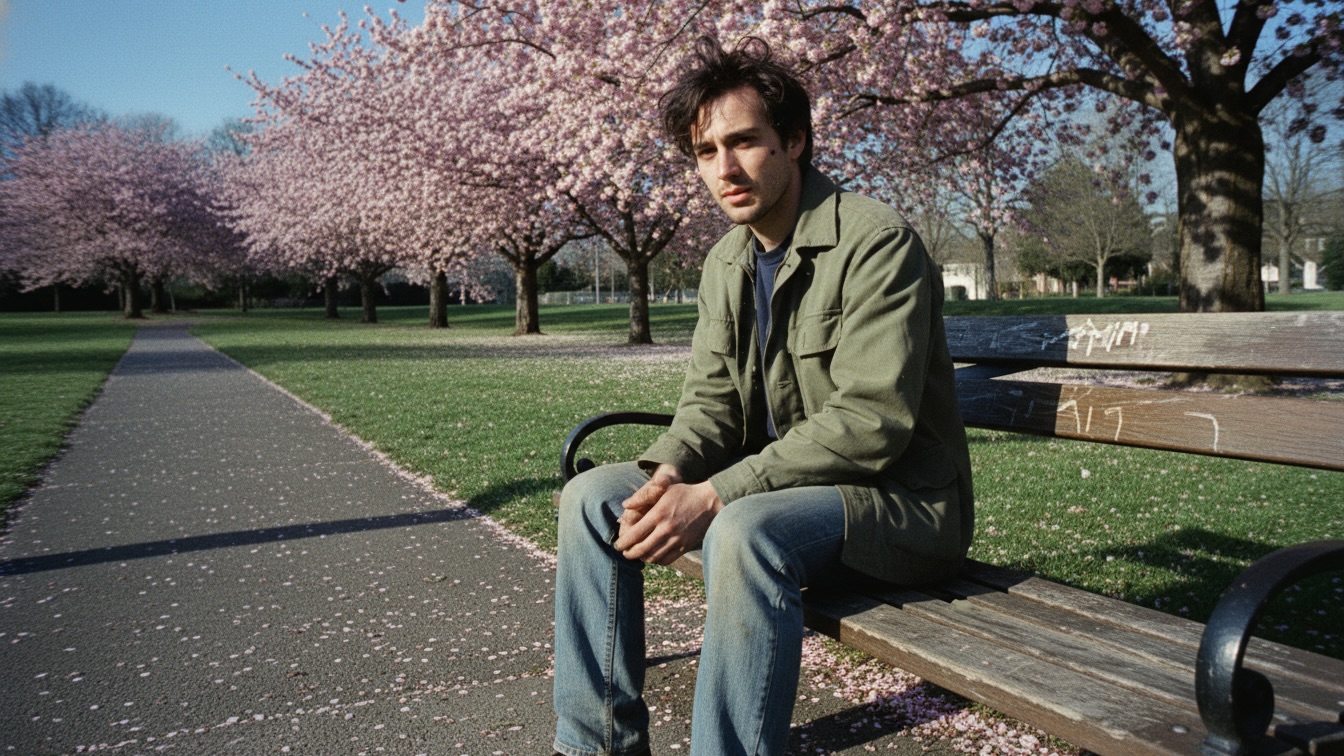
Leo sits in a silent kitchen where the smell of spring flowers masks the rot of recent family loss.
The lawnmower roared outside. It was a violent, mechanical scream that tore through the quiet of the kitchen. My father was out there, pushing the machine over the vibrant green grass. He was meticulous. He didn't miss a blade.
I watched him through the window, his face a mask of practiced calm. The sun was too bright. It hit the white quartz countertop and bounced into my eyes, making my head ache. I blinked, trying to clear the spots from my vision. The house smelled like lemon pledge and lilies. It was a clean smell. A sterile smell. It was the smell of a house where nothing bad had ever happened. But I knew better. My sister’s room was still at the end of the hall, the door shut tight, a silent vacuum of space. We didn't talk about her anymore. That was the rule. We were finding peace. That’s what the therapist said. We were moving forward. But the peace felt like a plastic bag pulled tight over my head. It was suffocating.
My mother entered the room. She was wearing a floral dress that looked like it belonged in a commercial for laundry detergent. She didn't look like a woman who had lost her daughter three weeks ago. She looked like a woman who was about to host a garden party. She carried a tray of tea. The porcelain cups clinked together. It was a delicate, fragile sound. She set the tray down on the island. Her movements were precise. Everything was performed. We were all actors now, playing our parts in a play that had no ending. The script was simple: be okay. Just be okay. If you aren't okay, you're the problem. I wasn't okay. My throat felt tight, like it was lined with sandpaper. I reached for a cup. My hand shook. I gripped the handle harder, my knuckles turning white. The tea was hot. The steam rose in a thin, vertical line. It didn't waver. There was no breeze in the house. The windows were locked.
"You must hydrate, Leo. It is essential for your recovery," my mother said. Her voice was level. It lacked the jagged edges of grief. It was a smooth, polished stone. She didn't look at me. She looked at the tea. She was studying the surface of the liquid as if searching for a secret code.
"I am hydrated, Mother," I replied. My own voice felt foreign. It was too deep, too heavy for this bright room. I sounded like an intruder in my own home. I took a sip. The tea was bitter. It tasted like herbs and dirt. "The garden looks well. Father is working hard."
"Appearance is everything," she said. She finally looked up. Her eyes were wide and clear. Too clear. There was no redness, no puffiness. It was as if she had deleted the memory of crying. "The neighbors are watching. They expect us to collapse. We will not provide them with that satisfaction. We will be the portrait of resilience. Do you understand?"
"I understand," I said. I felt a bead of sweat roll down my spine. The house was too warm. The heater was humming in the basement. It shouldn't be on. It was April. The cherry blossoms were blooming outside, their pink petals littering the driveway like confetti from a funeral. I looked back at my father. He had stopped the mower. He was standing by the flower beds, staring at the fresh mulch he had laid down this morning. It was dark, almost black, and it smelled heavy. It smelled like the earth was trying to swallow the house. He was holding a shovel. He wasn't moving. He was just looking at the ground. A bird landed on the fence, chirping a loud, frantic song. My father didn't flinch. He stayed perfectly still.
"Is something wrong with the mulch?" I asked. My mother didn't answer. She was pouring more tea. She didn't stop when the cup was full. The liquid spilled over the rim, pooling on the tray. She kept pouring. The sound of the splashing tea was the only thing I could hear. It was a wet, rhythmic sound. She didn't seem to notice. Her gaze was fixed on the wall behind me. I reached out and touched her arm. Her skin was cold. It was ice-cold despite the heat in the room.
"Mother," I said. I spoke louder this time. The word felt like a stone I was throwing into a deep well.
She blinked. The spell broke. She stopped pouring and set the teapot down with a sharp clack. She looked at the spilled tea and then at me. A small, polite smile touched her lips. "How clumsy of me. I must be tired. The spring air is so heavy with pollen, is it not? It makes one feel quite drowsy."
"You should rest," I said. I wanted her to leave. I wanted to be alone in the kitchen so I could breathe without feeling like I was being watched. Every corner of the room felt like it had an eye. The smoke detector, the light fixtures, the dark reflection in the toaster. I felt the paranoia creeping in, a slow tide of black water. I felt like the house was counting my breaths. I felt like if I stopped moving, the floor would open up. I stood up, my chair scraping loudly against the tile. The sound was like a gunshot.
"I think I will go outside," I said. "I should help Father."
"That would be most appropriate," she said. She began to wipe up the tea with a silk napkin. She didn't use a paper towel. She used silk. It seemed wasteful. It seemed wrong. I walked toward the sliding glass door. The handle was hot. I stepped out onto the deck. The air was thick. It wasn't the fresh, crisp air of spring. It was heavy and sweet, like rotting fruit. The sun beat down on my head. I walked down the stairs to the grass. My father heard me coming. He didn't turn around. He just pointed the shovel at the mulch.
"It is done, Leo," he said. His voice was a rasp. It sounded like he hadn't used it in years. "The borders are secure. The rot is contained."
"What rot?" I asked. I looked at the mulch. It was steaming. The heat from the sun was drawing moisture out of it. It looked like it was breathing. I saw something white poking out from under the dark wood chips. It was small. A fragment of something. I leaned closer. It looked like a piece of plastic. Or a tooth. My heart hammered against my ribs. A sharp, rhythmic thud. I felt a surge of nausea. The peace of the garden was a lie. It was a thin layer of dirt over a nightmare.
"The rot of memory," my father said. He turned to look at me. His eyes were bloodshot. The pupils were tiny pinpricks. "We must keep the garden clean. We must keep the edges sharp. If we let the weeds grow, they will take everything. Do you want the weeds to take us, Leo?"
"No," I whispered. I couldn't look away from the white fragment in the mulch. I wanted to reach down and grab it, but I was terrified of what I would find attached to it. My father stepped closer. He smelled like gasoline and sweat. He put a hand on my shoulder. His grip was like a vice. It hurt. "I just... I miss her, Dad."
The air went silent. Even the bird stopped chirping. My father's face didn't change, but his grip tightened until I felt my collarbone ache. "That name is not spoken here. That person does not exist in this garden. We have found peace. Do not disturb the peace, Leo. It is a very fragile thing."
He let go of my shoulder and went back to shoveling. He began to pile more mulch over the white fragment. He worked with a frantic energy, his movements jerky and fast. I backed away. I felt the sun burning my skin. I felt the flowers watching me. The tulips were too red. The grass was too green. It was all a performance. The whole world was a stage, and I was the only one who had forgotten my lines. I turned and ran back into the house. I didn't stop until I was in my room with the door locked. I sat on my bed, listening to the sound of the shovel hitting the earth. Thump. Thump. Thump. It sounded like a heart. A slow, dying heart underneath the house.
I looked at my phone. The screen was cracked. I hadn't charged it in days. I didn't want to see the messages. I didn't want to see the photos. But I needed to know if I was crazy. I plugged it in and waited. The Apple logo appeared, a bright white light in the dim room. My hands were shaking so hard I could barely hold the device. When the home screen finally loaded, I went straight to the gallery. I scrolled back to March. There she was. Maya. She was laughing at a coffee shop. She had a smear of foam on her nose. She looked real. She looked alive. She didn't look like a 'rot of memory.' She looked like my sister.
I heard a noise in the hallway. A soft, dragging sound. Like someone was pulling a heavy bag across the carpet. I froze. My breath hitched in my throat. The sound stopped right outside my door. I stared at the handle. It didn't turn. There was no knock. Just the silence. And then, a whisper. It was so quiet I almost missed it. It didn't sound like my mother or my father. It sounded like the wind whistling through a cracked window.
"Leo."
I didn't answer. I couldn't. My jaw was locked. The voice came again, a little louder this time. It was rhythmic. It was theatrical. It sounded like someone trying to imitate a human voice.
"The tea is getting cold, Leo. It is impolite to leave your mother alone."
It was my father. But he was supposed to be outside. I had just seen him. I looked out my window. The garden was empty. The shovel was sticking out of the mulch pile, but my father was gone. The lawnmower sat in the middle of the yard like a dead animal. I looked back at the door. The shadow under the door was too long. It stretched across the floor toward my bed. It looked like a reaching hand.
"I'm coming," I said. My voice was a ghost of itself. "I'm coming down now."
I stood up and walked to the door. I put my hand on the lock. My skin crawled. I felt like I was about to step off a cliff. I turned the deadbolt. The click was the loudest thing I had ever heard. I opened the door. The hallway was empty. The dragging sound was gone. The air was freezing. I walked toward the stairs. The house felt different. It felt bigger. The walls seemed to stretch upward into the shadows. I reached the top of the stairs and looked down into the foyer. My mother was standing at the bottom, looking up at me. She was still smiling that polite, empty smile. She was holding a fresh cup of tea.
"There you are," she said. "We were beginning to think you had lost your way."
"Where is Father?" I asked. I stayed on the top step. I didn't want to go down there.
"He is in the basement," she said. "He is checking the furnace. The house felt a bit chilly, don't you think?"
"It's boiling in here, Mother," I said. "The sun is out. It's spring."
"Spring is a deceptive season," she said. She started to walk up the stairs. One step at a time. Her shoes made no sound on the wood. "It promises life, but it only feeds on what is buried. We must be careful, Leo. We must stay warm. We must stay together."
She reached the step below me. She was close enough that I could see the fine lines around her eyes. They weren't wrinkles. They looked like cracks in porcelain. She held out the tea. "Drink. It will help you see the peace we have built."
I took the cup. The liquid was black. It wasn't tea. It was thick and oily. It smelled like the mulch in the garden. I looked into the cup and saw my own reflection. I looked tired. I looked old. I looked like them. I felt a sudden, sharp pain in my chest. It was a physical weight, a crushing pressure. I dropped the cup. It shattered on the stairs. The black liquid splashed onto my mother’s floral dress. She didn't flinch. She didn't even look down.
"That was a waste," she said. Her voice was flat. "We do not tolerate waste in this house."
She reached out and grabbed my wrist. Her grip was even stronger than my father's. It felt like her fingers were made of iron. She began to pull me down the stairs. I tried to resist, but I had no strength. My legs felt like lead. I felt like I was moving through molasses. We reached the bottom of the stairs and she led me toward the basement door. The door was open. A dull, orange light spilled out from the darkness below. I could hear the furnace humming. It was a deep, guttural sound. It sounded like a beast breathing in the dark.
"Father is waiting," she said. "He has found something in the pipes. Something that was clogging the system. He needs your help to remove it."
"No," I said. I planted my feet. "I'm not going down there."
"Leo," a voice called from the basement. It was my father. But it was distorted. It sounded like it was coming through a long tube. "The peace is almost complete. We just need to finish the cleaning. Come down. Help us keep the house clean."
My mother pushed me toward the stairs. I stumbled. I grabbed the railing, my fingers slipping on the polished wood. I looked down into the basement. I saw my father standing by the furnace. He was covered in soot. He was holding something long and thin. It was a pipe snake. But it wasn't made of metal. It looked like it was made of hair. Long, dark hair. Like Maya’s hair.
I felt a scream building in my throat, but it wouldn't come out. It was trapped behind the sandpaper in my neck. I looked at my mother. She wasn't smiling anymore. Her face was blank. It was an empty slate. She wasn't a person. She was a shell. They were both shells. The grief hadn't gone away. It had eaten them from the inside out, leaving only these theatrical husks behind. And now, it wanted me.
I shoved my mother. I didn't think about it. I just reacted. She was lighter than I expected. She fell back against the wall with a hollow thud. It sounded like a drum. I didn't wait to see if she got up. I turned and ran for the front door. I fumbled with the locks. There were so many. Why were there so many locks? My hands were shaking. I could hear my father coming up the basement stairs. He was moving fast. The sound of his boots on the wood was like thunder.
"Leo!" he roared. The formal tone was gone. This was raw. This was the rot breaking through the surface. "Do not leave! The garden is not finished!"
I finally got the last lock open. I threw the door wide. The spring sunlight hit me like a physical blow. It was blinding. I stepped out onto the porch and didn't look back. I ran across the lawn, my feet sinking into the soft earth. I ran past the lawnmower. I ran past the mulch. I didn't stop until I reached the sidewalk. I looked back at the house. It looked perfect. The white siding was gleaming. The windows were sparkling. The flowers were in full bloom. It was a beautiful home. It was a nightmare in a gift box.
My father was standing in the doorway. He didn't follow me. He just stood there, framed by the dark interior of the house. He looked small. He looked like a doll in a dollhouse. He raised a hand and waved. It was a slow, theatrical wave. It was the wave of a man saying goodbye to a guest.
I turned and walked away. I didn't have my keys. I didn't have my wallet. I only had my phone in my pocket. I walked down the street, past the identical houses and the perfectly manicured lawns. Everyone was out. Neighbors were washing cars. Children were playing on the sidewalk. It was a normal Saturday in spring. But everything felt wrong. The colors were too bright. The sounds were too loud. I felt like I was walking through a movie set. I felt like if I touched a tree, it would fall over and reveal that it was made of cardboard.
I reached a small park at the end of the block. I sat down on a bench. My heart was finally starting to slow down. The air here felt different. It didn't smell like lemon or mulch. It smelled like exhaust and old grass. It smelled real. I pulled my phone out of my pocket. I looked at the photo of Maya again. I let myself cry. I didn't try to hide it. I didn't try to be resilient. I just let the grief hit me. It was a cold, sharp pain. It felt like being stabbed. But it was better than the plastic peace. It was better than the silence.
I sat there for a long time. The sun began to set, casting long, orange shadows across the grass. The families went home. The park became quiet. A cool breeze started to blow, shaking the leaves on the trees. I felt a chill. I realized I had nowhere to go. I couldn't go back to the house. I couldn't go back to the actors. But I was free. I was outside the garden. I looked at my hands. They were covered in dirt. Mulch. I tried to brush it off, but it was stuck under my fingernails. It was dark and damp. It felt like it was part of me.
I looked up at the sky. The first stars were starting to appear. They were tiny, cold points of light. They didn't care about my loss. They didn't care about the garden. They were just there. I took a deep breath. The air was cold now. It stung my lungs. I stood up and started to walk. I didn't know where I was going, but I knew I had to keep moving. I couldn't let the peace catch up to me. I couldn't let the garden grow over my head. I walked until the streetlights came on, casting a flickering, yellow light on the pavement. I felt alone. I felt terrified. But for the first time in weeks, I felt like I was actually alive. The pain was the proof. The dirt under my nails was the evidence. I was not a shell. I was not a portrait. I was a person, and I was breaking. And that was okay.
I passed a small convenience store. The neon sign buzzed. A man was standing outside, smoking a cigarette. He looked tired. He looked bored. I wanted to go up to him and tell him everything. I wanted to tell him about the tea and the mulch and the hair in the basement. But I knew he wouldn't believe me. He would just see a kid with dirt on his face and tears in his eyes. He would see a problem. I kept walking. I crossed the street and headed toward the downtown area. The buildings were taller here. The shadows were deeper. I felt safer in the shadows. The bright spring sun had been a spotlight, exposing every flaw, every crack. In the dark, I could disappear.
I found a bus stop and sat down. I looked at the schedule. I didn't care where the next bus was going. I just needed to get away from this neighborhood. I needed to get away from the smell of lilies. A bus pulled up ten minutes later. It was nearly empty. I climbed the steps and paid with the change I found in my pocket. I sat in the back, leaning my head against the window. The vibration of the engine felt good. it was a steady, mindless hum. I watched the houses go by. I watched the gardens disappear. I watched the world turn into a blur of light and shadow.
I thought about Maya. I thought about the last time I saw her. We had been arguing about something stupid. I couldn't even remember what it was. I wished I could go back and change it. I wished I could tell her that I loved her. But she was gone. She was part of the earth now. And my parents were trying to bury her twice. They were trying to bury her in the mulch and in their minds. I wouldn't let them. I would keep the pain. I would keep the memory. I would keep the rot.
The bus stopped at a terminal in the city. I got off and walked into the station. It was crowded and loud. People were rushing everywhere. Nobody was looking at me. Nobody was performing. I found a corner and sat on my bag. I was exhausted. My body felt like it was made of lead. I closed my eyes and tried to sleep. But every time I drifted off, I saw the mulch moving. I saw my mother pouring the tea. I saw the hair in the furnace.
I woke up a few hours later. The station was quieter. The lights were dimmed. I felt a sudden, sharp realization. I had left my phone at the bus stop. Or maybe I had dropped it on the bus. It didn't matter. It was gone. The last photos of Maya were gone. I felt a surge of panic, but then it faded. I didn't need the photos. I had the memory. It was burned into my brain. It was part of my soul. I didn't need a screen to tell me who she was.
I stood up and stretched. My muscles were sore. I walked to the window and looked out at the city. The sun was starting to come up. It was another spring morning. Another day of blooming flowers and fresh grass. But I wasn't afraid of the light anymore. I knew what was underneath it. I knew the truth. I walked out of the station and into the cold morning air. I started to walk. I didn't have a plan. I didn't have a destination. I just had the road. And for now, that was enough.
I thought about the house. I wondered if they were still there. I wondered if my mother was still pouring tea. I wondered if my father was still shoveling mulch. I hoped they found their peace. But I knew it was a hollow thing. It was a peace built on a foundation of lies. It was a peace that required you to stop being human. I would rather be broken. I would rather be a mess. I would rather be real.
I saw a small flower growing in a crack in the sidewalk. It was a dandelion. It was yellow and bright. It wasn't part of a manicured garden. It was a weed. It was stubborn. It was alive. I smiled. It was the first time I had smiled in a long time. I reached down and touched the petal. It felt soft. It felt real. I stood up and kept walking. The city was waking up. The noise was starting to build. I felt like a ghost in a machine, but I was a ghost with a heartbeat. I was a ghost who could feel the wind. I was a ghost who was moving forward.
I reached a bridge that crossed the river. I stopped and looked down at the water. It was dark and fast. It was carrying the debris of the city away. I watched a piece of wood float by. It was caught in a whirlpool, spinning around and around before finally breaking free and disappearing under the bridge. I felt like that piece of wood. I had been caught in the whirlpool of my family’s grief, but I had finally broken free. I was moving with the current now. I didn't know where it would take me, but I knew I couldn't go back. The bridge was long. It stretched out across the water, connecting the city to the hills beyond. I started to cross it. Each step felt like a victory. Each step was a distance between me and the house.
I reached the other side just as the sun cleared the horizon. The sky was a pale, clear blue. The air was fresh. I saw a small park on the hillside. There were cherry trees there, too. But they didn't look threatening. They just looked like trees. I walked into the park and found a spot under a large oak. The ground was covered in old leaves and new grass. I sat down and leaned my back against the trunk. The bark was rough and solid. It felt like an anchor.
I looked out over the city. It was beautiful in the early light. The buildings were glowing. The river was a silver ribbon. I felt a sense of calm. It wasn't the plastic peace of the house. it was a quiet, heavy peace. It was the peace of survival. I had made it through the night. I had escaped the garden. I was still here. I closed my eyes and listened to the sounds of the morning. I heard the distant hum of traffic. I heard the rustle of the leaves. I heard my own breathing. It was a steady, rhythmic sound. It was the sound of a life continuing. It was the sound of a story that wasn't over yet.
I thought about the future. I didn't know what it held. I didn't know how I would eat or where I would sleep. But I wasn't afraid. I had faced the rot and I had come out the other side. I was dirty and tired and broken, but I was whole. I was Leo. And I was alive.
I felt something in my pocket. I reached in and pulled out a small, smooth stone. I had picked it up in the garden, without even realizing it. It was a piece of white quartz, just like the countertop in the kitchen. I looked at it for a moment, then I threw it. I watched it arc through the air and disappear into the tall grass. I didn't need it. I didn't need anything from that house. I stood up and brushed the dirt off my pants. I was ready. I turned away from the city and started to walk up the hill. The sun was warm on my back. The spring was just beginning.
“I turned away from the city and started to walk up the hill, leaving the polished nightmare of the garden behind.”


