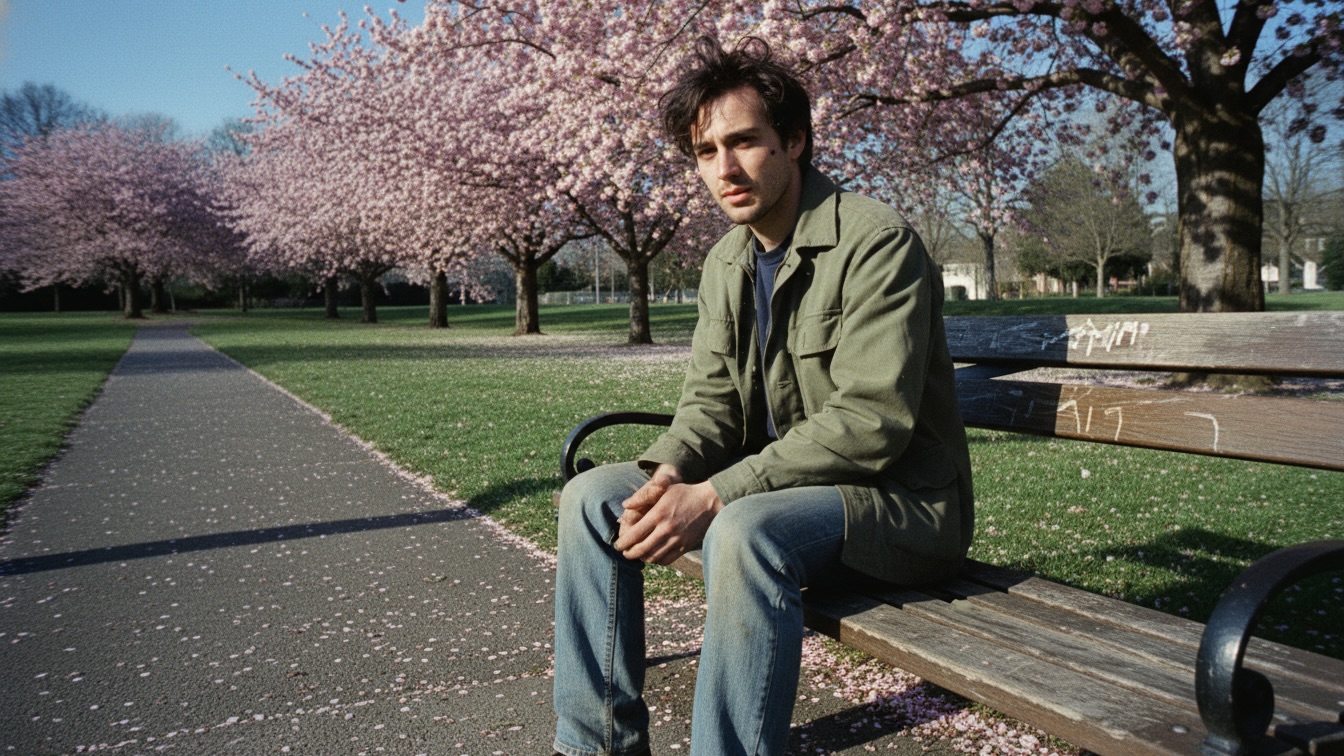
Imagine this story as a haunting installment of an anthology series titled The Manicured Edge, which explores the grotesque rot hidden beneath the surface of suburban perfection. Each episode centers on a different family whose suppressed trauma manifests as a surreal, localized haunting, turning the domestic dream into a visceral nightmare.
Format: Short Film / Anthology Episode | Est. Length: 10-12 minutes
The Manicured Edge is a psychological horror anthology that deconstructs the American suburban ideal, focusing on the "performative resilience" of families in crisis. Each episode features a standalone narrative where a specific grief or secret begins to physically manifest in the home’s architecture or landscaping. The overarching narrative arc across the series suggests a shared world where social expectations act as a literal parasite, hollowing out individuals until they become "shells" dedicated only to maintaining a sterile facade.
The deafening, mechanical roar of a lawnmower tears through a sterile, lemon-scented kitchen as Leo watches his father meticulously groom the grass with a mask of terrifying calm. The sun reflects off white quartz countertops with a blinding intensity, suggesting that something violent is being hidden in plain sight.
In a house where grief is forbidden, a teenager discovers his parents are burying more than just memories beneath the garden's fresh mulch. He must choose between joining their hollow performance of "peace" or escaping into a world that allows him to break.
The primary theme explores the toxicity of "performative resilience," where the militant suppression of grief leads to a literal and metaphorical rot that consumes the individual. It examines the conflict between the sterile, artificial safety of suburban life and the messy, painful reality of human emotion, suggesting that true healing requires embracing the "rot" rather than paving over it.
The secondary theme focuses on the preservation of memory versus the sanitization of history. While the parents attempt to "weed out" the memory of their deceased daughter to maintain their social standing, Leo realizes that his identity is tied to the pain they are trying to bury, leading to a struggle for the soul of the family.
For Leo, the stakes are his sanity and his humanity; if he succumbs to his parents' demands, he will become a "shell," an actor in a never-ending play of forced happiness. Failure to escape the house means he will likely be "processed" into the home’s sterile system, effectively dying while still breathing. For the parents, the stakes are the preservation of their social facade, which they value more than their son’s life or their daughter’s memory.
The primary conflict is a domestic psychological war, pitting Leo’s need to mourn against his parents' enforcement of a "plastic peace." The antagonistic forces are the Mother and Father, who act as wardens of a suburban prison, using tea, chores, and locked windows to keep reality at bay. Internally, Leo struggles with a mounting paranoia that he is the "problem" for feeling pain, creating a sense of isolation that threatens to collapse his will to resist.
Three weeks after his sister Maya’s death, Leo is trapped in a home governed by a strict rule of silence and "resilience." His mother hosts a phantom garden party for no one, serving bitter tea in a kitchen that smells of lemon Pledge and lilies, while his father obsessively lays dark, steaming mulch in the yard. Leo’s attempt to connect with his grief is met with cold directives to "hydrate" and "be okay," as the house itself feels like it is counting his breaths and watching his every move through the reflections in the appliances.
The tension breaks when Leo discovers a fragment of bone or plastic in the garden and is subsequently lured toward the basement, where his father claims to be "cleaning the rot" from the pipes. After witnessing a grotesque manifestation of his sister’s remains—a pipe snake made of human hair—Leo realizes his parents have been consumed by their denial and are no longer human. He narrowly escapes the house, losing his digital memories of Maya but gaining the freedom to feel real pain, finally finding a sense of self-worth in the messy, unmanicured world outside.
Leo: A teenager paralyzed by grief and the suffocating "peace" of his household. He begins as a passive observer, gaslit by his parents' normalcy, but ends as a survivor who chooses the "rot" of reality over the safety of the shell. His psychological arc is one of awakening, moving from a state of suffocating compliance to a state of liberated, albeit painful, autonomy.
Mother: A woman who has weaponized etiquette and aesthetics to survive her daughter's death. She operates with the precision of a clockwork doll, viewing any sign of genuine emotion as a "waste" or a "clumsiness" to be wiped away with silk napkins. By the end, she is revealed to be an empty vessel, a porcelain figure whose only function is to maintain the house's sterile facade at any cost.
Father: The silent, mechanical enforcer of the garden's borders. He uses physical labor and the "containment of rot" as a substitute for fatherhood, eventually becoming a soot-covered monster in the basement. He represents the violent side of repression, willing to "clean" his own son to keep the peace of the home undisturbed.
The Sterile Cage: Leo watches his father mow the lawn through a window so bright it causes physical pain, while his mother serves tea with a precision that feels like a theatrical performance. The house is established as a sensory vacuum where the smell of lilies masks the stench of death and the rule of "being okay" is enforced with cold, level voices. Leo’s shaking hands and the bitter, dirt-like taste of the tea signal his internal rejection of this forced tranquility.
The Garden's Secret: Leo ventures outside to find his father standing over steaming, black mulch that smells of heavy earth and decay. He spots a white fragment—a tooth or a piece of bone—poking through the wood chips, but his father’s vice-like grip and talk of "containing the rot" prevent him from investigating further. The father’s bloodshot eyes and the sudden silence of the birds heighten the surreal dread, suggesting the garden is a burial ground for the family's discarded humanity.
The Basement Descent: After a terrifying encounter in the hallway where a dragging sound mimics a human presence, Leo is pushed toward the basement by his mother to help his father "clear the pipes." In the flickering orange light of the furnace, he sees his father holding a pipe snake made of long, dark hair—a grotesque remnant of his sister Maya. Leo finally breaks the "peace" by shoving his hollow mother aside and sprinting through the multiple locks of the front door into the blinding, honest sunlight.
The episode begins with a sense of "suffocating stillness," characterized by high-key lighting and sterile environments that feel claustrophobic despite their brightness. As Leo discovers the anomalies in the mulch and the house, the mood shifts into "creeping paranoia," where every domestic sound is amplified and threatening. The climax is a "visceral explosion" of horror and adrenaline, followed by a "melancholic liberation" in the final scenes, where the audience feels the weight of Leo’s grief as a necessary, grounding force.
If expanded, the season would follow Leo as he navigates the city, discovering that his family’s "peace" is a symptom of a larger, societal contagion of denial. He would encounter other "survivors" of the Manicured Edge, forming a loose network of individuals who choose to live in the "rot" rather than the "shell."
The thematic escalation would involve Leo slowly uncovering the origin of the "shells"—perhaps a corporate or supernatural entity that offers "trauma-free living" in exchange for one's humanity. The season would conclude with Leo returning to his childhood neighborhood to expose the rot, not to save his parents, but to prevent the garden from swallowing the next grieving family.
The visual style utilizes "Suburban Gothic" aesthetics: extreme close-ups of sterile surfaces (quartz, silk, porcelain) contrasted with the organic, wet textures of the mulch and the hair. The lighting in the house is unnaturally bright and overexposed, creating a "clinical horror" vibe, while the basement and the exterior world use more naturalistic, gritty shadows and a cooler color palette.
Tonal influences include the clinical detachment of Yorgos Lanthimos and the surreal domestic dread of Ari Aster. The sound design is crucial, featuring a constant, low-frequency hum from the furnace and the rhythmic, aggressive sound of the lawnmower to maintain a baseline of anxiety that only breaks when Leo reaches the city.
This content is designed for fans of psychological horror and "prestige" anthology series like Black Mirror or The Twilight Zone. It appeals to an adult and late-teen demographic (16+) interested in themes of mental health, family dynamics, and the uncanny. The viewing context is ideal for streaming platforms that prioritize high-concept, visually-driven storytelling with a dark, emotional core.
The pacing is a "slow burn" that accelerates rapidly in the final three minutes. The first half of the 10-12 minute runtime focuses on building the atmospheric tension of the kitchen and garden, while the final act (the basement and escape) is a frantic, high-tempo sequence. The structure follows a traditional three-act format: Act I (The Tea), Act II (The Mulch), Act III (The Basement/Escape).
The "hair pipe snake" and the "steaming mulch" require high-quality practical effects to ensure the horror feels grounded and tactile rather than CGI-heavy. The house location must be a modern, "perfect" suburban home with a stark, white interior to maximize the contrast with the black mulch and soot-covered father.
Sound design is a primary production consideration; the transition from the "mechanical scream" of the mower to the "hollow thud" of the mother falling must be meticulously mixed to emphasize the artificiality of the environment. The use of silk napkins and porcelain clinks should be Foley-heavy to create an unsettling, hyper-real auditory experience that mirrors Leo's sensory overload.


